Chapter 7 — Pre-Bid Meeting, Clarification, Site Visit & Corrigendum Analysis
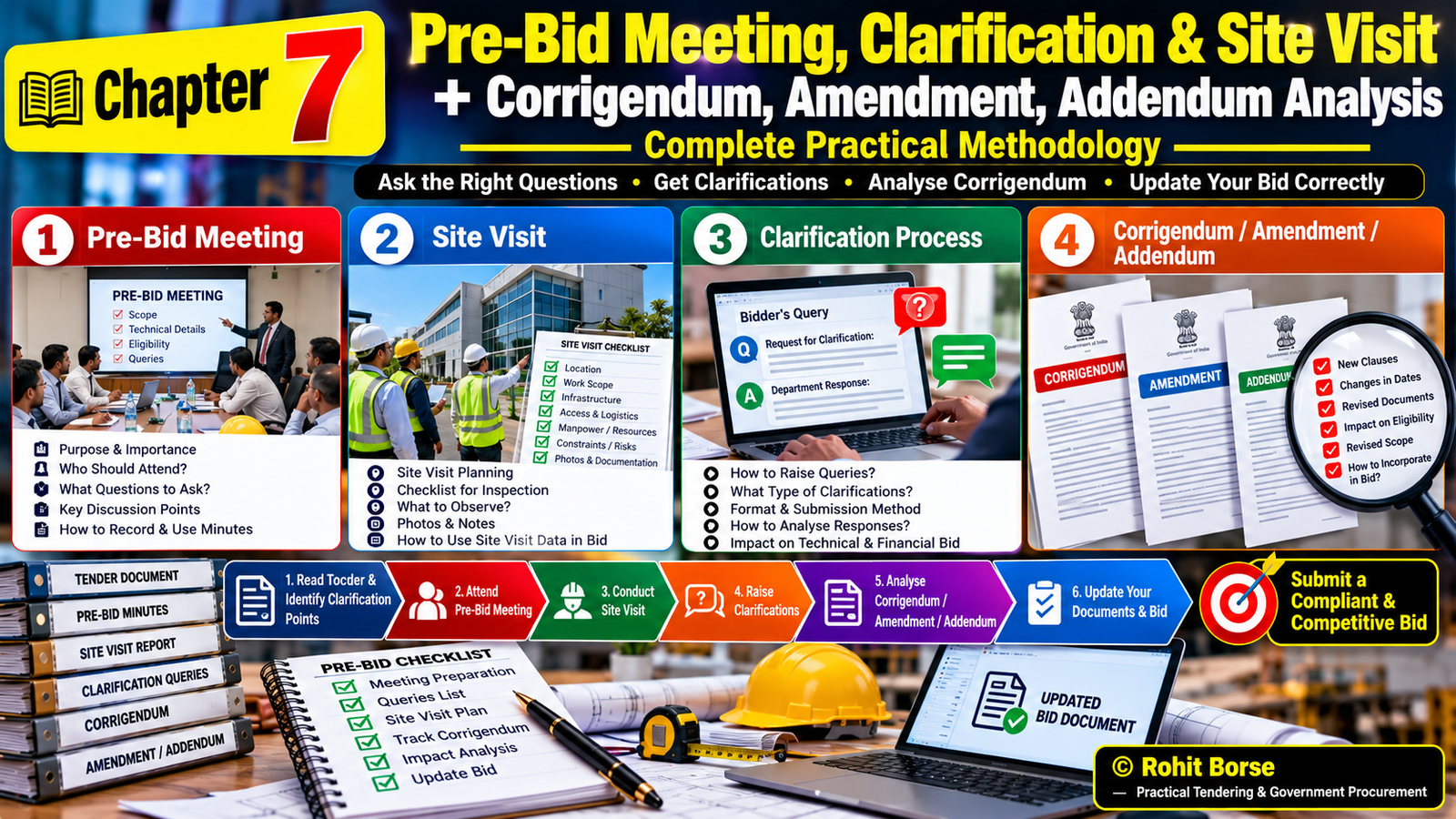
Topic 1 -: Pre-Bid Meeting, Clarification & Site Visit – Complete Practical Methodology
Tendering process मध्ये Pre-Bid Meeting हा केवळ department ने ठेवलेला एक formal meeting programme आहे असे समजणे चुकीचे आहे. अनेक tenders मध्ये tender document वाचताना काही conditions, technical requirements, scope of work, eligibility criteria, execution requirements किंवा commercial terms पूर्णपणे स्पष्ट होत नाहीत. काही वेळा एकाच tender document मधील दोन वेगवेगळ्या clauses मध्ये interpretation चा प्रश्न निर्माण होतो. काही वेळा प्रत्यक्ष site ची परिस्थिती document मध्ये दिलेल्या description पेक्षा वेगळी असू शकते. अशा वेळी bidder ला tender submit करण्यापूर्वी department समोर आपले प्रश्न मांडण्याची आणि clarification घेण्याची संधी मिळते. याच प्रक्रियेला broadly Pre-Bid Clarification Process म्हणता येते.
आपल्या practical tendering methodology मध्ये Pre-Bid चा उद्देश फक्त प्रश्न विचारणे नाही. Tender आपल्याला पूर्णपणे समजला आहे का, आपण त्याच्या conditions मध्ये technically, financially आणि practically बसतो का, execution मध्ये कोणत्या अडचणी येऊ शकतात, आणि tender document मधील कोणत्या बाबी official clarification शिवाय पुढे नेणे धोकादायक ठरू शकते, हे निश्चित करण्यासाठी Pre-Bid हा एक महत्त्वाचा stage आहे.
म्हणूनच Pre-Bid च्या आधी tender वाचणे, त्यातील doubtful clauses वेगळे काढणे, applicable rules आणि procurement principles समजून घेणे, प्रश्न योग्य भाषेत तयार करणे आणि meeting मध्ये काय बोलायचे याची तयारी करणे ही पूर्ण प्रक्रिया आहे. Meeting ला उपस्थित राहणे हा त्यातील फक्त एक भाग आहे.
1. Pre-Bid Meeting म्हणजे नेमके काय?
Pre-Bid Meeting म्हणजे tender publish झाल्यानंतर आणि bid submission ची अंतिम तारीख येण्यापूर्वी department आणि prospective bidders यांच्यात होणारी clarification-oriented interaction.
Department tender मध्ये कामाचे स्वरूप, eligibility, technical specifications, commercial conditions, submission requirements आणि contract obligations देतो. Bidder हे document वाचतो आणि त्याला काही शंका किंवा clarification points असतील तर ते department समोर मांडू शकतो.
काही tenders मध्ये department written queries मागते. काही ठिकाणी online meeting ठेवली जाते. काही ठिकाणी physical meeting असते. काही tenders मध्ये site visit ची स्वतंत्र व्यवस्था असते. काही ठिकाणी Pre-Bid compulsory असते, तर काही tenders मध्ये ती optional असते.
म्हणून manual मधील पहिला नियम असा असायला हवा:
“Pre-Bid Meeting आहे असे गृहीत धरू नका आणि नाही असेही गृहीत धरू नका. Tender document मध्ये ती कुठे, कोणत्या नावाने आणि कोणत्या condition अंतर्गत दिली आहे ते शोधा.”
कारण Pre-Bid ची माहिती नेहमी Technical Bid section मध्येच असेल असे नाही.
ती Tender Notice, RFP, Important Dates, Instructions to Bidders, Special Conditions, Schedule किंवा स्वतंत्र Pre-Bid Notice मध्येही असू शकते.
2. Pre-Bid Mandatory आहे की Optional?
हा अत्यंत महत्त्वाचा practical check आहे.
Tender मध्ये जर स्पष्टपणे लिहिले असेल की:
Pre-Bid Meeting is mandatory for all prospective bidders.
किंवा attendance / participation ला eligibility शी जोडले असेल, तर bidder ने ही condition अत्यंत गंभीरपणे घ्यावी.
काही tenders मध्ये Pre-Bid attendance नंतर participation certificate किंवा attendance proof दिले जाऊ शकते आणि पुढे bid submission मध्ये ते document मागितले जाऊ शकते.
अशा वेळी bidder ने meeting attend केली नाही तर बाकी technical documents perfectly तयार असूनही eligibility वर परिणाम होण्याची शक्यता निर्माण होऊ शकते.
दुसऱ्या बाजूला:
Pre-Bid Meeting is optional.
असे असल्यास participation न करणे आणि mandatory meeting miss करणे या दोन वेगळ्या गोष्टी आहेत.
म्हणून tender वाचताना “Pre-Bid” हा keyword शोधून थांबायचे नाही. त्याच्या आसपासच्या sentences मध्ये attendance, compulsory participation, certificate, eligibility, disqualification किंवा submission requirement जोडलेली आहे का हे पूर्ण वाचायचे.
3.Pre-Bid कुठे शोधायची?
Fresher ने tender document उघडल्यानंतर फक्त Technical Bid पाहून Pre-Bid शोधायची नाही.
Tender मधील खालील भाग तपासण्याची सवय लावायची:
Tender Notice
RFP / NIT
Important Dates
Instructions to Bidders
Eligibility Criteria
Technical Bid
Special Conditions
Pre-Bid Clause
Schedule / Milestones
Corrigendum
Annexures
याशिवाय tender portal वर स्वतंत्र notice किंवा attachment उपलब्ध आहे का तेही तपासायचे.
4.Pre-Bid पूर्वी Tender पुन्हा का वाचायचा?
Pre-Bid ला जाण्यापूर्वी tender एकदा वाचून झालेला असणे पुरेसे नाही.
आपल्या practical methodology मध्ये पहिले reading = understanding आणि Pre-Bid reading = clarification preparation असे समजता येईल.
पहिल्या reading मध्ये आपण scope, eligibility, technical requirements, financial requirements आणि contract obligations समजून घेतो.
दुसऱ्या reading मध्ये आपण विचारतो:
“यातील नेमके काय अजून स्पष्ट नाही?”
यासाठी tender समोर ठेवून pen आणि notebook घेऊन बसणे ही खूप उपयुक्त practical habit आहे.
Clause वाचताना जिथे ambiguity, contradiction, unusual requirement किंवा practical difficulty जाणवते तिथे लगेच note करायचे.
उदाहरणार्थ:
Clause 4.2 – Experience requirement
Clause 7.1 – Similar work definition
जर दोन्ही clauses वेगळ्या पद्धतीने experience सांगत असतील, तर हा Pre-Bid clarification point होऊ शकतो.
5.प्रत्येक शंकेला Pre-Bid Question बनवायचे का?
नाही.
हा अनुभवातून शिकण्याचा महत्त्वाचा भाग आहे.
Tender वाचताना अनेक छोट्या गोष्टी लक्षात येतात. पण प्रत्येक observation department समोर question म्हणून मांडणे आवश्यक नसते.
काही points आपण स्वतःच्या internal understanding साठी लिहून ठेवतो.
काही points senior management कडे clarify करतो.
काही points applicable law किंवा circular पाहून स्वतः resolve करू शकतो.
आणि काही points असे असतात की त्यांचे उत्तर department कडून official स्वरूपात घेणे आवश्यक असते.
म्हणून प्रश्नांची तीन पातळी करता येते:
Self-Clarification
Internal Management Clarification
Departmental Clarification
हा फरक नवीन staff ने समजून घेतला पाहिजे.
6.Pre-Bid Question तयार करण्याची Practical पद्धत
प्रश्न लिहिताना प्रथम Clause Number लिहा.
नंतर त्या clause मध्ये काय requirement आहे ते short मध्ये लिहा.
नंतर आपला exact doubt लिहा.
आणि शेवटी department कडून कोणते clarification अपेक्षित आहे ते स्पष्ट करा.
उदाहरणार्थ:
Clause: Experience Criteria
Requirement: Bidder must have experience of similar work.
Observation: Similar work ची definition स्पष्ट नाही.
Clarification Required: Kindly clarify whether housekeeping manpower services provided to Government Departments / PSUs / autonomous bodies will be considered as similar work.
ही पद्धत department ला प्रश्न समजायला सोपी जाते आणि आपल्यालाही नंतर record maintain करणे सोपे जाते.
7.Clause Number अत्यंत महत्त्वाचा का?
Pre-Bid मध्ये:
“Experience condition बद्दल clarification पाहिजे.”
असे broadly बोलण्यापेक्षा:
“Clause 5.2 – Similar Work Experience”
असे सांगितले तर department ला exact reference मिळतो.
Tender document मोठे असू शकते. त्यामध्ये 100, 200 किंवा त्यापेक्षा जास्त pages असू शकतात. त्यामुळे Clause Number + Page Number + Subject या पद्धतीने note ठेवणे अत्यंत उपयुक्त आहे.
उदाहरणार्थ:
5.2 – Similar Experience – Page 34
7.4 – Site Visit – Page 51
10.3 – Hard Copy Submission – Page 72
अशी notebook किंवा working sheet ठेवली तर Pre-Bid preparation व्यवस्थित होते.
8.काय प्रश्न विचारायचे?
Pre-Bid मध्ये सर्वात महत्त्वाचे प्रश्न ते असतात ज्यांचे उत्तर मिळाल्याशिवाय bidder ला tender properly evaluate करता येत नाही.
उदाहरणार्थ:
Eligibility अस्पष्ट आहे का?
Similar work ची definition स्पष्ट नाही का?
Experience period बद्दल contradiction आहे का?
Required document कोणता आहे हे स्पष्ट नाही का?
Hard copy submission कुठे आणि कधी करायची हे unclear आहे का?
Site visit compulsory आहे का?
Specific technical specification चा interpretation काय आहे?
BOQ आणि price bid मध्ये inconsistency आहे का?
Payment terms मध्ये ambiguity आहे का?
Manpower quantity आणि deployment requirement मध्ये mismatch आहे का?
Corrigendum किंवा previous clarification चा परिणाम समजत नाही का?
अशा questions ला priority द्यायची.
9.कोणते प्रश्न विचारू नयेत?
Pre-Bid Meeting मध्ये स्वतःच्या company ची confidential information unnecessarily disclose करणे टाळायचे.
उदाहरणार्थ:
“आमच्याकडे सध्या 500 guards आहेत.”
जर department ला त्याची गरज नसेल तर अशी माहिती देण्याची आवश्यकता नाही.
तसेच:
“आम्ही इतक्या कमी price मध्ये काम करू.”
किंवा
“आम्ही हा tender नक्की भरत आहोत.”
अशी information competitors समोर unnecessarily disclose करणे योग्य नाही.
Pre-Bid चा उद्देश tender clarify करणे आहे, स्वतःच्या commercial strategy किंवा internal capability चे unnecessary disclosure करणे नाही.
10.Competitors उपस्थित असताना Behaviour
हा भाग textbook पेक्षा experience मधून जास्त समजतो.
Pre-Bid Meeting मध्ये अनेक competitors उपस्थित असू शकतात. काही competitors तुमच्याशी friendly conversation करतील. काही जण तुमच्याकडे कामाचा अनुभव, manpower, existing clients, pricing किंवा company capability याबद्दल information घेण्याचा प्रयत्न करू शकतात.
यामध्ये दोन extremes टाळायचे.
पहिला:
अतिशय defensive होणे.
दुसरा:
अतिशय open होऊन company ची internal information सांगत राहणे.
आपली communication confident, polite आणि controlled असावी.
प्रश्न विचारताना आपला tone professional असावा. Competitor ने casual discussion सुरू केला तरी प्रत्येक गोष्ट share करणे आवश्यक नाही.
Confidence दाखवायचा; पण information surrender करायची नाही.
ही skill फक्त manual वाचून येत नाही. Senior लोक Pre-Bid मध्ये कसे बोलतात, कोणत्या प्रश्नाला किती उत्तर देतात, कोणत्या गोष्टी avoid करतात हे observe केल्याने ती विकसित होते.
11.Pre-Bid मध्ये “काय बोलायचे” आणि “काय observe करायचे”
आपण meeting ला फक्त आपल्या questions ची list घेऊन गेलो आणि बाकी काही पाहिले नाही तर आपली observation क्षमता कमी राहते.
Meeting मध्ये department चा approach observe करायचा.
कोणते clauses अनेक bidders question करत आहेत?
Department त्या प्रश्नांना काय उत्तर देत आहे?
Department clarification देताना specific आहे की generic?
इतर bidders कोणत्या technical issues वर प्रश्न विचारत आहेत?
कोणते प्रश्न repeated आहेत?
कोणत्या requirement बद्दल अनेक bidders confused आहेत?
Department एखाद्या condition चे justification कसे देते?
हे observations पुढील tender analysis मध्ये उपयोगी पडतात.
12.Tender म्हणजे Department च्या Working Approach चा आरसा
आपल्या practical methodology मधील हा एक महत्त्वाचा विचार manual मध्ये जतन केला पाहिजे.
Tender चे wording, clause structure, specifications आणि evaluation method यावरून department ची working approach काही प्रमाणात समजू शकते.
Tender अत्यंत detailed आहे की generic?
Conditions स्पष्ट आहेत की ambiguous?
Scope carefully drafted आहे की broad आहे?
Technical specifications performance-based आहेत की unnecessarily restrictive?
Evaluation transparent आहे की interpretation-heavy?
हे सर्व पाहिल्याने tender ची complexity समजते.
याचा अर्थ department बद्दल कोणताही unsupported निष्कर्ष काढायचा नाही.
पण tender document हा department च्या procurement approach चा एक practical indicator आहे, हे लक्षात ठेवायचे.
13.Pre-Bid मध्ये Legal / Procurement Principles चा वापर
जर आपल्याला वाटत असेल की एखादी condition unnecessarily restrictive आहे, तर फक्त:
“ही condition unfair आहे.”
असे म्हणणे professional approach नाही.
त्याऐवजी applicable procurement rules, government circulars, departmental guidelines किंवा relevant CVC principles यांचा अभ्यास करून त्या requirement चा आधार समजून घ्यायचा.
यानंतर question अधिक मजबूत करता येतो.
उदाहरणार्थ:
“Considering the scope and nature of the work, kindly clarify whether equivalent experience from other Government Departments / PSUs may also be considered.”
किंवा:
“Kindly clarify the rationale for restricting the eligibility requirement to ______ and whether equivalent qualifying experience may be accepted.”
इथे आपण department वर आरोप करत नाही.
आपण clarification आणि reasonable interpretation मागत आहोत.
14. Pre-Bid मध्ये Argument करण्यापेक्षा Clarification मागणे.
नवीन staff ने एक गोष्ट विशेष लक्षात ठेवावी:
Pre-Bid म्हणजे courtroom argument नाही.
आपल्याला प्रत्येक point वर department ला चुकीचे सिद्ध करायचे नसते.
आपला उद्देश आहे:
Understanding मिळवणे.
Ambiguity कमी करणे.
Official clarification मिळवणे.
Requirement practically fulfil करता येईल का हे समजणे.
म्हणून communication:
Calm + Clear + Specific + Respectful
अशी असावी.
15.जर Department ने प्रश्नाचे उत्तर स्पष्ट दिले नाही तर?
Meeting मध्ये कधी कधी department representative म्हणू शकतो:
“As per tender conditions.”
किंवा:
“Please follow the tender document.”
अशा वेळी unnecessary argument करायचा नाही.
जर प्रश्न महत्त्वाचा असेल तर तो written clarification मध्ये formally record करण्याचा मार्ग आहे का ते पाहायचे.
कारण oral discussion आणि official written clarification यांचे evidentiary value आणि practical usefulness वेगळे असू शकतात.
म्हणून शक्य असल्यास official written clarification / minutes / corrigendum / portal communication याकडे लक्ष द्यायचे.
16.Pre-Bid Minutes चे महत्त्व
Pre-Bid Meeting झाल्यानंतर department कडून minutes, clarification document किंवा revised tender information प्रकाशित होऊ शकते.
ही माहिती फक्त meeting मध्ये उपस्थित असलेल्या व्यक्तींसाठी नसते.
Tender मध्ये department ने official clarification प्रकाशित केले असल्यास त्याचा tender वर परिणाम होऊ शकतो.
म्हणून Pre-Bid नंतर काम संपत नाही.
उलट:
Pre-Bid → Clarification → Corrigendum/Amendment → Re-analysis
ही पुढची chain सुरू होते.
17. Pre-Bid नंतर Tender पुन्हा का वाचायचा?
हा आपल्या manual मधील अत्यंत महत्त्वाचा practical rule असायला हवा.
समजा आपण tender पहिल्यांदा वाचला.
Eligibility समजली.
Costing केली.
Pre-Bid मध्ये प्रश्न विचारले.
Department ने clarification दिले.
आता tender जसा पहिल्यांदा होता तसाच राहिलेला असेलच असे नाही.
कदाचित:
Clause बदलला असेल.
Deadline बदलली असेल.
Technical specification बदलली असेल.
Eligibility बदलली असेल.
BOQ बदलला असेल.
Document requirement बदलले असेल.
म्हणून Pre-Bid नंतर fresh verification करणे आवश्यक आहे.
18. Site Visit म्हणजे फक्त Site पाहणे नाही
आता दुसरा महत्त्वाचा भाग — Site Visit.
Tender मध्ये site visit दिली असल्यास ती केवळ औपचारिक भेट समजू नये.
Document मध्ये:
“100 housekeeping personnel required.”
असे वाचणे एक गोष्ट आहे.
पण प्रत्यक्ष site वर जाऊन:
- किती buildings आहेत?
- किती floors आहेत?
- किती toilets आहेत?
- किती entry/exit points आहेत?
- किती दूरपर्यंत area spread आहे?
- material movement कसा होईल?
- manpower reporting point कुठे आहे?
- supervisor कुठे बसेल?
- storage space आहे का?
- water/electricity availability काय आहे?
- waste disposal system काय आहे?
- working hours काय practical दिसतात?
हे समजणे पूर्णपणे वेगळी गोष्ट आहे.
यामुळे costing आणि execution analysis अधिक realistic होते.
19. Site Visit मध्ये Scope आणि Ground Reality Compare करणे
Site Visit चा मुख्य practical उद्देश:
Tender document मध्ये लिहिलेले scope आणि प्रत्यक्ष site ची परिस्थिती यांच्यातील relationship समजणे.
उदाहरणार्थ tender मध्ये cleaning area 1,00,000 sq.ft. दिले आहे.
प्रत्यक्ष site वर area अनेक buildings मध्ये spread आहे.
एका building पासून दुसऱ्या building पर्यंत manpower movement आवश्यक आहे.
काही areas restricted आहेत.
काही कामासाठी specialised equipment लागते.
तर costing मध्ये फक्त:
1,00,000 × rate
असे करून चालणार नाही.
Execution model बदलू शकतो.
यामुळे site visit हा pricing आणि operational feasibility चा input बनतो
20.Site Visit Report
Site Visit केल्यानंतर memory वर अवलंबून राहायचे नाही.
त्याच दिवशी किंवा शक्य तितक्या लवकर notes तयार करायचे.
उदाहरणार्थ:
Tender ID
Department
Site Location
Date of Visit
Person Attending
Department Representative
Scope Observed
Manpower Observations
Infrastructure
Equipment Requirement
Access / Transportation
Special Restrictions
Important Clarifications
Photographs / Documents, where permitted
Pending Clarifications
अशी basic record structure ठेवली तर पुढील costing आणि management discussion मध्ये मोठी मदत होते.
21. Site Visit मध्ये काय विचारायचे?
प्रत्येक प्रश्न site वर विचारायचा नाही.
Tender document मध्ये आधीच answer असलेला प्रश्न पुन्हा विचारण्यापेक्षा प्रत्यक्ष execution शी संबंधित practical doubts विचारणे अधिक उपयोगी ठरते.
उदाहरणार्थ:
“Material storage साठी department space provide करणार आहे का?”
“Manpower reporting location एकच आहे का?”
“Existing equipment contractor ला उपलब्ध करून दिले जाणार आहे का?”
“Water/electricity department provide करणार आहे का?”
“Restricted areas साठी access procedure काय आहे?”
“Working hours document प्रमाणेच आहेत का?”
अशा प्रश्नांमुळे execution model स्पष्ट होतो.
22. Site Visit आणि Costing यांचा संबंध
Site visit झाल्यानंतर costing पुन्हा पाहायची.
आपण आधी केलेली:
Manpower Cost
Statutory Cost
Equipment
Consumables
Transportation
Supervision
Local Expenses
Buffer
Risk
यापैकी काही बदलत आहे का ते तपासायचे.
उदाहरणार्थ document वर equipment requirement छोटी वाटली पण site वर मोठ्या area साठी heavy-duty machinery आवश्यक असल्याचे समजले, तर equipment cost वाढू शकते.
त्याचप्रमाणे site दूर असल्यास transportation आणि supervision cost बदलू शकते.
म्हणून:
Site Visit हा Technical Bid चा भाग असला तरी त्याचा परिणाम Financial Bid वरही होऊ शकतो.
23.Pre-Bid + Site Visit + GO–NO GO
Pre-Bid आणि Site Visit झाल्यानंतर पुन्हा एकदा स्वतःला विचारायचे:
आपण eligible आहोत का?
Technical requirement fulfils करता येते का?
Scope practically execute करता येईल का?
Costing sustainable आहे का?
Risk manageable आहे का?
Clarification नंतर काही eligibility बदलली आहे का?
Corrigendum लागले आहे का?
Management approval आवश्यक आहे का?
म्हणजे GO–NO GO हा एकदाच घेतलेला निर्णय नसून tender lifecycle मध्ये परिस्थितीनुसार पुन्हा validate होऊ शकतो.
24.Pre-Bid चे Complete Practical Sequence
आपल्या company च्या methodology प्रमाणे fresher ने खालील sequence मनात ठेवावा:
Tender Search
↓
Tender Download
↓
Complete Reading
↓
Eligibility Analysis
↓
Scope & Execution Analysis
↓
Doubt / Ambiguity Notes
↓
Pre-Bid Requirement Check
↓
Senior Discussion
↓
Clarification Questions Preparation
↓
Pre-Bid Meeting / Written Queries
↓
Site Visit, if applicable
↓
Observation & Site Notes
↓
Department Clarification / Minutes
↓
Corrigendum / Amendment Check
↓
Tender Re-reading
↓
Eligibility Re-check
↓
Costing Re-check
↓
Management Approval
↓
Technical Bid Preparation
हा sequence manual मध्ये practical workflow म्हणून स्वतंत्र visual/process diagram च्या रूपात दाखवता येईल.
25. Fresher साठी सर्वात महत्त्वाचा नियम
Pre-Bid Meeting बद्दल शेवटी एकच गोष्ट लक्षात ठेवा:
“Meeting ला उपस्थित राहणे म्हणजे Pre-Bid करणे नाही; Tender समजून घेऊन योग्य प्रश्न तयार करणे, योग्य वेळी योग्य पद्धतीने ते मांडणे, department चे उत्तर समजून घेणे, त्याची official record मध्ये नोंद ठेवणे आणि त्या उत्तराचा आपल्या eligibility, costing आणि execution वर काय परिणाम होतो हे पुन्हा तपासणे — ही पूर्ण Pre-Bid प्रक्रिया आहे.”
आणि Site Visit बाबत:
“Site पाहणे हा उद्देश नाही; Site समजून घेऊन Tender document मधील scope, actual execution आणि costing यांना एकमेकांशी जोडणे हा Site Visit चा उद्देश आहे.”
ही दोन वाक्ये नवीन tender executive च्या working mindset चा भाग झाली पाहिजेत.
———————————————————————————————————————————————————-
Topic 2 -: Tender Corrigendum, Amendment, Addendum & Pre-Bid Clarification Analysis
Correction किंवा Clarification आल्यानंतर Tender पुन्हा कसा समजून घ्यायचा, त्याचा Eligibility, Technical Bid, BOQ, Pricing आणि Submission वर परिणाम कसा तपासायचा तर Tender एकदा publish झाला म्हणजे त्यातील प्रत्येक गोष्ट अंतिम झाली असे समजणे ही tendering मधील मोठी चूक आहे. अनेक वेळा tender publish झाल्यानंतर bidders कडून queries येतात, pre-bid meeting होते, department स्वतः काही technical किंवा administrative त्रुटी लक्षात घेते किंवा एखादी condition स्पष्ट करण्याची गरज निर्माण होते. अशा वेळी department कडून Corrigendum, Amendment, Addendum, Clarification किंवा Pre-Bid Response जारी केले जाऊ शकते. त्यामुळे tenderer ने फक्त original tender document वाचून bid तयार करणे पुरेसे नसते. Tender ची पूर्ण आणि अंतिम स्थिती समजून घेण्यासाठी original tender सोबत त्यानंतर publish झालेली प्रत्येक correction किंवा clarification देखील वाचणे आवश्यक असते. प्रत्यक्ष कामात यासाठी एक साधा नियम लक्षात ठेवावा—“Tender बदलला की आपले analysis पुन्हा सुरू झाले.” म्हणजेच correction आलेली दिसली म्हणून फक्त बदललेला paragraph पाहून पुढे जायचे नाही; त्या बदलाचा पूर्ण tender cycle वर काय परिणाम होतो हे तपासायचे असते.
1. Corrigendum, Amendment, Addendum आणि Clarification म्हणजे काय?
सोप्या भाषेत सांगायचे तर या सर्वांचा मुख्य संबंध tender publish झाल्यानंतर tender मधील माहितीमध्ये होणाऱ्या change, correction, clarification किंवा additional information शी असतो. मात्र प्रत्येक department किंवा portal वर या शब्दांचा वापर एकाच पद्धतीने होईलच असे नाही. म्हणून फक्त document च्या नावावरून त्याचे महत्त्व ठरवू नये. त्या document मध्ये नेमके काय बदलले आहे हे वाचणे अधिक महत्त्वाचे आहे.
Corrigendum सामान्यतः original tender मधील एखादी चूक, चुकीची माहिती, date, clause, quantity, eligibility condition किंवा इतर तपशील दुरुस्त करण्यासाठी जारी केलेले correction document असू शकते. Amendment म्हणजे tender च्या एखाद्या existing condition मध्ये बदल करणे. Addendum म्हणजे original tender मध्ये एखादी नवीन माहिती, condition, document किंवा requirement जोडणे. Clarification म्हणजे existing condition चा अर्थ अधिक स्पष्ट करणे; मात्र clarification चा अर्थ नेहमीच condition बदलणे असा नसतो. काही वेळा pre-bid meeting मध्ये bidders ने विचारलेल्या प्रश्नांना department कडून दिलेली उत्तरे पुढील bid preparation साठी अत्यंत महत्त्वाची ठरतात.
म्हणून manual मध्ये नवीन staff ने शब्दांच्या technical definition मध्ये अडकून न पडता एक practical प्रश्न विचारावा—“या document मुळे original tender मध्ये काय बदलले, काय स्पष्ट झाले आणि मला माझ्या bid मध्ये काय बदलावे लागेल?” हा प्रश्न योग्य पद्धतीने विचारला की Corrigendum Analysis ची खरी सुरुवात होते.
2. Correction आलेली आहे म्हणजे फक्त तीच page वाचायची नाही
Tendering मध्ये एक सामान्य mistake अशी होते की staff ला corrigendum मिळाले की तो फक्त corrigendum मधील दोन-तीन ओळी वाचतो आणि document folder मध्ये save करतो. ही पद्धत अपुरी आहे. उदाहरणार्थ original tender मध्ये experience condition ₹2 crore च्या work experience ची असेल आणि corrigendum मध्ये त्या condition मध्ये बदल करून ₹1 crore करण्यात आले असेल, तर हा बदल फक्त एक line चा असला तरी त्याचा eligibility आणि competition दोन्हींवर परिणाम होतो.
त्याचप्रमाणे bid submission deadline मध्ये बदल झाला असेल तर technical preparation, hard copy dispatch, EMD arrangement, management approval आणि final submission planning यावर परिणाम होऊ शकतो. BOQ मध्ये quantity बदलली असेल तर costing बदलते. Scope of work बदलला असेल तर manpower, equipment, consumables आणि supervision ची costing बदलू शकते. त्यामुळे corrigendum म्हणजे “एक नवीन document” नसून existing tender च्या analysis मध्ये आलेला नवीन input म्हणून त्याकडे पाहिले पाहिजे.
3.Corrigendum Analysis ची पहिली practical पद्धत
Correction किंवा amendment दिसल्यानंतर सर्वप्रथम त्या document ला स्वतंत्रपणे download करून tender folder मध्ये save करावे. File च्या नावातून ती कोणत्या tender ची आहे हे स्पष्ट दिसले पाहिजे. उदाहरणार्थ:
Tender ID – Department – Work Description – Corrigendum 01
अशी naming केल्यामुळे नंतर tender file उघडताना कोणता corrigendum कितवा आहे हे सहज समजते. जर पुढे Corrigendum 02, Corrigendum 03 आले तर प्रत्येक स्वतंत्रपणे record मध्ये ठेवावे. कोणतेही जुने corrigendum delete करून फक्त नवीन document ठेवणे टाळावे, कारण tender history समजण्यासाठी previous versions देखील उपयोगी ठरू शकतात.
त्यानंतर corrigendum ची date, reference number, title आणि issuing authority note करावी. त्यानंतर document पूर्ण वाचावे. “फक्त माझ्या कामाशी संबंधित paragraph असेल” असे गृहीत धरून बाकी मजकूर skip करू नये. कारण कधी correction एका section मध्ये दिसते पण त्याचा परिणाम दुसऱ्या section वर होऊ शकतो.
4.Corrigendum Analysis साठी “Impact Reading” पद्धत
Corrigendum वाचताना प्रत्येक बदलासाठी स्वतःला पाच प्रश्न विचारण्याची सवय लावावी:
काय बदलले?
पूर्वी काय होते?
आता काय आहे?
याचा माझ्या eligibility किंवा bid वर काय परिणाम होतो?
मला माझ्या कामात काय बदल करावा लागेल?
उदाहरणार्थ:
Original: Experience – 3 completed works.
Corrigendum: Experience – 2 completed works.
इथे फक्त “3 बदलून 2 झाले” एवढे लिहून थांबायचे नाही. पुढचा विचार असा असावा की company ची eligibility आता बदलली आहे का? पूर्वी eligible नसलेली company आता eligible झाली आहे का? Technical documents मध्ये काही नवीन proof द्यावे लागणार आहेत का? Management ला पुन्हा approval घ्यायची गरज आहे का?
हीच पद्धत प्रत्येक correction ला लागू करायची.
5.Eligibility वर परिणाम तपासणे
Corrigendum Analysis मधील सर्वात पहिला आणि महत्त्वाचा भाग म्हणजे Eligibility Impact.
Tender मध्ये incorporation, GST, turnover, experience, net worth, manpower experience, location, licence, registration, financial capacity किंवा इतर qualification criteria मध्ये बदल झाला असेल तर हा बदल अत्यंत गंभीरपणे तपासला पाहिजे.
उदाहरणार्थ original tender मध्ये bidder ला मागील तीन वर्षांचा ₹5 crore turnover required असेल आणि corrigendum नंतर तो ₹3 crore केला असेल तर आपल्या company ची eligibility पुन्हा calculate करावी लागेल. उलट turnover requirement ₹5 crore वरून ₹8 crore झाली असेल तर आधी eligible असलेली company आता ineligible होऊ शकते.
म्हणून corrigendum आल्यानंतर “आपण tender मध्ये eligible आहोत का?” हा प्रश्न पुन्हा विचारणे mandatory आहे.
फक्त technical bid तयार झाली आहे म्हणून eligibility पुन्हा तपासायची गरज नाही असे समजू नये.
6.Technical Bid वर परिणाम
Eligibility मध्ये बदल झाला नाही तरी technical bid मध्ये बदल होऊ शकतो. उदाहरणार्थ corrigendum मध्ये एखादा declaration format बदलला असेल, affidavit requirement बदलली असेल, licence जोडण्याची अट आली असेल किंवा एखाद्या certificate ची validity period बदलली असेल तर technical bid पुन्हा तपासावी लागते.
काही वेळा original tender मध्ये document requirement अस्पष्ट असते आणि pre-bid clarification मध्ये department स्पष्टपणे सांगते की specific document mandatory आहे. अशा परिस्थितीत staff ने “original technical bid मध्ये हा document स्पष्टपणे नव्हता” असे म्हणून त्याकडे दुर्लक्ष करू नये. Clarification चा practical effect समजून घेणे आवश्यक आहे.
Technical bid तयार झालेली असली तरी correction नंतर document checklist पुन्हा cross-check करणे आवश्यक आहे.
7.BOQ किंवा Quantity मध्ये बदल
Corrigendum चा सर्वात थेट आर्थिक परिणाम BOQ किंवा quantity बदलल्यावर होतो.
उदाहरणार्थ original BOQ मध्ये:
100 Security Guards
असेल आणि corrigendum नंतर quantity 120 झाली, तर manpower costing बदलते. त्यासोबत PF, ESI, bonus, wages, service charge, GST impact, supervision आणि execution cost यांचाही परिणाम तपासावा लागतो.
त्याचप्रमाणे housekeeping tender मध्ये area 50,000 sq. ft. वरून 70,000 sq. ft. झाला तर manpower requirement, machines, consumables आणि supervision पुन्हा calculate करावे लागतील.
म्हणून BOQ correction = costing correction हा practical rule लक्षात ठेवावा.
8.Scope of Work बदलला तर पूर्ण costing पुन्हा तपासा
कधी कधी corrigendum मध्ये quantity बदलत नाही पण scope बदलतो. उदाहरणार्थ original tender मध्ये फक्त housekeeping manpower असते, परंतु correction नंतर machine cleaning, consumables, PPE किंवा additional services जोडल्या जातात.
अशा वेळी “manpower तेवढीच आहे म्हणून costing तीच राहील” असे म्हणणे चुकीचे आहे.
Scope मध्ये प्रत्येक नवीन obligation पाहावी:
काम कोण करणार?
किती manpower लागेल?
किती वेळा service द्यावी लागेल?
Equipment लागेल का?
Consumables कोण देणार?
Transportation कोणाची?
Supervisor लागेल का?
Additional licence किंवा compliance लागेल का?
Penalty exposure वाढतो का?
यानंतर exact cost आणि buffer cost पुन्हा calculate करावी.
9.Deadline बदलली तर त्याचा अर्थ फक्त “जास्त वेळ मिळाला” असा नसतो
Corrigendum मध्ये bid submission date किंवा opening date बदलणे ही सामान्य बाब आहे. पण deadline extension कडे फक्त additional time म्हणून पाहू नये.
उदाहरणार्थ submission date वाढली असेल तर त्या काळात additional corrigendum येऊ शकतो, pre-bid clarification publish होऊ शकते किंवा competitors ना अधिक तयारीची संधी मिळू शकते. त्यामुळे revised deadline नोंदवून tender tracking system मध्ये update करणे आवश्यक आहे.
विशेषतः closing date आणि opening date यांचा गोंधळ होऊ नये. Revised closing date कोणती आहे, technical bid opening date कोणती आहे आणि financial opening वेगळी आहे का हे स्पष्टपणे note करावे.
10. Hard Copy Requirement मध्ये बदल
Hard copy submission हा tender च्या कोणत्याही section मध्ये असू शकतो. Corrigendum मध्ये hard copy submission ची deadline, address, document list किंवा submission method बदलला असेल तर त्याचा विशेष विचार करावा.
उदाहरणार्थ original tender मध्ये bid closing पूर्वी hard copy पोहोचणे आवश्यक असेल आणि corrigendum मध्ये submission नंतर specific hours मध्ये hard copy पोहोचवण्याची अट असेल, तर execution planning पूर्णपणे बदलू शकते.
यासाठी corrigendum वाचताना Hard Copy / Physical Submission / Original Documents / Address / Deadline अशा terms वर विशेष लक्ष द्यावे.
11.Pre-Bid Clarification आणि Corrigendum यांचा संबंध
Pre-bid meeting मध्ये bidders प्रश्न विचारतात. Department त्या प्रश्नांची उत्तरे देऊ शकते. काही प्रश्नांना उत्तर देताना department फक्त existing clause स्पष्ट करते; परंतु काही प्रश्नांमुळे tender condition मध्ये प्रत्यक्ष बदल करण्याची गरज निर्माण होऊ शकते.
उदाहरणार्थ bidder ने विचारले:
“Experience requirement मध्ये similar work म्हणजे housekeeping manpower supply की facility management work?”
Department जर फक्त interpretation स्पष्ट करते तर ते clarification असू शकते. पण department ने experience definition बदलली, additional category स्वीकारली किंवा original condition मध्ये amendment केला तर त्याचा formal tender document वर परिणाम होऊ शकतो.
म्हणून Pre-Bid Response आणि Corrigendum वेगळे documents असले तरी त्यांचा संबंध एकाच tender decision chain मध्ये असू शकतो.
12. Pre-Bid Response वाचताना “Question” पेक्षा “Final Answer” महत्त्वाचा
Pre-bid clarification document मध्ये सामान्यतः bidder चा प्रश्न आणि department चे उत्तर असते. नवीन staff ने फक्त bidder ने काय विचारले ते वाचून थांबू नये. Department ने नेमके काय उत्तर दिले आहे हे समजून घ्यावे.
विशेषतः:
Accepted
Not Accepted
Clarified
Modified
As per tender condition
No change
अशा प्रकारच्या responses चा practical अर्थ समजून घ्यावा.
कारण bidder ने काही मागितले म्हणून department ने ते स्वीकारले असे होत नाही. त्यामुळे pre-bid analysis मध्ये question आणि response दोन्ही वाचणे अत्यावश्यक आहे.
13.एक महत्त्वाची सवय – “Original vs Revised” Comparison
मोठ्या tender मध्ये correction आल्यानंतर comparison table तयार करणे अत्यंत उपयोगी ठरते. मात्र प्रत्येक tender साठी unnecessarily मोठी spreadsheet बनवणे आवश्यक नाही. Tender च्या complexity नुसार छोटा handwritten किंवा digital comparison note देखील पुरेसा असू शकतो.
उदाहरणार्थ:
| विषय | Original | Revised | परिणाम |
| Bid Closing | 15 Oct | 22 Oct | Preparation time वाढला |
| Experience | 3 works | 2 works | Eligibility बदलली |
| Manpower | 50 | 60 | Costing बदलली |
| BOQ | Original | Revised | Financial bid पुन्हा तपासा |
| Hard Copy | Required | Same | No change |
याचा उद्देश fancy documentation नसून “काय बदलले आणि आपण काय करायचे?” हे लगेच समजणे हा आहे.
14.Pricing वर Corrigendum चा परिणाम
Pricing हा अत्यंत sensitive भाग आहे. Tender costing एकदा तयार झाली आहे म्हणून ती final समजू नये.
जर corrigendum मुळे manpower quantity, wage category, working hours, equipment, consumables, transportation, scope किंवा statutory requirement बदलली असेल तर costing पुन्हा करावी.
त्यानंतर:
Exact Cost → Buffer Cost → Minimum Acceptable Price → Final Quote
ही pricing hierarchy पुन्हा management समोर ठेवावी.
इथे एक महत्त्वाचा practical rule आहे—Corrigendum नंतर फक्त BOQ rate बदलायचा की पूर्ण costing बदलायची हे प्रथम ठरवा.
कधी quantity बदलते पण per-unit cost बदलत नाही. कधी scope बदलल्यामुळे पूर्ण execution model बदलतो. त्यामुळे प्रत्येक correction चा financial impact स्वतंत्रपणे analyse करावा.
15.Final Quote आधी जुन्या BOQ वर विश्वास ठेवू नका
हा विशेषतः नवीन staff साठी महत्त्वाचा नियम आहे.
जर tender च्या folder मध्ये original BOQ आणि revised BOQ दोन्ही असतील, तर staff ने चुकीने जुना BOQ भरून upload करू नये. म्हणून file naming मध्ये version स्पष्ट ठेवणे उपयुक्त ठरते:
BOQ_ORIGINAL
BOQ_CORRIGENDUM_01
BOQ_REVISED_FINAL
अशा प्रकारे working files आणि final submission files वेगळे ठेवावेत.
Final submission folder मध्ये फक्त latest approved version upload-ready ठेवणे अधिक सुरक्षित ठरते.
16.Corrigendum नंतर Management ला पुन्हा काय सांगायचे?
Corrigendum आल्यानंतर management ला फक्त “Sir, corrigendum आले आहे” असे सांगणे पुरेसे नाही.
Tender executive ने concise पण complete reporting करावी:
Tender ID:
Department:
Corrigendum Date:
काय बदलले:
Eligibility वर परिणाम:
Technical Bid वर परिणाम:
Costing वर परिणाम:
Deadline वर परिणाम:
आपल्याला काय करावे लागेल:
Management Decision Required:
यामुळे management ला पूर्ण tender पुन्हा वाचल्याशिवाय decision घेण्यासाठी आवश्यक माहिती मिळते.
17. एकदा Eligible ठरलेला Tender पुन्हा “GO–NO GO” होऊ शकतो
हा अत्यंत महत्त्वाचा practical point आहे.
Tender analysis करून company eligible ठरली आणि management ने tender भरायला सांगितला. त्यानंतर मोठा corrigendum आला आणि experience requirement वाढली, location condition बदलली किंवा execution obligation वाढले, तर आधीचा GO decision automatic लागू होत नाही.
Major corrigendum = Re-analysis = Re-approval
असे समजावे.
कारण tendering मध्ये decision static नसतो. Tender बदलला की company चा risk, eligibility, costing आणि execution feasibility बदलू शकते.
18.Corrigendum मध्ये “काहीच बदलले नाही” हेही एक finding आहे
प्रत्येक correction चा परिणाम होईलच असे नाही.
कधी department एखादा minor typographical error correct करते किंवा एखादी date clarify करते ज्याचा आपल्या eligibility किंवा costing वर कोणताही परिणाम नसतो.
अशावेळी स्वतःला unnecessary काम देऊ नये. Analysis note मध्ये स्पष्ट लिहावे:
“Corrigendum reviewed – No impact on eligibility, technical submission, financial bid or execution.”
यामुळे future मध्ये कोणीतरी tender file पाहिल्यावर correction तपासला होता हे स्पष्ट होते.
19.Multiple Corrigendum असल्यास शेवटचा documentच blindly follow करू नका
समजा:
Corrigendum 01
Corrigendum 02
Corrigendum 03
असे तीन documents आले आहेत.
तर Corrigendum 03 पाहून बाकी दोन्ही documents delete करणे चुकीचे आहे. प्रत्येक correction ने tender मध्ये वेगवेगळे बदल केले असू शकतात. अंतिम tender position समजण्यासाठी original tender + सर्व applicable corrigenda + pre-bid clarifications यांचा एकत्र विचार करावा.
विशेषतः एखाद्या clause मध्ये पहिल्या corrigendum ने बदल केला आणि नंतरच्या corrigendum ने त्यात पुन्हा बदल केला असेल तर latest applicable position ओळखणे आवश्यक आहे.
20.“Changed Clause” पासून “Affected Documents” पर्यंत विचार करणे
ही पद्धत नवीन staff ने नक्की शिकावी.
उदाहरणार्थ Corrigendum म्हणते:
Experience requirement revised.
इथे analysis फक्त eligibility sheet पर्यंत थांबू नये.
Experience revised → Eligibility check → Experience certificates → Technical bid sequence → Management approval → GO/NO GO → Costing किंवा competition impact → Final submission checklist.
म्हणजेच एका clause चा पूर्ण chain effect पाहायचा.
हीच tender analysis ची maturity आहे.
21.Corrigendum Analysis चा Practical Flow
प्रत्यक्ष कामात ही प्रक्रिया अशी ठेवता येते:
Corrigendum प्रकाशित झाले → Download → Tender Folder मध्ये Save → पूर्ण वाचन → Changed Clauses Identify → Original Clause शी Compare → Eligibility Impact → Technical Impact → Scope/Execution Impact → BOQ Impact → Costing Impact → Deadline/Submission Impact → Required Documents Update → Management Reporting → Re-Approval if required → Final Bid Documents Update → Submissionपूर्वी Latest Version Verification.
ही chain staff ला पाठ करण्यापेक्षा प्रत्यक्ष प्रत्येक tender वर वापरायला शिकवायची आहे.
22. Tender Folder मध्ये Corrigendum कुठे ठेवायचे?
आपण आधी ठरवलेल्या tender file management system प्रमाणे original tender documents सोबत corrigendum आणि pre-bid documents व्यवस्थित record मध्ये ठेवावेत.
उदाहरणार्थ:
Tender ID – Department – Work Name
त्यामध्ये:
01____Tender Documents
02____Technical Bid
03____Financial Bid
04____Annexures
05____Corrigendum & Pre-Bid Clarifications
06____Submitted Bid
Corrigendum folder मध्ये:
01____Corrigendum 01
02____Pre-Bid Clarification
03____Corrigendum 02
अशा प्रकारे sequence ठेवता येईल.
आपल्या आधीच्या naming methodology प्रमाणे underscore वापरून same numbering maintain करण्याचा फायदा असा की files एकाच क्रमाने दिसतात आणि पुढे दुसऱ्या व्यक्तीला folder समजावून सांगण्याची गरज कमी होते.
23.Corrigendum नंतर Final Submission साठी “Version Control” अत्यंत महत्त्वाचे
Tender submission मध्ये एक मोठी practical risk म्हणजे जुना document upload होणे.
उदाहरणार्थ:
Original Annexure तयार झाले.
नंतर corrigendum आले.
Annexure मध्ये correction लागला.
Staff ने नवीन document तयार केला.
पण upload करताना जुनाच PDF select झाला.
यामुळे पूर्ण tender preparation असूनही चुकीचा document submit होऊ शकतो.
म्हणून final submission च्या वेळी प्रत्येक document साठी स्वतःला एक प्रश्न विचारावा:
“हा document latest corrigendum/pre-bid clarification नुसार तयार केलेला आहे का?”
हा प्रश्न final checklist चा भाग असावा.
24.Corrigendum वाचण्याची मानसिक पद्धत
Tendering मध्ये correction वाचताना घाई करू नये. Staff ने मनात असा विचार करावा:
“Department ने हे का बदलले?”
कारण प्रत्येक correction मागे काही context असतो. कधी bidder query, कधी departmental correction, कधी practical execution problem, कधी administrative requirement किंवा कधी tender drafting मधील ambiguity दूर करण्याची गरज असू शकते.
पण याचा अर्थ department च्या हेतूबद्दल अनुमान काढायचे असा नाही. आपण documented change आणि त्याचा practical impact यावरच काम करायचे.
25.शेवटचा Practical Rule
Tendering मध्ये एक अतिशय महत्त्वाची सवय निर्माण झाली पाहिजे:
“Original Tender वाचला म्हणजे Tender समजला असे नाही; Tender ची latest applicable position समजली म्हणजे Tender समजला.”
Latest applicable position समजण्यासाठी original tender, applicable corrigendum, amendments, addendum, pre-bid clarifications, revised BOQ आणि revised deadlines यांचा एकत्र विचार करावा लागतो.
नवीन staff ने हे लक्षात ठेवावे की Corrigendum हा छोटा attachment नसून tender decision बदलू शकणारा document असू शकतो. तो eligibility बदलू शकतो, technical bid बदलू शकतो, financial bid बदलू शकतो, deadline बदलू शकतो, execution risk बदलू शकतो आणि काही वेळा पूर्ण GO–NO GO decision देखील बदलू शकतो.
म्हणून आपल्या tender desk वर एक साधा नियम कायम असावा:
“कोणतीही correction आली तर ती save करा, पूर्ण वाचा, काय बदलले ते शोधा, त्याचा परिणाम तपासा आणि मगच tender पुढे चालवा.”
याच सवयीमुळे tender executive फक्त documents upload करणारा कर्मचारी राहत नाही, तर तो tender च्या पूर्ण commercial, technical आणि executional impact कडे पाहणारा independent tender professional बनतो.
© Rohit Borse
— Practical Tendering & Government Procurement