Chapter 6 — Tender Evaluation Criteria & Technical Qualification
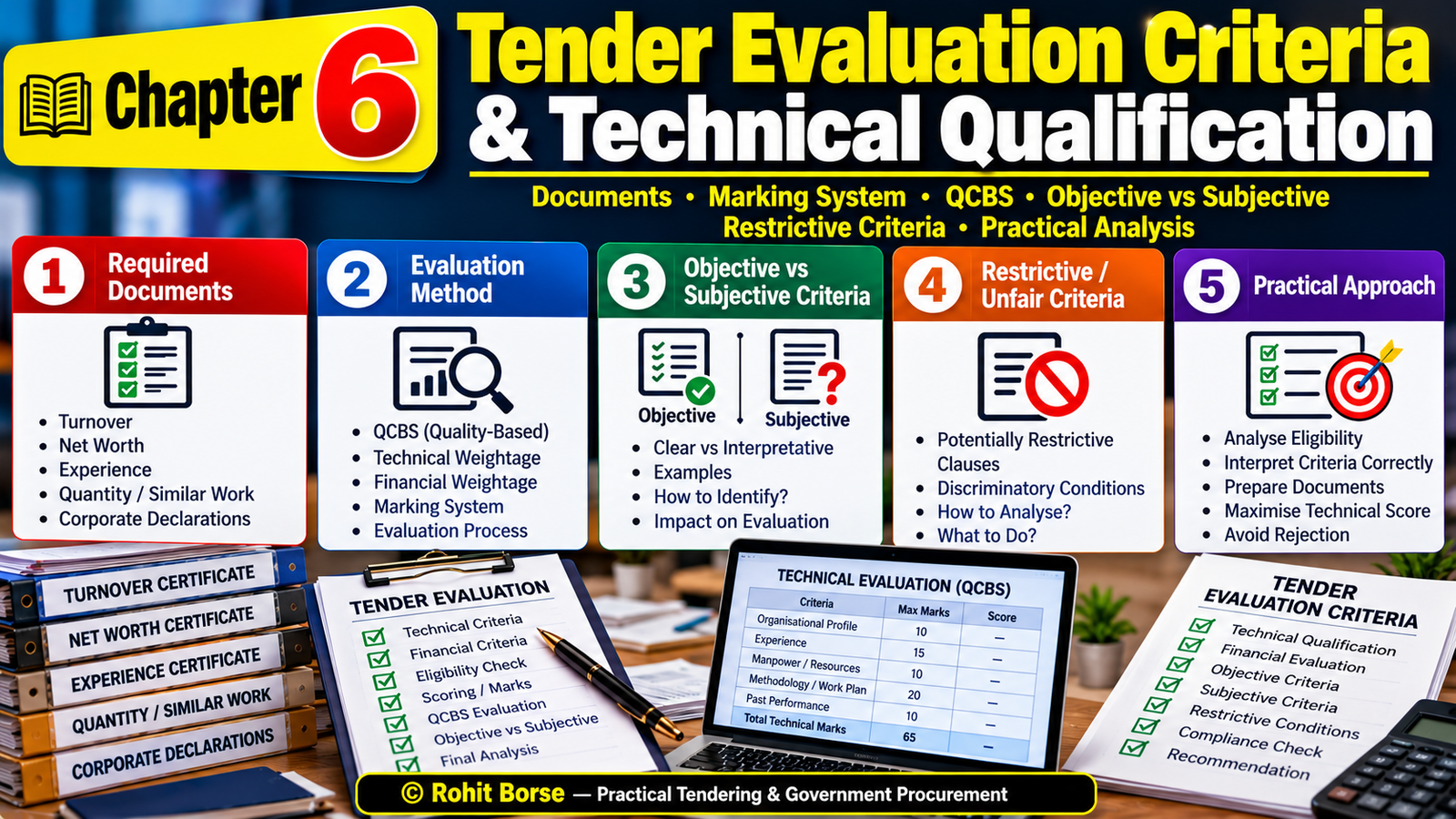
Topic 1 -: Documents, Turnover, Net Worth, Experience, Quantity & Corporate Declarations
Tender मध्ये Technical Bid तयार करताना सर्वात आधी समजून घ्यायची गोष्ट म्हणजे Eligibility म्हणजे फक्त documents ची checklist नाही. Eligibility म्हणजे त्या particular tender मध्ये सहभागी होण्यासाठी department ने bidder समोर ठेवलेल्या पात्रतेच्या सर्व अटींचा एकत्रित संच होय. एखाद्या bidder कडे company registration, GST, PAN, PF, ESIC यांसारखी सर्व basic documents असली तरी तो tender साठी eligible असेलच असे नाही. कारण प्रत्येक tender मध्ये department आपल्या कामाच्या scope, estimated value, risk, manpower requirement, technical complexity, previous experience आणि execution capacity यानुसार additional eligibility conditions ठेवू शकते. त्यामुळे eligibility check करताना “आपल्याकडे documents आहेत का?” एवढे न पाहता “आपण या specific tender च्या प्रत्येक eligibility condition मध्ये बसतो का?” हा मूलभूत प्रश्न विचारला पाहिजे.
1.Basic Corporate & Statutory Documents
Eligibility मध्ये काही documents असे असतात जे अनेक tenders मध्ये वारंवार पाहायला मिळतात. उदाहरणार्थ Certificate of Incorporation / Registration Certificate, PAN, GST Registration, Shop & Establishment किंवा applicable establishment registration, MSME / Udyam / NSIC certificate, Labour Licence किंवा applicable labour registration, EPF / PF registration, ESIC registration आणि tender च्या nature नुसार इतर statutory registrations. प्रत्येक tender मध्ये यातील प्रत्येक document compulsory असेलच असे नाही; मात्र आपल्या company कडे लागू असलेली basic statutory documentation व्यवस्थित maintained असणे हे tendering work साठी अत्यंत महत्त्वाचे आहे.
याकडे आपण Corporate Disclosure / Readiness म्हणून पाहू शकतो. म्हणजे department ने प्रत्येक tender मध्ये एखादा document explicitly मागितला नाही तरी company ची basic legal आणि statutory identity व्यवस्थित documented असणे professional tender participation साठी चांगली practice आहे. उदाहरणार्थ incorporation document company अस्तित्वात असल्याचे दाखवतो, PAN taxation identity दाखवतो, GST applicable असल्यास taxation registration दाखवतो, PF आणि ESIC registrations manpower-related statutory compliance ची क्षमता दाखवतात, तर MSME / NSIC किंवा इतर certificates tender-specific benefits किंवा eligibility conditions साठी relevant ठरू शकतात.
मात्र येथे एक महत्त्वाची सावधगिरी manual मध्ये स्पष्ट लिहिली पाहिजे: “Document available आहे” आणि “Document tender मध्ये acceptable आहे” या दोन वेगळ्या गोष्टी आहेत. Document आहे म्हणून तो प्रत्येक tender मध्ये automatically valid ठरेल असे नाही. Tender मध्ये registration type, validity, issuing authority, date, location, category, applicable activity किंवा इतर specific condition दिलेली असल्यास ती तपासणे आवश्यक आहे. म्हणून प्रत्येक document tender clause शी match करणे आवश्यक आहे.
2.Eligibility Document म्हणजे फक्त Upload करण्याची File नाही
Fresher अनेकदा eligibility check करताना एक common mistake करतो. Tender document उघडतो, “GST Certificate”, “PAN”, “Experience Certificate” अशी documents ची list तयार करतो आणि documents available आहेत की नाही हे पाहतो. ही सुरुवात बरोबर आहे; पण complete eligibility analysis नाही.
उदाहरणार्थ tender मध्ये “valid labour licence” असे लिहिले असेल तर फक्त labour licence ची copy आहे का हे पाहणे पुरेसे नाही. Licence कोणत्या establishment साठी आहे, कोणत्या state/location साठी आहे, किती manpower साठी applicable आहे, tender च्या work nature शी त्याचा संबंध आहे का, tender मध्ये licence submission award नंतर करायचे आहे की bid stage मध्ये, याचा विचार करावा लागतो.
म्हणून प्रत्येक eligibility document साठी मनात एकच पद्धत ठेवावी:
Requirement → Available Document → Validity → Applicability → Tender Clause → Compliance Status
ही पद्धत वापरली तर eligibility check अधिक systematic होते.
3.Turnover Criteria
Eligibility मधील पुढचा मोठा भाग म्हणजे Financial Turnover Criteria. Department ला bidder कडे केवळ registration आहे एवढ्यावर विश्वास ठेवायचा नसतो; त्याला bidder ची financial capacity आणि business scale याबद्दलही खात्री करायची असते. त्यामुळे tender मध्ये मागील काही financial years मधील average annual turnover किंवा specified period मधील turnover requirement दिली जाऊ शकते.
उदाहरणार्थ tender ची estimated value मोठी असल्यास department bidder कडे त्या स्तराचे काम handle करण्याची financial capacity आहे का हे पाहण्यासाठी turnover condition ठेवू शकते. आपल्या practical experience मध्ये tender value च्या तुलनेत turnover requirement विविध प्रकारे ठेवलेली पाहायला मिळू शकते. काही tenders मध्ये tender value च्या आसपासचा turnover, काही ठिकाणी त्याच्या विशिष्ट टक्केवारीतील turnover, तर काही परिस्थितीत त्यापेक्षा जास्त किंवा कमी financial threshold ठेवलेला असू शकतो. त्यामुळे manual मध्ये कोणताही एक percentage हा universal rule म्हणून शिकवायचा नाही.
काही GeM tenders मध्ये tender value च्या तुलनेत turnover requirement विशिष्ट percentage प्रमाणात दिसू शकते. उदाहरणार्थ 33% turnover requirement सारखी condition काही tender structures मध्ये आढळू शकते. काही tenders मध्ये 100% turnover किंवा त्यापेक्षा वेगळा threshold देखील असू शकतो. त्यामुळे fresher ने “GeM मध्ये नेहमी 33% असते” किंवा “turnover नेहमी tender value एवढाच असतो” असा fixed formula मनात ठेवू नये. Actual tender clause is final.
4.Unreasonably High Turnover Requirement ओळखणे
Eligibility analysis मध्ये फक्त आपण eligible आहोत की नाही हे पाहणे पुरेसे नाही. कधी कधी tender ची financial condition ही scope of work च्या तुलनेत disproportionate आहे का, हेदेखील विचारात घ्यावे लागते.
उदाहरणार्थ, समजा एखाद्या tender ची estimated value ₹2 crore आहे आणि bidder कडून ₹20 crore turnover मागितला आहे. अशा वेळी लगेच “ही condition illegal आहे” असा निष्कर्ष काढायचा नाही. प्रथम tender चा actual scope, contract duration, risk, manpower, equipment requirement, previous execution requirement आणि department ची justification यांचा अभ्यास करायचा.
जर turnover requirement कामाच्या nature आणि scale च्या तुलनेत अत्यंत disproportionate वाटत असेल, तर pre-bid clarification / representation च्या माध्यमातून department कडे professional पद्धतीने clarification मागता येते. येथे bidder ने भावनिक किंवा आरोपात्मक language वापरायची नसते. “ही condition unfair आहे” असे सरळ लिहिण्यापेक्षा requirement आणि scope यांच्यातील apparent mismatch स्पष्ट करून department कडून clarification किंवा reconsideration मागणे अधिक योग्य approach आहे.
यासाठी tendering executive ला procurement principles, applicable government instructions, departmental rules आणि relevant CVC / procurement guidance यांचा basic अभ्यास असणे उपयोगी ठरते. कारण एखादी eligibility condition legitimate आहे की unnecessarily restrictive आहे हे समजण्यासाठी comparative understanding आवश्यक असते.
5.Net Worth Criteria
काही tenders मध्ये Net Worth ची condition देखील असू शकते. Net Worth साधारणपणे company च्या financial strength शी संबंधित criterion म्हणून वापरली जाते. Department ला bidder financially stable आहे का आणि त्याच्याकडे contract execute करण्याची आर्थिक क्षमता आहे का याचा एक indicator म्हणून ती condition ठेवता येते.
Tender मध्ये positive net worth अशी condition आढळू शकते किंवा specific financial threshold दिलेला असू शकतो. येथे देखील tender मध्ये कोणत्या financial year च्या audited financial statements किंवा CA-certified documents वर आधारित calculation स्वीकारली जाईल हे पाहणे महत्त्वाचे आहे.
Fresher ने Net Worth, Turnover आणि Profit यांना एकच गोष्ट समजू नये. Turnover म्हणजे business volume; Net Worth म्हणजे financial position; Profit म्हणजे profitability. Tender मध्ये कोणती financial condition मागितली आहे त्यानुसार योग्य document आणि योग्य financial figure वापरली पाहिजे.
6. Experience Criteria – Eligibility मधील सर्वात महत्त्वाचा भाग
Manpower outsourcing, housekeeping, facility management, security, drivers किंवा इतर service contracts मध्ये Experience Criteria हा अनेकदा eligibility मधील सर्वात sensitive भाग असतो.
Department ला केवळ “company अस्तित्वात आहे” हे पुरेसे नसते. त्याला bidder ने पूर्वी similar work successfully execute केले आहे का हे जाणून घ्यायचे असते. कारण tender मिळाल्यानंतर actual execution करण्याची क्षमता document, registration किंवा turnover पेक्षा practical experience वर मोठ्या प्रमाणात अवलंबून असू शकते.
म्हणून experience condition वाचताना फक्त “Experience required” एवढे वाचायचे नाही. Experience of what? For whom? Of what value? For how many works? In which period? At which location? For what quantity? हे सर्व प्रश्न विचारायचे.
7. Experience Based on Percentage of Tender Value
एक common structure म्हणजे previous completed work ची value ही current tender value च्या विशिष्ट percentage इतकी असावी अशी condition.
उदाहरणार्थ, tender मध्ये खालीलप्रमाणे structure असू शकते:
Three similar completed works – each of minimum 40% of estimated tender value;
OR
Two similar completed works – each of minimum 50%;
OR
One similar completed work – minimum 80% of estimated tender value.
अशा प्रकारची experience structure विविध procurement conditions मध्ये पाहायला मिळते. मात्र प्रत्येक tender मध्ये percentages आणि number of works बदलू शकतात. म्हणून हे percentages illustrative practical pattern म्हणून समजायचे, universal rule म्हणून नाही.
यात एक महत्त्वाचा analytical point आहे: bidder कडे एक मोठे काम आहे म्हणून तो प्रत्येक experience condition मध्ये eligible होईलच असे नाही. Tender ने जर specifically “two works” मागितले असतील तर एका मोठ्या work certificate ने condition पूर्ण होते का हे tender wording वर अवलंबून असेल.
त्याचप्रमाणे “similar work” हा शब्द अत्यंत महत्त्वाचा आहे. फक्त work value match झाली म्हणून experience automatically similar होत नाही. Scope of work देखील compare करावा लागतो.
8.Similar Work म्हणजे नेमके काय?
हा भाग fresher साठी विशेष महत्त्वाचा आहे. Tender मध्ये “similar work” किंवा “similar nature of work” असे लिहिले असल्यास त्याचा अर्थ प्रत्येक tender मध्ये वेगळ्या प्रकारे define केला जाऊ शकतो.
उदाहरणार्थ housekeeping manpower tender मध्ये पूर्वीचा housekeeping manpower contract relevant असू शकतो; परंतु फक्त general manpower supply contract समान आहे का हे tender च्या definition वर अवलंबून राहील.
म्हणून experience certificate पाहताना खालील गोष्टी compare कराव्यात:
Previous Work Scope + Current Tender Scope + Manpower Category + Contract Nature + Value + Duration + Client/Department + Location + Completion Status
हे comparison केल्याशिवाय “experience आहे” असे assume करणे धोकादायक आहे.
9.Location-Based Experience
Experience condition चा दुसरा प्रकार म्हणजे Location-Based Experience.
उदाहरणार्थ department असे सांगू शकते की bidder ने specific state, city, district, government establishment किंवा particular type of location मध्ये काम केलेले असावे.
अशा वेळी bidder कडे मोठ्या value चे काम असले तरी ते required location मध्ये झालेले नसेल तर eligibility वर परिणाम होऊ शकतो.
म्हणून experience certificate वाचताना फक्त client चे नाव आणि work value पाहू नका. Work location कुठे आहे? हा प्रश्नही तितकाच महत्त्वाचा आहे.
काही वेळा location condition technical bid मध्ये नसते. ती eligibility section, special conditions, scope, additional conditions किंवा दुसऱ्या भागात दिलेली असू शकते. म्हणून पुन्हा एकदा tender पूर्ण वाचण्याचे महत्त्व येथे सिद्ध होते.
10.Time-Based Experience
काही tenders मध्ये experience साठी time period देखील निश्चित केलेला असतो.
उदाहरणार्थ bidder कडे मागील तीन वर्षांतील, मागील पाच वर्षांतील किंवा specified period मधील similar work experience असणे आवश्यक असू शकते.
अशा वेळी जुना experience certificate company कडे असला तरी तो automatically acceptable असेल असे नाही. Tender मध्ये दिलेला cut-off period, financial year किंवा completion date तपासावी लागते.
म्हणून experience document तपासताना:
Work Date → Start Date → Completion Date → Tender Cut-off Date
यांचा संबंध पाहणे अत्यंत महत्त्वाचे आहे.
11.Quantity-Based Experience
Experience फक्त monetary value वर आधारित असेलच असे नाही. काही manpower/service tenders मध्ये Quantity-Based Experience मागितला जाऊ शकतो.
उदाहरणार्थ tender मध्ये 100 drivers required असतील आणि bidder ने पूर्वी किमान 100 drivers supply किंवा deploy केले असल्याचा experience दाखवणे अपेक्षित असू शकते.
याचा उद्देश स्पष्ट आहे: ₹2 crore चे काम केले आहे म्हणून bidder ने necessarily 100 किंवा 200 manpower simultaneously manage केले आहेत असे सिद्ध होत नाही. Department ला actual deployment capacity verify करायची असल्यास quantity-based experience उपयोगी ठरतो.
म्हणून experience certificate मध्ये number of manpower, category, deployment period आणि nature of service यांचा उल्लेख आहे का हे पाहणे आवश्यक आहे.
12.Experience Certificate चे Deep Verification
Experience criterion पूर्ण करण्यासाठी certificate upload करणे ही फक्त formal process नाही. Certificate मध्ये tender requirement शी संबंधित आवश्यक information आहे का हे पाहणे गरजेचे आहे.
उदाहरणार्थ tender मध्ये completed work मागितले असेल आणि certificate मध्ये फक्त “work awarded” किंवा “work undertaken” असा उल्लेख असेल तर त्यातून completion स्पष्ट होते का हे तपासावे लागेल.
त्याचप्रमाणे work value, duration, nature of work, location, manpower quantity, client authority आणि completion status यापैकी कोणती माहिती tender मध्ये आवश्यक आहे ते पाहावे.
Tender requirement → Experience certificate wording → Supporting document
हा connection clear नसल्यास bid submission पूर्वी senior कडे clarification घ्यावी.
13.Declaration आणि Non-Blacklisting
Eligibility मध्ये Declaration हा छोटा दिसणारा पण practical दृष्ट्या महत्त्वाचा भाग आहे.
उदाहरणार्थ bidder कडून company blacklisted नाही, tender मधील सर्व terms and conditions मान्य आहेत, information furnished is true and correct, company has not been debarred इत्यादी declarations मागितल्या जाऊ शकतात.
कधी कधी tender मध्ये specific declaration format दिलेला असतो. अशा वेळी स्वतःचा format तयार करण्याऐवजी department ने दिलेला format वापरणे अधिक सुरक्षित असते.
काही वेळा specific declaration स्पष्टपणे technical bid checklist मध्ये नसली तरी tender च्या दुसऱ्या section मध्ये ती requirement दिलेली असू शकते. त्यामुळे complete tender reading आवश्यक आहे.
14.Declaration म्हणजे फक्त Formality नाही
काही नवीन tender executives declaration ला “एक साधा paper” समजतात. हा approach चुकीचा आहे.
Declaration वर authorised person ची signature, company seal/stamp, date, letterhead किंवा notarization याबाबत tender मध्ये specific requirement असल्यास ती पूर्ण करावी लागते. चुकीचा format, चुकीचे wording किंवा signature requirement पूर्ण न केल्यामुळे technical issue निर्माण होऊ शकतो.
त्यामुळे प्रत्येक declaration साठी Who will sign? On which letterhead? Notarized or not? Stamp required? Date required? Specific format? हे तपासले पाहिजे.
15.General Declaration – Corporate Etiquette
काही परिस्थितीत tender मध्ये specific declaration नसले तरी company कडून सामान्य स्वरूपाची Non-Blacklisting / Compliance Declaration attach करणे corporate documentation च्या दृष्टीने चांगली practice ठरू शकते—मात्र tender requirement शी conflict होणार नाही आणि additional document स्वीकारण्याबाबत tender मध्ये restriction नसेल याची खात्री करणे आवश्यक आहे.
याचा उद्देश केवळ eligibility पूर्ण करणे नाही. Company आपली documentation discipline, transparency आणि professional approach दाखवत असते. योग्य प्रकारे तयार केलेली declaration company च्या corporate credibility ला support करू शकते.
पण येथे एक महत्त्वाची गोष्ट: Extra document जोडणे म्हणजे tender requirement automatically पूर्ण झाली असे नाही. Department ने specific declaration मागितली असेल तर ती specific declaration स्वतंत्रपणे पूर्ण करावीच लागते.
16.Eligibility Analysis करताना Fresher ने कोणती मानसिकता ठेवावी?
Eligibility check करताना “आपल्याकडे काय आहे?” यापेक्षा “Tender मध्ये काय मागितले आहे आणि त्याचा पुरावा म्हणून आपण नेमके काय दाखवणार आहोत?” हा विचार करायचा.
Tender executive ने प्रत्येक condition ला स्वतःशी एक छोटा संवाद करावा:
“ही condition काय मागते?”
“आपण त्यात बसतो का?”
“आपल्याकडे त्याचा documentary proof आहे का?”
“तो proof valid आहे का?”
“तो tender च्या required period मध्ये येतो का?”
“Certificate वर required wording आहे का?”
“काही supporting document लागेल का?”
“ही condition technical bid मध्ये कुठे submit करायची आहे?”
“याबाबत senior confirmation आवश्यक आहे का?”
अशा पद्धतीने विचार केल्यास eligibility हा केवळ checklist न राहता पूर्ण analytical process बनतो.
18. Eligibility वर Final GO / NO-GO
शेवटी eligibility analysis चा उद्देश एकच आहे—Tender भरायचा की नाही याबाबत योग्य निर्णय घेणे.
Company technically eligible आहे, financial criteria पूर्ण करते, required experience उपलब्ध आहे, location/quantity/time conditions पूर्ण होतात, statutory documents available आहेत आणि execution practically possible आहे, तर tender पुढे GO करू शकतो.
पण एखादी major mandatory eligibility condition पूर्ण होत नसेल आणि ती tender मध्ये स्पष्टपणे compulsory असेल, तर फक्त “बाकी सर्व documents आहेत” म्हणून tender भरू नये.
त्याचप्रमाणे एखाद्या condition बाबत ambiguity असेल तर स्वतःहून assumption करण्यापेक्षा pre-bid clarification / senior management discussion / department clarification यापैकी योग्य मार्ग वापरावा.
यातून एक महत्त्वाचा principle लक्षात ठेवायचा:
Eligibility म्हणजे documents जमा करण्याची प्रक्रिया नाही; Eligibility म्हणजे tender च्या प्रत्येक mandatory condition समोर आपल्या company ची वास्तविक पात्रता आणि तिचा documentary proof सिद्ध करण्याची प्रक्रिया आहे.
आणि आपल्या tendering methodology मध्ये याच कारणामुळे आपण सुरुवातीपासून सांगतो—Tender एकदा नाही, अनेकदा वाचा. कारण पहिल्या reading मध्ये आपण scope पाहतो, दुसऱ्या reading मध्ये eligibility दिसते, पुढच्या reading मध्ये hidden requirements दिसतात आणि अनुभव वाढल्यानंतर त्याच clause मधून execution risk, departmental expectation आणि संभाव्य problem areas देखील दिसायला लागतात.
हा chapter पुढे “Eligibility Matrix कशी बनवायची, Experience Certificate कसे verify करायचे आणि Tender Eligibility ला Exact GO/NO-GO मध्ये कसे convert करायचे” या practical भागाने जोडता येईल.
——————————————————————————————————————————————————————————-
Topic 2 -: QCBS / Quality-Based Technical Evaluation आणि Marking System
सर्व tenders एकाच पद्धतीने evaluate केले जात नाहीत. अनेक सामान्य tenders मध्ये technical bid चा मुख्य उद्देश bidder prescribed eligibility आणि mandatory technical conditions पूर्ण करतो की नाही हे पाहणे असतो. अशा परिस्थितीत technical evaluation अनेकदा Pass/Fail स्वरूपात असते. म्हणजे bidder ने required documents, experience, turnover, statutory requirements आणि इतर conditions पूर्ण केल्या तर तो technically qualified होतो आणि त्याची financial bid पुढे evaluate केली जाते. परंतु काही मोठ्या, technically complex किंवा quality-sensitive assignments मध्ये department ला केवळ “bidder eligible आहे की नाही” एवढे पाहायचे नसते; eligible bidders पैकी कोणाचा technical proposal अधिक मजबूत आहे हे देखील मोजायचे असते. अशा वेळी technical proposal ला marks दिले जाऊ शकतात आणि prescribed scoring methodology वापरली जाते. QCBS ही quality आणि cost या दोन्ही घटकांचा विचार करणारी selection method आहे.
येथे fresher ने सर्वात आधी एक फरक समजून घेतला पाहिजे—Technical Eligibility आणि Technical Scoring या दोन वेगळ्या गोष्टी आहेत. उदाहरणार्थ tender मध्ये “bidder should have minimum ₹2 crore annual turnover” असे लिहिले असेल, तर हा एक eligibility threshold असू शकतो. म्हणजे ₹2 crore पेक्षा कमी turnover असलेला bidder technically eligibleच होणार नाही. पण त्याच tender मध्ये पुढे technical evaluation च्या marking section मध्ये “₹2 crore turnover = 10 marks, ₹5 crore = 15 marks, ₹10 crore = 20 marks” असे दिले असेल, तर आता turnover केवळ eligibility तपासण्यासाठी वापरलेला नसून quality/technical evaluation मध्ये comparative scoring करण्यासाठीही वापरला जात आहे. त्यामुळे bidder कडे ₹2 crore turnover असल्यामुळे तो automatically ₹10 marks घेईल; पण दुसऱ्या bidder कडे ₹10 crore turnover असल्यास त्याला त्या criterion मध्ये 20 marks मिळू शकतात. हा फरक tender executive ने अत्यंत काळजीपूर्वक समजून घेतला पाहिजे.
यामुळे Technical Bid वाचताना फक्त “Required Documents” section वाचून थांबायचे नाही. Technical Evaluation / Evaluation Criteria / Qualification Criteria / Scoring Criteria / QCBS / Technical Score / Marks Distribution अशा sections स्वतंत्रपणे शोधायचे असतात. कारण काही tender documents मध्ये eligibility एका section मध्ये असते आणि त्याच eligibility चा scoring impact दुसऱ्या section मध्ये दिलेला असतो. आपल्याला bidder म्हणून दोन्ही जोडून पाहावे लागते.
1.Minimum Qualifying Technical Marks
समजा tender मध्ये technical evaluation 100 marks ची आहे आणि department ने स्पष्ट केले आहे की technical stage मध्ये qualify होण्यासाठी किमान 70 marks आवश्यक आहेत. अशा वेळी bidder ने mandatory documents submit केले असले तरी त्याची technical score 70 पेक्षा कमी आली तर तो पुढच्या stage मध्ये जाऊ शकत नाही.
उदाहरणार्थ:
Bidder A – 82 marks → Technically Qualified
Bidder B – 74 marks → Technically Qualified
Bidder C – 68 marks → Technically Disqualified
येथे Bidder C कडे tender मध्ये मागितलेले सर्व basic documents असले तरी त्याचा final technical score minimum qualifying benchmark पेक्षा कमी असल्यामुळे तो पुढे जाऊ शकत नाही.
Government procurement guidance मध्ये QCBS साठी technical quality चा minimum qualifying benchmark tender document मध्ये स्पष्टपणे देण्याची अपेक्षा आहे; साधारणपणे 70–80 marks out of 100 हा benchmark वापरला जाऊ शकतो, मात्र actual tender मध्ये दिलेली condition अंतिम असते.
म्हणून fresher ने एक अत्यंत महत्त्वाची सवय लावून घ्यावी:
“Eligibility मध्ये बसतो का?” हा पहिला प्रश्न.
“Technical marks किती मिळतील?” हा दुसरा प्रश्न.
आणि
“Qualifying benchmark किती आहे?” हा तिसरा प्रश्न.
ही तीनही उत्तरे मिळाल्याशिवाय technical position पूर्ण समजलेली नाही.
Marks Distribution कसे वाचायचे?
Technical scoring section मध्ये department वेगवेगळ्या parameters साठी marks देऊ शकते. उदाहरणार्थ एक काल्पनिक structure असा असू शकतो:
Turnover – 20 Marks
Similar Experience – 25 Marks
Manpower Deployment Experience – 15 Marks
Technical Methodology – 20 Marks
Presentation – 10 Marks
Other Relevant Criteria – 10 Marks
Total – 100 Marks
आता bidder ने प्रत्येक criterion independently analyse करायचा. “आपण eligible आहोत” एवढ्यावर समाधान मानायचे नाही. प्रत्येक criterion मध्ये आपल्याला किती marks मिळू शकतात? हे आधीच अंदाजाने calculate करायचे.
यामुळे technical bid preparation ही फक्त document collection राहत नाही; ती technical score maximisation ची preparation बनते.
Eligibility Threshold आणि Scoring Threshold एकाच tender मध्ये असू शकतात
हा भाग manual मध्ये विशेष bold करून सांगण्यासारखा आहे.
समजा tender मध्ये:
Minimum turnover required – ₹2 crore.
आणि पुढे:
| Tender Value | Marks |
| ₹2 Crore | 10 Marks |
| ₹5 Crore | 15 Marks |
| ₹10 Crore and Above | 20 Marks |
तर ₹2 crore हा entry threshold आहे, तर 10/15/20 marks हा comparative technical scoring आहे.
याचा अर्थ ₹1.90 crore turnover असलेली company technically eligibleच होणार नाही; परंतु ₹2 crore turnover असलेली company eligible असूनही त्या criterion मध्ये maximum marks मिळवणार नाही.
याच पद्धतीने experience साठीही scoring असू शकते. उदाहरणार्थ minimum one similar work required असू शकतो, पण तीन किंवा अधिक similar works असलेल्या bidder ला additional technical marks दिले जाऊ शकतात.
म्हणून minimum eligibility आणि competitive technical strength यांची तुलना करणे अत्यंत आवश्यक आहे.
QCBS मध्ये “Eligible” असणे पुरेसे नसते
ही QCBS ची सर्वात महत्त्वाची practical learning आहे.
साध्या L1-oriented tender मध्ये technical eligibility पूर्ण करून financial bid मध्ये competitive price देणे हा मुख्य game असतो. पण QCBS मध्ये situation वेगळी असते. येथे bidder technically eligible असूनही दुसऱ्या bidder पेक्षा कमी technical marks मिळवू शकतो.
उदाहरणार्थ:
Bidder A – Technical: 85
Bidder B – Technical: 74
दोघेही technically qualified आहेत. पण जर tender मध्ये technical quality ला significant weightage असेल तर Bidder A ला final combined evaluation मध्ये advantage मिळू शकतो.
म्हणून QCBS tender पाहताना फक्त:
“आपण tender भरू शकतो का?”
एवढे न विचारता:
“आपण technically किती strong score करू शकतो?”
हा प्रश्न विचारणे आवश्यक आहे.
Technical Marks मिळवण्यासाठी Documents कसे तयार करायचे?
QCBS tender मध्ये प्रत्येक supporting document हा संभाव्य score शी जोडून पाहायचा.
उदाहरणार्थ tender मध्ये previous experience साठी 20 marks असतील आणि specific number/value/location/time period नुसार marks दिले असतील, तर experience certificates तयार करताना फक्त certificate आहे का हे पाहायचे नाही. त्यात scoring criterion सिद्ध करणारी माहिती आहे का हे पाहायचे.
उदाहरणार्थ department म्हणत असेल:
Similar work of ₹2 crore – 5 marks
₹5 crore – 10 marks
₹10 crore – 15 marks
तर certificate मध्ये work value स्पष्ट दिसत नसेल तर bidder कडे प्रत्यक्षात मोठा experience असूनही evaluation committee ला required score देण्यासाठी documentary basis मिळणार नाही.
म्हणून QCBS मध्ये एक practical rule:
“जे marks मध्ये मोजले जाणार आहे, त्याचा documentary proof स्पष्ट आणि evaluation-friendly स्वरूपात उपलब्ध असला पाहिजे.”
2.Technical Presentation / Methodology यासारखे Subjective Areas
काही QCBS tenders मध्ये marks केवळ turnover किंवा experience सारख्या objective figures वर नसतात. Methodology, approach, work plan, manpower deployment plan, quality assurance, presentation, understanding of assignment यांसारख्या areas वरही marks असू शकतात.
येथे tender executive ने विशेष काळजी घ्यावी कारण अशा criteria मध्ये documentation ची quality आणि presentation चा परिणाम होऊ शकतो. Government procurement guidance देखील technical scoring शक्य तितकी objective आणि स्पष्ट असावी, subjective interpretation साठी ambiguity कमी असावी, असे सांगते.
म्हणून tender मध्ये methodology किंवा presentation ला marks असल्यास ते “एक formal document” म्हणून तयार करू नये. Tender च्या scope, objectives, manpower, execution methodology, monitoring, reporting आणि quality requirements यांच्याशी जोडलेले उत्तर तयार करणे आवश्यक आहे.
QCBS मध्ये Technical Score आणि Financial Score
QCBS मध्ये technical evaluation नंतर financial component देखील final selection मध्ये येतो. Government procurement manuals मध्ये technical आणि financial scores ला tender मध्ये घोषित केलेल्या weightages नुसार combine केले जाते आणि highest combined score असलेला bidder final ranking मध्ये वर येतो.
उदाहरणार्थ एखाद्या tender मध्ये:
Technical Weightage – 70%
Financial Weightage – 30%
असे घोषित केले असेल, तर technical आणि financial scores थेट raw marks म्हणून जोडले जात नाहीत. ते prescribed method ने normalize करून weightage लागू केले जातात.
याचा practical अर्थ असा:
सर्वात कमी price देणारा bidder = नेहमीच final winner असेल असे नाही.
आणि त्याचप्रमाणे:
सर्वात जास्त technical marks मिळवणारा bidder = नेहमीच final winner असेल असेही नाही.
दोन्ही components चा combined result महत्त्वाचा असतो.
एक साधे Practical Example
समजा तीन bidders आहेत:
| Bidder | Technical Score | Financial Score | Final Result |
| A | 90 | 75 | Weightage नुसार calculate |
| B | 80 | 95 | Weightage नुसार calculate |
| C | 72 | 100 | Weightage नुसार calculate |
जर technical ला 70% आणि financial ला 30% weightage असेल, तर Bidder A चा technical advantage मोठा आहे; Bidder C चा price advantage मोठा आहे. Final H-1 कोण असेल हे raw technical किंवा raw financial score पाहून ठरवता येत नाही; declared QCBS formula लागू केल्यानंतरच final ranking कळते.
यामुळे tender executive ने financial bid तयार करण्यापूर्वीच technical score चा संभाव्य परिणाम समजून घेतला पाहिजे.
3. QCBS Tender वाचताना विशेष सावधगिरी
QCBS tender मध्ये आपण विशेषतः हे शोधायचे:
Technical eligibility criteria कुठे आहे?
Technical evaluation criteria कुठे आहे?
Total technical marks किती आहेत?
Minimum qualifying technical marks किती आहेत?
प्रत्येक criterion ला किती marks आहेत?
Marks objective आहेत की subjective?
Turnover ला marks आहेत का?
Experience ला marks आहेत का?
Quantity/location/time experience ला वेगवेगळे marks आहेत का?
Presentation किंवा methodology ला marks आहेत का?
Technical आणि financial weightage किती आहे?
Financial score कसा calculate होणार आहे?
Tie झाल्यास काय provision आहे?
Technical qualifying bidder ची financial bid कधी उघडली जाईल?
या सर्व प्रश्नांची उत्तरे मिळाल्यावरच QCBS tender ची वास्तविक competitive position समजते.
आपल्या Manual मध्ये यानंतर आणखी एक महत्त्वाचा topic घेऊया:
“Tender Evaluation Criteria मध्ये Objective vs Subjective Conditions आणि Potentially Restrictive / Unfair Criteria कसे ओळखायचे?”
——————————————————————————————————————————————————————————-
Topic – 3 Tender Evaluation Criteria मध्ये Objective vs Subjective Conditions आणि Potentially Restrictive / Unfair Criteria कसे ओळखायचे?
Tender वाचताना Eligibility Criteria, Technical Evaluation Criteria आणि Qualification Conditions समजून घेणे ही एक गोष्ट आहे; पण त्यामधील प्रत्येक condition कशा प्रकारची आहे, ती objectively verify करता येते का, की तिच्यामध्ये interpretation ला मोठी जागा आहे, आणि ती condition competition अनावश्यकपणे restrict तर करत नाही ना, हे ओळखणे ही त्यापेक्षा पुढची आणि अधिक महत्त्वाची skill आहे.
Tendering मध्ये एखादी condition पाहिली आणि फक्त “आपण ही condition पूर्ण करतो / करत नाही” एवढ्यावर analysis थांबवणे योग्य नाही. एक experienced tender executive असा विचार करतो की ही condition का ठेवली आहे? ती work requirement शी proportionate आहे का? ती सर्व bidders साठी समानपणे लागू आहे का? तिचे measurement किंवा verification स्पष्ट आहे का? आणि ती condition genuine qualification तपासते आहे की अनावश्यकपणे bidder pool कमी करते आहे?
याच विचारपद्धतीला आपण Tender Evaluation Criteria Analysis म्हणू शकतो.
1.Objective Condition म्हणजे काय?
Objective Condition म्हणजे अशी tender condition जी उपलब्ध documents, records किंवा निश्चित criteria यांच्या आधारे तुलनेने स्पष्टपणे verify करता येते.
उदाहरणार्थ tender मध्ये लिहिले आहे की bidder कडे मागील तीन financial years मध्ये किमान ₹2 crore average annual turnover असावा.
इथे verification करण्यासाठी स्पष्ट आधार उपलब्ध आहे—audited financial statements, CA certificate, ITR किंवा tender मध्ये मागितलेला संबंधित financial document.
म्हणजे evaluator ला “हा bidder ₹2 crore turnover criterion पूर्ण करतो का?” हा प्रश्न विचारला असता त्याचे उत्तर उपलब्ध documentary evidence वरून हो किंवा नाही अशा स्वरूपात ठरवता येते.
याचप्रमाणे:
“Bidder shall have minimum 5 years of experience.”
“Bidder shall have completed at least two similar works.”
“Bidder shall possess valid GST registration.”
“Bidder shall have valid EPF and ESI registrations wherever applicable.”
या conditions च्या verification साठी साधारणपणे documentary evidence उपलब्ध असते.
म्हणून अशा conditions ला broadly objective conditions म्हणता येते.
2.Objective Condition मध्ये Tender Executive ने काय पाहावे?
Objective condition दिसली म्हणजे ती blindly accept करायची असे नाही.
प्रत्येक condition साठी स्वतःला काही प्रश्न विचारायचे.
Condition exactly काय मागते आहे?
ती कोणत्या document ने prove करायची आहे?
Document ची validity कोणत्या date ला असावी?
Requirement पूर्ण करण्यासाठी tender मध्ये दिलेला period कोणता आहे?
Condition tender च्या scope शी संबंधित आहे का?
त्याच condition ची दुसऱ्या section मध्ये वेगळी definition तर नाही ना?
उदाहरणार्थ एका tender मध्ये “similar work” अशी condition आहे.
Technical eligibility मध्ये फक्त:
Experience in similar work.
असे लिहिले असेल, तर लगेच स्वतःला विचारायचे—similar work म्हणजे exactly काय?
जर पुढच्या section मध्ये similar work ची definition दिली असेल की:
Housekeeping manpower supply in government/semi-government organisation for minimum 100 personnel.
तर आता condition objectively analyse करता येते.
पण जर similar work ची definitionच स्पष्ट नसेल आणि evaluator ला प्रत्येक bidder साठी वेगवेगळ्या interpretation ची शक्यता असेल, तर ती condition अधिक काळजीपूर्वक वाचावी लागते.
इथेच objective आणि subjective interpretation मधला फरक सुरू होतो.
3. Subjective Condition म्हणजे काय?
Subjective Condition म्हणजे अशी condition ज्यामध्ये evaluation करताना evaluator च्या interpretation, judgement किंवा opinion ला तुलनेने जास्त जागा असते.
उदाहरणार्थ:
“Bidder should have adequate experience and capability to execute the work satisfactorily.”
इथे “adequate experience” म्हणजे किती?
3 years?
5 years?
10 years?
₹1 crore experience?
₹10 crore experience?
याची स्पष्ट measurement नसल्यास bidder ला स्वतःची eligibility समजणे कठीण होते.
तसेच evaluator कडेही interpretation ची मोठी space राहते.
दुसरे उदाहरण:
“The bidder should have sufficient infrastructure.”
Sufficient infrastructure म्हणजे नेमके काय?
किती equipment?
किती manpower?
किती vehicles?
किती offices?
याचे measurable parameters दिले नसतील तर condition subjective होते.
4.Subjective Condition म्हणजे ती आपोआप चुकीची आहे का?
नाही. हा अत्यंत महत्त्वाचा मुद्दा आहे.
Subjective element आहे म्हणून condition illegal किंवा unfair आहे असे लगेच म्हणायचे नाही.
काही works मध्ये qualitative assessment आवश्यक असू शकते.
विशेषतः मोठ्या किंवा technically complex procurement मध्ये bidder ची technical capability, methodology, presentation, quality approach, project understanding इत्यादींचे evaluation आवश्यक असू शकते.
परंतु अशा वेळी tender document मध्ये evaluation methodology, marking criteria, parameters आणि qualifying threshold शक्य तितक्या स्पष्टपणे दिलेले असणे महत्त्वाचे ठरते.
म्हणजे evaluator ला judgement वापरायची गरज असली तरी bidder ला “मला कोणत्या आधारावर evaluate केले जाणार आहे?” हे आधीपासून समजले पाहिजे.
5.Objective vs Subjective — Practical Difference
समजा दोन tender conditions आहेत.
Condition A:
Bidder should have completed at least three similar works during the last five years, each having value of not less than ₹50 lakh.
ही condition तुलनेने objective आहे.
कारण:
- किती works — 3
- कोणत्या period मध्ये — 5 years
- प्रत्येक work ची value — ₹50 lakh
- similar work ची definition — tender मध्ये असेल तर आणखी स्पष्ट
यामुळे bidder स्वतःची eligibility तपासू शकतो.
Condition B:
Bidder should possess extensive experience in similar works and adequate capability to undertake the proposed assignment.
इथे:
Extensive म्हणजे किती?
Adequate म्हणजे किती?
Capability कशी measure होणार?
हे स्पष्ट नसल्यास condition subjective interpretation कडे जाते.
6.Evaluation Criteria आणि Eligibility Criteria एकच नसतात
हा फरक manual मध्ये विशेष लक्षात ठेवायचा आहे.
Eligibility Criteria साधारणपणे सांगते:
“Bidder या tender मध्ये participate करण्यास qualified आहे का?”
तर Evaluation Criteria सांगते:
“Qualified bidders मधून technical किंवा quality basis वर evaluation कसे केले जाईल?”
उदाहरणार्थ:
Tender मध्ये minimum turnover ₹2 crore आहे.
हा eligibility criterion असू शकतो.
पण पुढे QCBS marking मध्ये:
₹2 crore turnover = 10 marks
₹5 crore turnover = 15 marks
₹10 crore turnover = 20 marks
असे दिले असल्यास turnover आता evaluation parameter म्हणूनही वापरला जात आहे.
म्हणून tender वाचताना एकच condition वेगवेगळ्या sections मध्ये कोणत्या purpose साठी वापरली आहे हे समजून घेणे गरजेचे आहे.
7.QCBS मध्ये Objective आणि Subjective Evaluation
मोठ्या tenders मध्ये Quality and Cost Based Selection (QCBS) सारखी methodology वापरली जाऊ शकते.
इथे technical proposal ला marks दिले जाऊ शकतात.
उदाहरणार्थ:
Technical Score — 70 marks
Financial Score — 30 marks
Technical section मध्ये:
Experience — 20 marks
Turnover — 15 marks
Manpower strength — 10 marks
Methodology — 15 marks
Presentation — 10 marks
अशा प्रकारे evaluation होते.
यामध्ये काही parameters objective असतात.
उदाहरणार्थ:
Turnover:
₹2 crore = 10 marks
₹5 crore = 15 marks
₹10 crore = 20 marks
तर काही parameters अधिक qualitative असू शकतात.
उदाहरणार्थ:
Methodology / Approach
Poor = 2 marks
Average = 5 marks
Good = 8 marks
Excellent = 10 marks
इथे evaluator चा judgement येतो.
म्हणून अशा section मध्ये आपण फक्त “marks किती आहेत?” एवढे पाहायचे नाही.
आपण हे पाहायचे:
Marks कोणत्या basis वर दिले जाणार आहेत?
प्रत्येक level ची definition आहे का?
70 marks qualification threshold आहे का?
Technical score कमी पडल्यास financial bid उघडली जाणार नाही का?
एका parameter ला disproportionate weightage दिले आहे का?
ही पूर्ण evaluation structure समजून घ्यायची.
8. Potentially Restrictive Condition म्हणजे काय?
Tender मध्ये काही conditions genuine qualification साठी आवश्यक असू शकतात.
पण काही वेळा एखादी condition competition unnecessarily restrict करू शकते.
अशा condition ला broadly potentially restrictive condition म्हणून identify करता येते.
इथे “potentially” हा शब्द महत्त्वाचा आहे.
Tender executive ने लगेच असा निष्कर्ष काढायचा नाही की:
“ही condition चुकीची आहे.”
त्याऐवजी विचार करायचा:
“ही condition work requirement शी proportionate आहे का आणि तिचा objective काय आहे?”
9. Restrictive Condition ओळखण्यासाठी Practical Thinking
समजा tender value ₹2 crore आहे.
Tender मध्ये bidder साठी:
Minimum average annual turnover ₹20 crore.
अशी condition आहे.
आता ही condition पाहून फक्त “आपण eligible नाही” असे म्हणायचे नाही.
पहिला प्रश्न:
₹20 crore turnover ची requirement या ₹2 crore work साठी का आवश्यक आहे?
दुसरा:
Scope इतका complex आहे का की ₹20 crore financial capacity आवश्यक आहे?
तिसरा:
यापेक्षा कमी turnover असलेली पण technically competent company हे काम करू शकत नाही का?
चौथा:
Department ने ही requirement justify करण्यासाठी tender document मध्ये काही reasoning दिली आहे का?
पाचवा:
ही condition competition कमी करण्याची शक्यता निर्माण करते का?
यानंतरच पुढील analysis करायचा.
10.Experience Criteria मध्ये Restrictiveness कशी तपासायची?
Experience हा सर्वात महत्त्वाचा आणि संवेदनशील eligibility area असतो.
उदाहरणार्थ tender मध्ये ₹5 crore च्या work साठी:
Bidder must have completed three works of exactly ₹5 crore each for the same department.
अशी condition असेल तर तिचे analysis करणे आवश्यक आहे.
कारण:
“same department” का?
जर bidder ने दुसऱ्या government department मध्ये त्याच nature चे ₹10 crore चे काम केले असेल, तर तो technically incapable आहे का?
हा प्रश्न विचारता येतो.
कधी department ला genuinely specific experience आवश्यक असू शकतो.
उदा. अत्यंत specialised system, specialised equipment, security-sensitive installation किंवा location-specific statutory requirement.
परंतु प्रत्येक tender मध्ये “same department experience” आवश्यकच असते असे गृहीत धरायचे नाही.
Requirement आणि restriction यांच्यातील proportionality तपासायची.
11.Location-Based Experience
समजा tender Nashik मध्ये आहे.
Condition:
Bidder must have completed similar work only within Nashik Municipal Corporation limits.
आता bidder ने Pune, Mumbai, Nagpur आणि Aurangabad येथे identical government housekeeping works successfully केले असतील, तरी तो फक्त Nashik location experience नसल्यामुळे disqualify होणार असेल तर condition चा purpose समजून घ्यायचा.
Department चा genuine operational reason आहे का?
Location-specific difficulty आहे का?
Special local regulation आहे का?
Emergency response requirement आहे का?
की similar work anywhere in India चालू शकले असते?
हा analysis pre-bid stage मध्ये महत्त्वाचा ठरू शकतो.
12. Brand-Specific किंवा Manufacturer-Specific Conditions
Technical specifications मध्ये हा एक महत्त्वाचा red flag असू शकतो.
उदाहरणार्थ:
Equipment should be of Brand X only.
आता प्रश्न:
Brand X का?
जर technical requirement specific performance parameters मध्ये define करता येत असेल, तर फक्त एका brand वर specification आधारित ठेवण्यामागे justification काय आहे हे तपासता येते.
काही परिस्थितीत proprietary / compatibility / standardisation कारणे legitimate असू शकतात.
म्हणून पुन्हा एकदा:
Brand-specific = automatically unfair असा निष्कर्ष काढायचा नाही.
पण:
“Is this requirement performance-based or unnecessarily brand-restricted?”
हा प्रश्न tender executive ने स्वतःला विचारायचा.
13.Turnover Criteria मध्ये Proportionality
Turnover requirement ही practical tender analysis मध्ये खूप महत्त्वाची आहे.
समजा:
Tender Value = ₹2 crore
आणि turnover requirement = ₹20 crore.
आता हे पाहून immediately objection करायचा नाही.
Scope, duration, manpower requirement, financial exposure, working capital, statutory liabilities, execution risk यांचा विचार करायचा.
कदाचित काम multi-year असेल.
कदाचित bidder ला मोठी upfront investment करावी लागेल.
कदाचित payment cycle मोठा असेल.
कदाचित working capital requirement जास्त असेल.
म्हणून turnover requirement ची reasonableness फक्त tender value पाहून ठरवता येत नाही.
हा एक अत्यंत महत्त्वाचा practical lesson आहे.
14.Net Worth Condition
Net worth requirement सुद्धा similarly analyse करायची.
उदाहरणार्थ:
Bidder should have positive net worth.
ही एक relatively understandable financial-strength condition आहे.
पण जर tender च्या तुलनेत अत्यंत मोठी positive net worth requirement ठेवली असेल तर:
ही requirement work च्या financial risk शी proportionate आहे का?
हा प्रश्न विचारायचा.
15.“Only Government Experience” Condition
समजा:
Experience should be only from Central Government departments.
आता bidder कडे:
State Government
PSU
Municipal Corporation
Defence organisation
Large institutional clients
यांचा substantial similar experience आहे.
तर प्रश्न:
Central Government experience specifically का आवश्यक आहे?
जर कामाचे nature Central Government-specific statutory process किंवा security requirement मुळे वेगळे असेल तर condition ला justification असू शकते.
परंतु समान nature चे work दुसऱ्या public organisation मध्ये केल्याने bidder ची capability सिद्ध होत असेल तर restriction चा practical impact analyse करणे आवश्यक आहे.
16.Subjective Technical Evaluation मध्ये विशेष काळजी
समजा tender मध्ये:
“Technical proposal will be evaluated based on quality of approach.”
असे लिहिले आहे.
इथे tender executive ने लगेच पुढे जायचे नाही.
Quality कशी measure करणार?
जर marks आहेत:
Methodology – 20 marks
तर पुढे:
10 marks कशासाठी?
15 marks कशासाठी?
20 marks कशासाठी?
असे evaluation parameters दिले आहेत का?
जर नाहीत, तर bidder ला स्वतःचे proposal कोणत्या basis वर तयार करायचे हे uncertain होऊ शकते.
म्हणून subjective evaluation acceptable असू शकते, परंतु अस्पष्ट evaluation methodology हा स्वतंत्र analysis point आहे.
17.“Discretion” आणि “Arbitrariness” मध्ये फरक
Tender document मध्ये department ला काही discretion असणे शक्य आहे.
पण discretion म्हणजे department काहीही arbitrary करू शकते असा अर्थ नाही.
Tender executive म्हणून आपल्याला हा फरक समजून घ्यायचा आहे:
Discretion: Rules/criteria च्या framework मध्ये decision घेण्याची authority.
Arbitrariness: स्पष्ट criteria किंवा समान application शिवाय inconsistent किंवा unreasonable decision घेण्याची शक्यता.
म्हणून tender वाचताना:
“Department ला decision घेण्याचा अधिकार आहे”
इतकेच वाचायचे नाही.
त्या decision साठी framework काय दिले आहे?
हेही पाहायचे.
18. Potentially Unfair Condition दिसल्यावर काय करायचे?
सर्वात आधी भावनिक reaction टाळायची.
“ही condition चुकीची आहे.”
असे management ला सांगण्यापेक्षा:
“Clause No. ___ requires ______. The tender value/scope is ______. Our observation is that this condition may restrict participation because ______. Kindly review whether the requirement can be aligned with the actual scope / applicable procurement principles.”
अशा प्रकारे issue structured करायचा.
यामुळे आपण complaint करणारा bidder न राहता professionally analysing bidder म्हणून communicate करतो.
19.Pre-Bid मध्ये प्रश्न कसा तयार करायचा?
समजा experience condition potentially restrictive वाटते.
चुकीची पद्धत:
“This clause is wrong. Remove it.”
Professional approach:
“The tender requires experience of similar works completed specifically for ______. Considering the nature and scope of the work, kindly clarify whether experience of similar works executed for other Government Departments / PSUs / statutory organisations may also be considered.”
इथे आपण department ला स्वतःचा निष्कर्ष लादत नाही.
आपण clarification मागतो.
आणखी specific technical/legal basis आवश्यक असेल तर applicable procurement guidelines/circulars चा reference तपासून प्रश्न मजबूत करता येतो.
20.Tender Executive ने काय करू नये?
Potentially restrictive clause दिसली म्हणून:
Department वर आरोप करू नये.
“Tender fixed आहे” असे लगेच conclude करू नये.
Competitor ला याबद्दल unnecessary माहिती देऊ नये.
Pre-bid मध्ये emotional argument करू नये.
Legal provision पूर्णपणे verify न करता circular number सांगू नये.
Management ला incomplete information देऊ नये.
पहिले:
Clause → Scope → Requirement → Impact → Applicable principle/guideline → Practical consequence → Clarification
या sequence ने analysis करायचा.
21.Tender Reading चा Experienced Approach
याच कारणामुळे आपण सुरुवातीपासून सांगतो:
Tender फक्त भरायचा document नाही; तो पूर्ण contract समजून घेण्याचा primary document आहे.
एक experienced tender executive tender वाचताना फक्त:
“आपण eligible आहोत का?”
हा प्रश्न विचारत नाही.
तो पुढचे प्रश्न विचारतो:
Department ने हे requirement का ठेवले आहे?
ही requirement work शी संबंधित आहे का?
ही condition objectively measurable आहे का?
Evaluation कसे होणार आहे?
Evaluator ला interpretation ची किती space आहे?
सर्व bidders साठी criteria समान आहे का?
या condition मुळे genuine competition कमी होण्याची शक्यता आहे का?
याबाबत pre-bid clarification आवश्यक आहे का?
ही condition आपण contract मिळाल्यानंतर practically fulfil करू शकतो का?
हीच Tender Evaluation Criteria Analysis ची वास्तविक practical mindset आहे.
22.शेवटचा Practical Rule
Tender मध्ये कोणतीही unusual condition दिसली तर लगेच “wrong” असे label लावू नका.
त्याऐवजी मनात ही चार-step प्रक्रिया ठेवा:
Understand → Compare → Analyse → Clarify
Understand: condition नेमकी काय सांगते?
Compare: ती scope, tender value आणि work requirement शी कशी जोडलेली आहे?
Analyse: objective आहे की subjective? proportionate आहे की potentially restrictive?
Clarify: ambiguity किंवा genuine concern असल्यास pre-bid/official communication द्वारे professionally clarification घ्यायचे.
ही पद्धत वापरली तर tender executive फक्त documents upload करणारा operator राहत नाही; तो tender चा commercial, technical आणि contractual meaning समजून घेणारा decision-support person बनतो.
© Rohit Borse
— Practical Tendering & Government Procurement