Chapter 3 — Tendering & Government Procurement Fundamentals
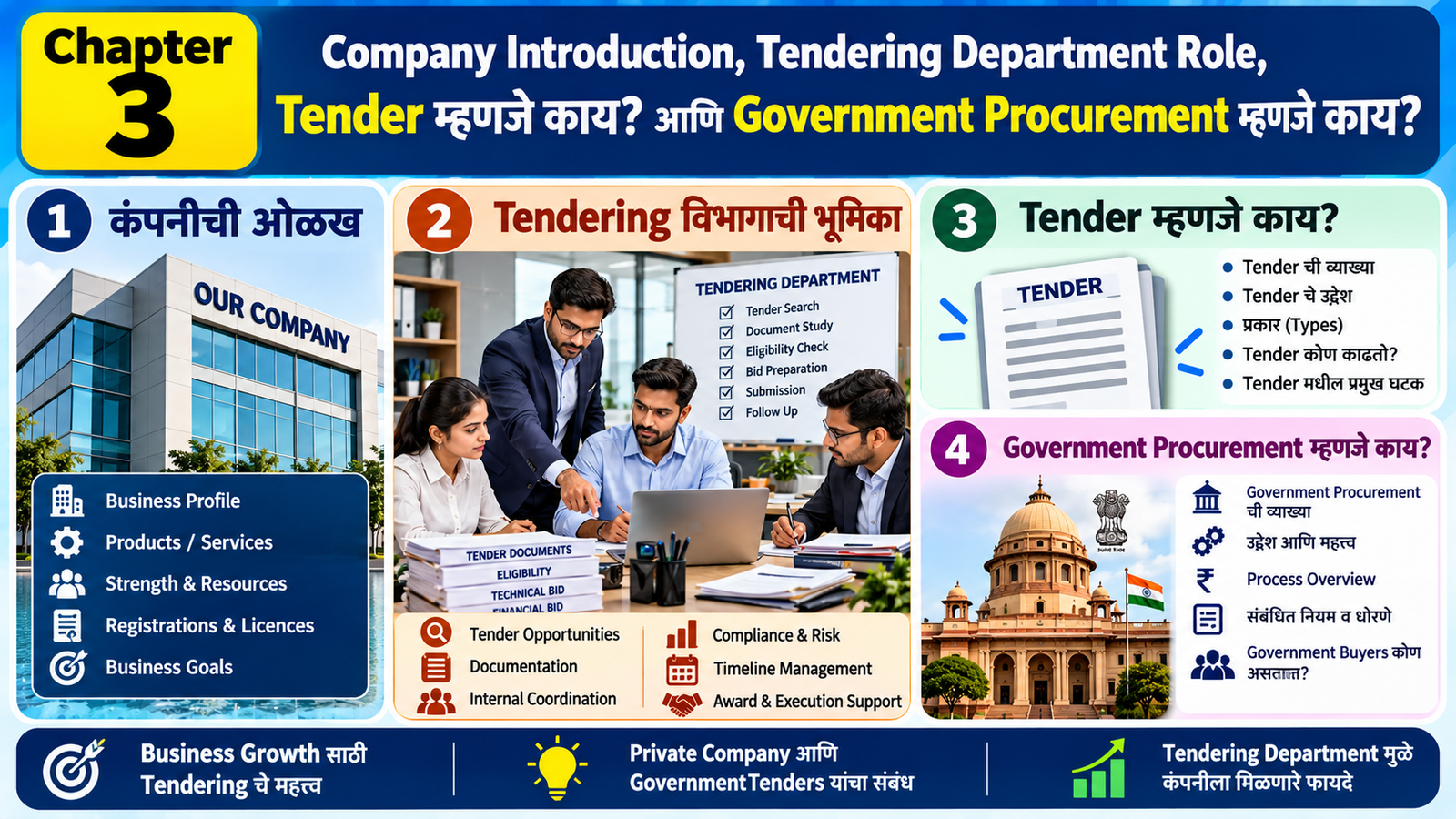
Topic 1 -: Company Identity and Role of  Tendering Department

       कोणत्याही नवीन व्यक्तीला Tendering चे काम देण्यापूर्वी सर्वप्रथम त्याला आपण ज्या कंपनीसाठी काम करीत आहोत त्या कंपनीची आणि तिच्या व्यवसायाची योग्य ओळख असणे आवश्यक आहे. Tendering हे स्वतंत्रपणे चालणारे काम नसून ते कंपनीच्या संपूर्ण business operations चा एक महत्त्वाचा भाग आहे. कंपनी कोणत्या प्रकारची कामे करते, कोणत्या क्षेत्रांमध्ये सेवा देते, कोणत्या प्रकारच्या clients किंवा departments साठी काम करण्याची क्षमता ठेवते, कंपनीकडे कोणते manpower, documents, registrations, licenses, financial capacity आणि execution capability उपलब्ध आहे, याची प्राथमिक समज नसताना एखाद्या tender चा योग्य अभ्यास करणे कठीण जाते. त्यामुळे Tender Executive ने फक्त portal वर tender शोधण्यापूर्वी कंपनीची basic working, service profile आणि practical capabilities समजून घेणे आवश्यक आहे.


      आपली कंपनी मुख्यतः manpower outsourcing, facility management, housekeeping, security manpower, drivers, तसेच आवश्यकतेनुसार इतर manpower आणि support services संबंधित कामांमध्ये सहभागी होऊ शकते. प्रत्यक्ष tendering मध्ये मात्र कंपनीच्या service profile पेक्षा एक गोष्ट अधिक महत्त्वाची असते—एखाद्या specific tender मध्ये मागितलेले काम आपण प्रत्यक्षात स्वीकारून पूर्णपणे execute करू शकतो का? कारण कंपनी एखाद्या क्षेत्रात काम करते म्हणून त्या क्षेत्रातील प्रत्येक tender साठी ती आपोआप eligible होत नाही. प्रत्येक tender ची स्वतःची eligibility, manpower requirement, geographical condition, experience requirement, statutory compliance, equipment requirement, financial condition आणि execution obligations असतात. म्हणून कंपनीची माहिती ही tender selection साठी एक background आहे; अंतिम निर्णय नेहमी specific tender च्या conditions आणि practical execution analysis वर आधारित असला पाहिजे.


     Tendering विभागाचे काम केवळ नवीन tenders शोधणे किंवा documents upload करणे एवढ्यापुरते मर्यादित नसते. Tendering team ही कंपनी आणि Government Department किंवा इतर Tender Inviting Authority यांच्यामधील एक महत्त्वाची coordination link असते. एका tender ची सुरुवात portal वर tender शोधण्यापासून होते, पण त्याचा शेवट अनेकदा Work Order मिळेपर्यंत आणि त्यानंतर execution team कडे योग्य information handover होईपर्यंत चालतो. त्यामुळे Tender Executive ने स्वतःला “portal operator” समजणे चुकीचे आहे. त्याचे काम tender च्या संपूर्ण lifecycle ला समजून घेणे, प्रत्येक stage वर आवश्यक information गोळा करणे, तिचे analysis करणे, management समोर योग्य माहिती ठेवणे, आवश्यक तेथे clarification घेणे, bid योग्य पद्धतीने तयार करणे, वेळेत submit करणे आणि submission नंतर tender च्या पुढील movement वर लक्ष ठेवणे हे आहे.


     Tendering कामात एक महत्त्वाची गोष्ट सुरुवातीपासून लक्षात ठेवली पाहिजे. Tendering म्हणजे फक्त tender मिळवण्याची प्रक्रिया नाही; ती योग्य tender निवडण्याची, त्याचा अभ्यास करण्याची, त्यातील अटी समजून घेण्याची, त्याची financial आणि execution feasibility तपासण्याची आणि कंपनीच्या हिताचा निर्णय घेण्याची प्रक्रिया आहे. एखादा tender technically भरता येतो म्हणून तो tender भरलाच पाहिजे असे नाही. काही tenders कागदोपत्री eligible दिसू शकतात, परंतु त्यातील manpower requirement, location, transportation, equipment, consumables, supervision, statutory liabilities किंवा इतर execution commitments पाहता ते कंपनीसाठी practical नसू शकतात. उलट काही tenders पहिल्या reading मध्ये कठीण वाटले तरी योग्य analysis, clarification आणि management support नंतर ते योग्य प्रकारे execute करता येऊ शकतात. म्हणून Tendering मध्ये प्रत्येक निर्णयामागे reasoning असणे आवश्यक आहे.
नवीन Tender Executive ने आणखी एक गोष्ट समजून घेतली पाहिजे की कंपनीच्या Tendering कामात Management ची भूमिका अंतिम असते.
      Tender Executive हा tender शोधू शकतो, वाचू शकतो, eligibility तपासू शकतो, costing तयार करू शकतो, risk points identify करू शकतो आणि management ला recommendation देऊ शकतो; परंतु अंतिम commercial किंवा strategic decision Management चा असतो. एखादा tender पूर्ण तयार झाल्यानंतरही Management ने परिस्थितीनुसार “हा tender submit करू नका” असे सांगितले तर submission थांबवणे आवश्यक आहे. कारण tendering decisions हे केवळ document-based नसतात; त्यामध्ये त्या वेळची company position, existing commitments, available manpower, cash-flow considerations, execution capacity, competition, business relationships आणि इतर dynamic factors देखील महत्त्वाचे ठरू शकतात.
       यामुळे Tender Executive ची खरी जबाबदारी म्हणजे Management पर्यंत योग्य, स्पष्ट आणि complete decision-making information पोहोचवणे. “Tender आहे, भरायचा का?” एवढा प्रश्न Management समोर ठेवणे पुरेसे नाही. त्याऐवजी tender ची estimated value काय आहे, scope काय आहे, eligibility मध्ये आपण कुठे बसतो, कोणते documents उपलब्ध आहेत, कोणते documents तयार करावे लागतील, pre-bid आहे का, site visit आहे का, hard copy requirement आहे का, location-related condition काय आहे, execution मध्ये कोणते risks आहेत, costing किती येऊ शकते, कोणते points clarification मागतात आणि कंपनीच्या दृष्टीने कोणत्या अडचणी दिसत आहेत, हे समजावून सांगणे आवश्यक आहे. Management ला जितकी clear information मिळेल तितका decision अधिक informed होऊ शकतो.
       Tendering मध्ये काम करणाऱ्या व्यक्तीने कंपनीच्या capabilities सोबत कंपनीच्या limitations सुद्धा समजून घेतल्या पाहिजेत. एखाद्या tender मध्ये मोठ्या प्रमाणावर manpower आवश्यक असेल, तर फक्त “आपल्याकडे manpower supply चा experience आहे” एवढे पुरेसे नाही. त्या specific location वर manpower उपलब्ध होईल का, wages आणि statutory costs किती येतील, transportation किंवा accommodation ची आवश्यकता असेल का, supervisor ठेवावा लागेल का, equipment किंवा consumables लागतील का, local support आवश्यक असेल का, आणि tender मिळाल्यानंतर दिलेल्या conditions मध्ये काम सुरू करता येईल का, याचा विचार करावा लागतो. Tendering मध्ये “Can we submit?” आणि “Can we execute?” हे दोन वेगळे प्रश्न आहेत, आणि दोन्हींचे उत्तर मिळाल्याशिवाय tender पूर्णपणे समजलेला मानता येत नाही.
        कंपनीच्या Tendering Department मध्ये काम करणाऱ्या नवीन व्यक्तीने त्यामुळे सुरुवातीपासून एक professional habit विकसित करणे आवश्यक आहे—कोणतीही गोष्ट फक्त ऐकून किंवा अंदाजाने assume करू नये. Company document, tender document, senior instruction, portal information किंवा department communication यापैकी ज्या source मधून माहिती मिळते ती त्यानुसार verify करावी. काही गोष्ट निश्चित असेल तर ती निश्चित म्हणून मांडावी; काही गोष्ट unclear असेल तर ती clarification किंवा senior discussion साठी ठेवावी. Tendering मध्ये चुकीचा assumption पुढे eligibility issue, wrong document, incorrect costing, missed deadline किंवा execution problem निर्माण करू शकतो. म्हणून “मला वाटते” आणि “tender मध्ये स्पष्ट आहे” यामधील फरक समजणे हे सुरुवातीपासून आवश्यक आहे.
      Tendering मध्ये अनुभव वाढत असताना कंपनीच्या पूर्वीच्या कामांचा आणि पूर्वी हाताळलेल्या tenders चा अनुभव उपयोगी पडतो. एखाद्या नवीन tender मध्ये एखादा clause, manpower pattern, department requirement, document किंवा execution condition पाहताना आधीच्या tenders मधील अनुभवातून त्याचा अर्थ किंवा संभाव्य practical impact लक्षात येऊ शकतो. परंतु प्रत्येक नवीन tender हा स्वतंत्र document म्हणून वाचणे आवश्यक आहे. पूर्वीच्या tender मध्ये एखादी condition होती म्हणून नवीन tender मध्येही तीच condition असेल असे assume करता येत नाही. पूर्वीची experience ही reference आणि understanding वाढवण्यासाठी आहे; ती नवीन tender वाचण्याचा पर्याय नाही.
      याच कारणामुळे या manual चा पहिला आणि सर्वात महत्त्वाचा training principle असा आहे की Tendering शिकण्याची सुरुवात portal पासून होत नाही; ती Tender समजून घेण्यापासून होते. Portal वर search करण्याची पद्धत, filters, keywords, department search, tender download आणि पुढे bid submission हे सर्व आपण नंतर practically शिकणार आहोत. परंतु portal वर tender सापडल्यानंतर त्याच्याकडे कसे पाहायचे, कोणत्या गोष्टी प्रथम तपासायच्या, कोणत्या गोष्टींवर शंका घ्यायची, कोणत्या conditions कधीच ignore करायच्या नाहीत आणि tender मिळाल्यानंतर त्याचे execution कसे होईल याचा विचार कसा करायचा, हे समजले नाही तर portal वापरणे शिकूनही एक चांगला Tender Executive तयार होत नाही.
      म्हणून या manual मध्ये आपण सुरुवातीला tender च्या मूलभूत संकल्पना समजून घेणार आहोत आणि त्यानंतर हळूहळू actual working कडे जाणार आहोत. आधी Tender म्हणजे काय, तो का काढला जातो, त्यामध्ये कोण कोण involved असतात आणि Government किंवा इतर organisation contractor कडून काम करून घेण्यासाठी ही पद्धत का वापरते हे समजून घेऊ. त्यानंतर tender ची पूर्ण lifecycle समजून घेऊ. त्यानंतर tender document कसा वाचायचा, त्यातील वेगवेगळे भाग कसे ओळखायचे, eligibility आणि execution feasibility कशी तपासायची हे पाहू. हे foundation तयार झाल्यानंतरच MahaTender किंवा GeM सारख्या portals वर actual searching, tender download, bid preparation आणि online submission ची practical प्रक्रिया शिकवली जाईल.
     एक नवीन कर्मचारी हा manual वाचताना सुरुवातीपासून एक गोष्ट लक्षात ठेवेल: Tender हा फक्त एक PDF किंवा online page नाही. Tender हा Department ला नेमके काय काम करून घ्यायचे आहे, कोणत्या अटींवर करून घ्यायचे आहे, contractor कडून कोणत्या क्षमता अपेक्षित आहेत, contractor ने काय submit करायचे आहे, काम मिळाल्यानंतर कोणत्या obligations पाळायच्या आहेत आणि payment किंवा contract execution कोणत्या framework मध्ये होणार आहे याचे एक संपूर्ण working document आहे. म्हणून tender वाचणे म्हणजे प्रत्येक page वरचे शब्द वाचून पुढे जाणे नव्हे; तर त्या document मधून Department ची requirement समजून घेणे आहे.
      याच ठिकाणी या manual मधील एक मूलभूत विचार समजून घेणे आवश्यक आहे—

“जितके जास्त योग्य tenders तुम्ही शांतपणे वाचाल, तितके tendering तुम्हाला समजू लागेल.”

           सुरुवातीला प्रत्येक tender वेगळा, मोठा आणि complicated वाटेल. काही शब्द समजणार नाहीत, काही conditions कुठे शोधायच्या हे कळणार नाही, काही documents का मागितले आहेत हे स्पष्ट होणार नाही आणि काही clauses एकमेकांशी जोडलेले आहेत हेही लगेच जाणवणार नाही. परंतु प्रत्येक tender काळजीपूर्वक वाचताना त्याची structure, recurring principles, department requirements, eligibility patterns, commercial conditions आणि execution obligations यांचे patterns हळूहळू समजू लागतात. त्यामुळे Tender Executive ने tender वाचण्याची सवय ही केवळ काम पूर्ण करण्यासाठी नव्हे, तर professional skill develop करण्यासाठी लावली पाहिजे.
             या manual मध्ये पुढे आपण प्रत्येक प्रक्रिया practical पद्धतीने पाहणार आहोत. जिथे portal वापरायचा असेल तिथे portal interface समजावला जाईल; जिथे tender document वाचायचा असेल तिथे document मधील relevant portion कसा शोधायचा ते सांगितले जाईल; जिथे senior decision आवश्यक असेल तिथे कोणती माहिती घेऊन senior कडे जायचे ते स्पष्ट केले जाईल; जिथे financial working असेल तिथे costing च्या प्रत्येक component चा विचार केला जाईल; आणि submission stage वर प्रत्येक document, file, format, sequence आणि deadline यांचा practical संबंध समजावून सांगितला जाईल. उद्देश हा नाही की कर्मचारी manual पाठ करेल. उद्देश असा आहे की manual वाचल्यानंतर त्याला tender समोर ठेवून विचार करता आला पाहिजे आणि योग्य पद्धतीने पुढची action घेता आली पाहिजे.
           Tendering मध्ये चांगला कर्मचारी तो नाही जो सर्वात जास्त tenders submit करतो. चांगला Tender Executive तो आहे जो योग्य tender ओळखतो, तो पूर्णपणे वाचतो, त्यातील requirements समजतो, eligibility आणि execution feasibility तपासतो, doubts वेळेवर escalate करतो, management ला योग्य माहिती देतो, bid disciplined पद्धतीने तयार करतो, वेळेत submit करतो आणि submission नंतरही त्या tender चा पुढील प्रवास समजून track करतो.
आता पुढील अध्यायात आपण सर्वात मूलभूत प्रश्नापासून सुरुवात करू — “Tender म्हणजे नेमके काय?” त्यानंतर Tender का काढला जातो, tendering system ची गरज काय आहे, Government आणि contractor यांच्यातील ही प्रक्रिया कशी काम करते आणि एका tender ची सुरुवातीपासून शेवटपर्यंतची मूलभूत lifecycle कोणती असते हे सविस्तर समजून घेऊ.

———————————————————————————————————————————————————

Topic – 2 Tender म्हणजे काय? आणि Government Procurement म्हणजे काय?

      Tendering समजून घेण्यापूर्वी सर्वात आधी Tender या शब्दाचा नेमका अर्थ समजून घेणे आवश्यक आहे. प्रत्यक्ष कामामध्ये “Tender आला आहे”, “Tender भरायचा आहे”, “Tender publish झाला आहे”, “Bid submit झाली आहे”, “L1 आले”, “Work Order मिळाला” असे अनेक शब्द रोज वापरले जातात; परंतु नवीन व्यक्तीने या शब्दांचा फक्त वापर ऐकून त्यांचा अर्थ समजून घेण्याऐवजी त्यामागची संपूर्ण प्रक्रिया समजून घेतली पाहिजे. Tender हा मूलतः एखाद्या organisation किंवा Government Department ला आवश्यक असलेले काम, service, material किंवा इतर requirement योग्य अटींवर बाहेरील eligible agency, supplier किंवा contractor कडून मिळवण्यासाठी वापरला जाणारा औपचारिक procurement mechanism आहे. साध्या भाषेत सांगायचे झाले तर, एखाद्या Department ला स्वतःच्या resources मधून एखादे काम करणे शक्य नसते किंवा ते काम बाहेरील योग्य agency कडून करून घेणे अधिक योग्य असते, तेव्हा त्या कामासाठी आवश्यक requirement स्पष्ट करून इच्छुक आणि पात्र bidders कडून offers मागवले जातात. त्या संपूर्ण process ला broadly tendering किंवा procurement process म्हणता येते.

Government Procurement म्हणजे काय?

         Government Procurement म्हणजे Government Department, Government organisation किंवा सार्वजनिक संस्थेला आवश्यक असलेले goods, services, works किंवा इतर requirements बाहेरील योग्य source कडून ठराविक नियम, प्रक्रिया आणि conditions च्या आधारे खरेदी करणे किंवा करून घेणे. Government ला प्रत्येक requirement स्वतःच्या manpower किंवा internal resources मधून पूर्ण करता येईलच असे नाही. उदाहरणार्थ एखाद्या Government hospital ला housekeeping service आवश्यक असू शकते, एखाद्या Government office ला security guards आवश्यक असू शकतात, एखाद्या Government establishment ला drivers ची आवश्यकता असू शकते, एखाद्या project साठी construction work करणे आवश्यक असू शकते किंवा एखाद्या department ला specific equipment किंवा material खरेदी करायचे असू शकते. अशा वेळी Government स्वतःच्या procurement framework अंतर्गत बाहेरील eligible agencies कडून requirement पूर्ण करून घेते. त्या procurement साठी जी प्रक्रिया वापरली जाते त्यामध्ये tender हा एक अत्यंत महत्त्वाचा mechanism आहे.
         Government procurement कडे फक्त “Government ला काहीतरी खरेदी करायचे आहे” या दृष्टीने पाहणे चुकीचे आहे. Government च्या पैशातून किंवा public funds मधून खर्च होत असल्यामुळे procurement process मध्ये transparency, fairness, competition, accountability आणि defined procedure यांना महत्त्व असते. Government Department ने एखाद्या contractor ला काम द्यायचे ठरवले आणि कोणतीही formal प्रक्रिया न करता थेट काम दिले, तर त्या decision मागील transparency आणि fairness वर प्रश्न निर्माण होऊ शकतात. म्हणून Government procurement मध्ये requirement काय आहे, ती कोणत्या specification नुसार आहे, कोणत्या eligibility असलेल्या agencies participate करू शकतात, bid कशी submit करायची, evaluation कशी होणार आणि award कशा पद्धतीने केला जाणार यासाठी एक defined framework तयार केला जातो.
         याचा अर्थ असा नाही की प्रत्येक Government procurement अगदी एकाच पद्धतीने होते. Procurement च्या nature, value, department, requirement, applicable rules, portal आणि specific procurement method नुसार procedure बदलू शकते. काही requirements साठी open tender असू शकतो, काही ठिकाणी limited participation असू शकते, काही procurement portals च्या माध्यमातून होऊ शकतात, काही cases मध्ये rate contract किंवा इतर procurement mechanisms लागू होऊ शकतात. त्यामुळे Tender Executive ने “Government procurement म्हणजे नेहमी एकच process” असा fixed assumption ठेवू नये. आपल्याला ज्या specific tender वर काम करायचे आहे त्याची actual tender document, applicable conditions आणि संबंधित procurement framework समजून घेणे आवश्यक आहे.

Tender आणि Government Procurement यांचा संबंध -: 

      Tender हा Government Procurement चा एक भाग आहे. Government Procurement हा मोठा विषय आहे आणि त्यामध्ये requirement identification पासून procurement planning, specification, tendering, bidding, evaluation, award आणि contract execution पर्यंत अनेक stages असू शकतात. Tender हा त्या procurement process मधील असा टप्पा आहे जिथे Department आपली requirement आणि applicable conditions स्पष्ट करून eligible bidders कडून bids किंवा offers मागवते.
       हे relationship एका साध्या उदाहरणातून समजून घेऊ. समजा एखाद्या Government establishment ला 100 housekeeping manpower ची आवश्यकता आहे. ही आवश्यकता म्हणजे procurement requirement. Department ला किती manpower पाहिजे, कोणत्या category चे manpower पाहिजे, कोणत्या location वर पाहिजे, कोणते working hours असतील, कोणत्या statutory compliances लागू होतील, contractor ने कोणती services द्यायची आहेत, किती कालावधीसाठी contract असेल आणि इतर कोणत्या conditions असतील याचा अभ्यास करून procurement requirement तयार होते. त्यानंतर Department त्या requirement साठी tender publish करू शकते. Tender publish झाल्यानंतर eligible contractors त्याचा अभ्यास करून bid submit करतात. Department bids evaluate करते आणि applicable process नुसार successful bidder निवडला जातो. त्यानंतर award, agreement आणि work order च्या माध्यमातून contract execution सुरू होते. अशा प्रकारे requirement → procurement → tender → bid → evaluation → award → contract → execution हा संबंध समजून घेणे आवश्यक आहे.

Tender म्हणजे फक्त Price Quote नाही ! 

     नवीन Tender Executive कडून होणारी एक सामान्य चूक म्हणजे tender म्हणजे “कोण किती कमी price देतो” एवढेच समजणे. Financial competition tendering मध्ये नक्कीच महत्त्वाची असते, परंतु tender त्यापेक्षा खूप मोठी प्रक्रिया आहे. Tender document मध्ये Department ने contractor कडून अपेक्षित असलेल्या technical, commercial, legal, administrative आणि execution-related conditions दिलेल्या असतात. Bidder ने त्या conditions समजून घेऊन त्यानुसार participation करायचे असते.
     उदाहरणार्थ, एखाद्या tender मध्ये manpower service मागितली आहे म्हणून फक्त manpower उपलब्ध आहे आणि कमी rate देता येतो म्हणून company eligible झाली असे होत नाही. Department कदाचित specific experience मागू शकते, particular registration मागू शकते, specific office location मागू शकते, statutory compliance records मागू शकते, minimum turnover मागू शकते, pre-bid attendance मागू शकते, site visit मागू शकते किंवा hard-copy submission ची condition ठेवू शकते. यापैकी एखादी mandatory condition पूर्ण झाली नाही तर financial rate चांगला असूनही bidder technical stage वरच बाहेर जाऊ शकतो.
    म्हणून tendering मध्ये Price हा tender चा एक भाग आहे; Tender म्हणजे Price नाही. Tender समजून घेण्यासाठी technical eligibility, commercial conditions, statutory requirements, execution obligations आणि financial requirements या सर्वांचा एकत्रित विचार करावा लागतो.

Tender का काढला जातो?

      Government Department स्वतःच्या प्रत्येक requirement साठी contractor शोधत फिरत नाही. त्याला एक structured procurement mechanism आवश्यक असतो. Tender काढण्याचा मुख्य उद्देश म्हणजे Department ची requirement स्पष्ट स्वरूपात market मध्ये ठेवणे आणि त्या requirement साठी eligible आणि capable agencies कडून offers प्राप्त करणे. यामुळे Department ला उपलब्ध bidders मध्ये तुलना करण्याची संधी मिळते आणि applicable rules नुसार योग्य bidder किंवा suitable offer निवडण्याची प्रक्रिया करता येते.
     उदाहरणार्थ, Department ला housekeeping service आवश्यक आहे. Department स्वतः प्रत्येक housekeeping agency ला फोन करून “तुम्ही किती rate मध्ये काम कराल?” असे विचारत बसण्याऐवजी एक tender तयार करू शकते. त्यामध्ये manpower किती, working hours किती, scope काय, location काय, statutory obligations काय, contract period किती आणि bidder eligibility काय हे सांगितले जाऊ शकते. इच्छुक agencies त्या tender चा अभ्यास करून bid submit करतात. त्यामुळे Department आणि bidders दोघांसाठी requirement एका formal framework मध्ये येते.

Tender हा Department साठी काय आणि Contractor साठी काय?

     Department च्या दृष्टीने tender हा procurement requirement market मध्ये मांडण्याचा formal mechanism आहे. Contractor च्या दृष्टीने तो एक business opportunity आणि contractual opportunity आहे. परंतु contractor ने प्रत्येक tender कडे फक्त business opportunity म्हणून पाहू नये. Tender म्हणजे त्याच वेळी potential contractual obligation देखील आहे.
हे distinction अत्यंत महत्त्वाचे आहे……..
     Tender मिळणे म्हणजे revenue opportunity असू शकते; परंतु tender accept करून work order मिळाल्यानंतर manpower देणे, statutory compliance करणे, equipment देणे, service levels maintain करणे, penalties स्वीकारणे, reporting करणे, payment conditions पाळणे, agreement नुसार काम करणे आणि Department च्या directions चे पालन करणे अशा अनेक obligations contractor वर येऊ शकतात. त्यामुळे Tender Executive ने tender वाचताना फक्त “हा tender आपल्याला किती मिळेल?” हा प्रश्न विचारू नये. त्यासोबत “हा tender मिळाल्यावर आपल्याला नेमके काय करावे लागेल?” हा प्रश्नही विचारला पाहिजे.
    याच विचारातून आपल्या Tendering process मध्ये Execution Feasibility ला महत्त्व दिले जाते. Tender मिळवणे हा पहिला business objective असू शकतो; परंतु tender sustainable पद्धतीने execute करणे हा त्याहून मोठा objective आहे. चुकीच्या costing मुळे tender कमी rate मध्ये मिळू शकतो, परंतु नंतर execution शक्य झाले नाही तर penalty, financial loss, contractual dispute आणि company reputation वर परिणाम होऊ शकतो. म्हणून tender selection पासूनच execution चा विचार सुरू होणे आवश्यक आहे.
Tender Document म्हणजे काय?
     Tender publish झाल्यानंतर Department कडून उपलब्ध करून दिलेले विविध documents, notices, conditions, schedules, specifications, forms, annexures, BOQ, price bid formats, corrigenda आणि संबंधित communications यांचा एकत्रित अभ्यास करणे आवश्यक असते. यापैकी कोणत्या document ला कोणते नाव आहे आणि कोणत्या document मध्ये कोणती माहिती आहे हे tender-to-tender बदलू शकते. म्हणून Tender Executive ने एखाद्या specific file चे नाव पाहूनच तिचे महत्त्व ठरवू नये.
   काही tender मध्ये मुख्य tender document मध्ये मोठ्या प्रमाणात information असते. काही ठिकाणी RFP, NIT, technical specification, scope of work, eligibility criteria, commercial conditions, annexures, BOQ आणि price bid स्वतंत्र documents असू शकतात. काही वेळा pre-bid meeting नंतर clarification किंवा corrigendum publish होतो आणि त्यामध्ये आधीच्या condition मध्ये बदल केला जातो. त्यामुळे tender एकदाच download करून वाचणे आणि त्यानंतर बाकी updates न पाहणे ही गंभीर चूक ठरू शकते.
याच कारणामुळे Tender Executive ने tender च्या प्रत्येक related document कडे एकाच procurement package चा भाग म्हणून पाहिले पाहिजे. Tender publish झाल्यापासून bid submission पर्यंत Department कडून आलेले corrigendum, amendment, clarification किंवा other official communication यामुळे original tender condition मध्ये बदल होऊ शकतो. म्हणून tender चा अभ्यास म्हणजे फक्त initial document वाचणे नसून latest applicable version समजून घेणे आहे.

Tender हा Contractor साठी मार्गदर्शक document का आहे?

    Tender document मध्ये Department ने contractor कडून काय अपेक्षित आहे याचे अनेक संकेत दिलेले असतात. Scope of Work contractor ने कोणते काम करायचे हे सांगतो. Eligibility contractor मध्ये कोणती पात्रता असावी हे सांगते. Technical requirements contractor ने कोणते documents किंवा capabilities दाखवायच्या आहेत हे सांगतात. Commercial conditions financial terms स्पष्ट करतात. Execution clauses काम मिळाल्यानंतर contractor वर येणाऱ्या obligations ची कल्पना देतात. Penalty clauses service किंवा contractual failure झाल्यास होणारे consequences दाखवतात. त्यामुळे tender document हा contractor साठी केवळ bid submit करण्याचा document नसून काम कसे करायचे याचा प्राथमिक contractual framework असतो.
       यामुळे आपल्या working method मध्ये tender वाचताना एक महत्त्वाचा प्रश्न नेहमी विचारला जातो—“जर हा tender आपल्याला मिळाला तर उद्यापासून आपल्याला नेमके काय करावे लागेल?” या प्रश्नाचे उत्तर tender document मधून शोधण्याचा प्रयत्न केला पाहिजे. जर technical bid भरताना आपण एखादी condition पाहिली आणि तिचा execution वर परिणाम काय आहे हे समजले नाही, तर त्या condition कडे पुन्हा पाहणे आवश्यक आहे. जर manpower requirement समजली पण त्यासाठी supervision, equipment किंवा consumables किती लागतील याचा अंदाज आला नाही, तर scope पुन्हा वाचणे आवश्यक आहे. Tender समजणे म्हणजे tender जिंकण्यापुरते reading नसून contract execute करण्याच्या दृष्टीने reading आहे.

Tender मध्ये “काय लिहिले आहे” आणि “त्याचा practical अर्थ काय आहे” यामध्ये फरक -: 

    Tender document अनेकदा formal किंवा technical language मध्ये लिहिलेले असते. काही clauses कायदेशीर किंवा administrative wording मध्ये असतात. नवीन कर्मचारी त्या wording मुळे घाबरू नये. प्रथम clause काय सांगतो आहे हे simple language मध्ये समजून घेण्याचा प्रयत्न करावा. गरज असल्यास dictionary, translation tools किंवा इतर reliable reference वापरता येतील. परंतु translation करून शब्द समजला म्हणजे clause समजला असे होत नाही. त्याचा tender च्या बाकी conditions शी संबंध आणि practical implication देखील समजून घ्यावा लागतो.
उदाहरणार्थ एखाद्या clause मध्ये bidder ने specific location मध्ये office असणे आवश्यक असल्याचे नमूद केले असेल. हा clause technical bid च्या document checklist मध्ये वेगळा document म्हणून दिसेलच असे नाही. तो eligibility section, special condition, scope किंवा इतर भागात असू शकतो. म्हणून Tender Executive ने फक्त “Technical Bid मध्ये कोणते documents upload करायचे?” एवढेच पाहिले तर तो clause miss होऊ शकतो. पण tender संपूर्ण वाचला तर त्या condition चा eligibility आणि submission वर परिणाम लक्षात येतो.
यामुळे Tender reading ही स्वतःमध्ये एक skill आहे. या manual च्या पुढील chapters मध्ये ही skill आपण स्वतंत्रपणे develop करणार आहोत.

Government Procurement मध्ये नियम आणि Ground-Level Working -: 

    Government procurement ही formal system वर आधारित प्रक्रिया आहे. Tender documents, procurement rules, departmental procedures, applicable government instructions आणि संबंधित guidelines यांच्या आधारे tender process चालते. परंतु प्रत्यक्ष Tendering काम करणाऱ्या व्यक्तीने एक practical गोष्ट देखील समजून घेतली पाहिजे—कागदावरची process आणि ground-level working यांचा संबंध समजून घेणे आवश्यक आहे.
    याचा अर्थ rules मोडणे किंवा formal procedure बाजूला ठेवणे असा अजिबात नाही. उलट formal rules आणि tender conditions यांची माहिती असणे अधिक महत्त्वाचे आहे. परंतु actual working मध्ये Department communication, pre-bid interaction, clarification, follow-up, document movement, portal updates, internal approvals, practical timelines आणि departmental working style यांसारख्या गोष्टींचा अनुभव येतो. काही updates online system वर उशिरा दिसू शकतात, काही communication email किंवा letter द्वारे येऊ शकते, काही clarification portal वर shortfall section मध्ये मागितले जाऊ शकते. त्यामुळे Tender Executive ने official record आणि practical follow-up दोन्ही व्यवस्थित समजून घेतले पाहिजेत.
    Ground-level experience म्हणजे rules पेक्षा वेगळे rules तयार करणे नाही. त्याचा अर्थ असा की official process च्या चौकटीत प्रत्यक्ष काम कसे पुढे जाते हे समजून घेणे. उदाहरणार्थ tender opening date portal वर दिलेली असली तरी actual opening किंवा evaluation process departmental circumstances नुसार पुढे-मागे होऊ शकते. अशा वेळी portal वर status पाहण्याबरोबर Department communication आणि proper follow-up देखील महत्त्वाचे ठरू शकते. मात्र कोणतीही unofficial माहिती final fact म्हणून मानण्यापूर्वी तिची योग्य confirmation करणे आवश्यक आहे.

Tender वाचणे म्हणजे Department समजून घेणे ! 

   अनुभवातून एक महत्त्वाचा professional insight असा आहे की प्रत्येक Department tender draft करताना स्वतःची requirement, priorities आणि working expectations त्या document मध्ये वेगवेगळ्या प्रकारे व्यक्त करते. Tender ची wording, scope ची रचना, eligibility ची कठोरता, clarification ची पद्धत, pre-bid requirement, documentation pattern, execution conditions आणि commercial terms यांचा एकत्रित अभ्यास केल्यास त्या Department च्या working approach ची काही कल्पना येऊ शकते.
परंतु येथे Tender Executive ने अत्यंत सावध राहणे आवश्यक आहे. Tender मधील wording वरून documented requirement, procedural expectation आणि practical risk यांचा अभ्यास करायचा आहे; कोणत्याही व्यक्तीबद्दल, Department बद्दल किंवा bidder बद्दल unsupported assumptions तयार करायचे नाहीत. Professional Tendering मध्ये observation महत्त्वाचे आहे, पण observation आणि assumption यांच्यामध्ये स्पष्ट फरक ठेवणे त्याहून महत्त्वाचे आहे.

Tendering मध्ये “Reading” हा पहिला Practical Skill का आहे?

   Moving forward in Tendering, we will learn all the stages of searching, eligibility analysis, pre-bid, technical bid preparation, costing, financial bid, document management, portal login, DSC, upload, final submission, clarification, technical evaluation, financial evaluation, award and work order. But all these stages start with one simple task — reading the Tender carefully.
        The more relevant tenders a person reads silently, the more recurring patterns in the tender structure become apparent. Which documents come in which type of tender, which clauses come frequently, which conditions affect eligibility, where to look for a pre-bid, where a hard-copy condition might be, why a corrigendum is important, what the difference between a BOQ and a price bid might be, where execution risk is visible—these things develop through reading experience. So, a new employee should not initially think, “I should understand everything immediately by reading the manual.” The manual will provide direction; but reading actual tenders is the real laboratory of training .
        In the same way, we will encourage each new employee to search for tenders and download them themselves, read them silently, write down important clauses, identify their doubts and then discuss them with a senior. What he understands from them will be more important than how many tenders he has seen. Gradually, the tender document should not seem like a large and complicated PDF but a structured business document.

Basic thoughts to remember from this topic -: 

         Government Procurement is a large framework ; Tender is an important mechanism in that procurement process . In the Tender, the Department clarifies its requirements and conditions and invites offers from eligible bidders . While a tender is a business opportunity for the contractor , it is also a potential contractual responsibility . Therefore, the Tender Executive should read the tender not only in terms of “how much rate to pay ?” but also in terms of “what exactly will the company be accepting if it wins this work ?”

Before winning a tender, it is necessary to understand the tender ; and understanding the tender means not just submitting the bid , but understanding its full contractual and execution reality.

Scroll to Top