Chapter 4 — Tender Reading, Analysis & GO–NO GO Decision
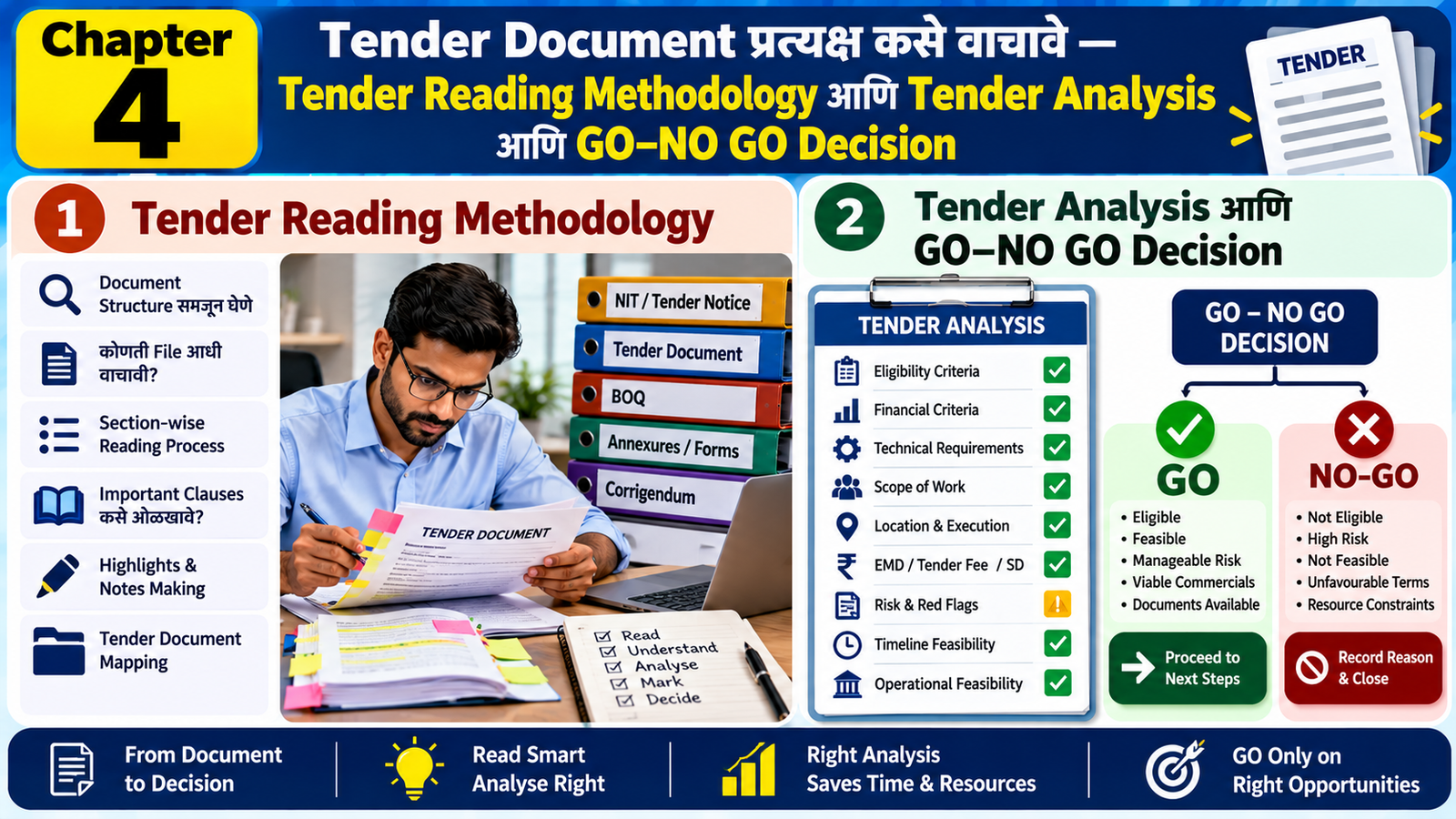
Topic 1-: Tender Document प्रत्यक्ष कसे वाचावे — Tender Reading Methodology
Tender search करून योग्य tender शोधणे आणि tender page वरील basic information समजून घेणे हा फक्त प्रारंभिक भाग आहे. त्यानंतर सुरू होणारी सर्वात महत्त्वाची प्रक्रिया म्हणजे Tender Document Reading. Tendering मध्ये एखाद्या व्यक्तीला किती portals माहिती आहेत, किती keywords माहिती आहेत किंवा किती tenders search करता येतात यापेक्षा त्याला मिळालेला tender शांतपणे, पूर्णपणे आणि योग्य पद्धतीने वाचता येतो का, याला अधिक महत्त्व आहे. कारण tender मध्ये department ने contractor कडून नेमके काय अपेक्षित केले आहे, bidder कोणत्या conditions पूर्ण करणार आहे, कोणते documents द्यायचे आहेत, काम मिळाल्यानंतर कोणत्या obligations येणार आहेत, किती manpower लागणार आहे, कोणते statutory खर्च येतील, penalty काय आहे, payment कसे होईल आणि contract प्रत्यक्षात execute करता येईल का—या सर्व प्रश्नांची उत्तरे वेगवेगळ्या भागांमध्ये विखुरलेली असतात. त्यामुळे tender reading ही एक स्वतंत्र skill म्हणून विकसित करणे आवश्यक आहे.
आपल्या working methodology मध्ये tender वाचताना पहिला नियम असा आहे की घाई करू नये. Tender हातात घेताना शक्यतो शांत वातावरणात बसावे, pen आणि notebook किंवा working sheet जवळ ठेवावी आणि पहिल्याच reading मध्ये प्रत्येक गोष्ट लक्षात ठेवण्याचा प्रयत्न करू नये. Tender वाचताना आपल्याला काही गोष्ट समजली नाही तर ती सोडून पुढे जाणे, पण नंतर पुन्हा त्याकडे येण्यासाठी ती note करून ठेवणे, ही योग्य पद्धत आहे. “मला सगळे लगेच समजले पाहिजे” या pressure मुळे tender reading खराब होऊ शकते. आपल्या उद्देशाचा केंद्रबिंदू हा tender पाठ करणे नसून tender ची complete working picture तयार करणे हा आहे.
1.Tender document उघडल्यानंतर पहिली reading कशी करावी?-:
Tender document उघडल्यानंतर लगेच प्रत्येक clause line-by-line analyse करण्याऐवजी प्रथम document ची overall structure समजून घ्यावी. Tender किती pages चा आहे, त्यात कोणकोणते sections आहेत, Notice आहे का, Instructions to Bidders आहेत का, Scope of Work आहे का, Eligibility Criteria आहे का, Technical Specifications आहेत का, General Conditions आहेत का, Special Conditions आहेत का, Payment Terms आहेत का, Penalty clauses आहेत का, Annexures आहेत का आणि Price Bid/BOQ स्वतंत्र आहे का—याचा प्राथमिक अंदाज घ्यावा.
ही पहिली reading म्हणजे orientation reading आहे. यामध्ये आपण tender मध्ये कुठे काय आहे हे समजून घेतो. एखाद्या मोठ्या पुस्तकाचे पहिले पान उघडून थेट प्रत्येक वाक्याचा अर्थ काढण्याऐवजी आधी त्याची contents आणि chapter structure पाहतो, त्याचप्रमाणे tender document कडे पाहावे.
[IMAGE / SCREENSHOT HERE – Tender PDF च्या Table of Contents किंवा document structure वर section-wise marking दाखवावी.]
Tender document ची ही structure समजली की पुढील detailed reading खूप सोपी होते. उदाहरणार्थ, technical eligibility एखाद्या section मध्ये आहे असे समजले तर पुन्हा संपूर्ण document मध्ये ती शोधत बसण्याची गरज राहत नाही. पण इथे एक महत्त्वाची practical warning आहे—एका heading वरून complete requirement assume करू नये. अनेकदा एखादी महत्त्वाची condition दुसऱ्या section मध्ये, note मध्ये, annexure मध्ये किंवा special condition मध्ये दिलेली असू शकते. म्हणून structure समजून घेतल्यानंतर complete reading करणे आवश्यक आहे.
2.Scope of Work आधी समजून घेणे-:
आपल्या methodology मध्ये tender reading करताना Scope of Work हा सुरुवातीच्या महत्त्वाच्या भागांपैकी एक आहे. कारण company ने tender भरायचा की नाही याचा निर्णय घेण्यापूर्वी सर्वात मूलभूत प्रश्न हा असतो की department ने आपल्याला नेमके कोणते काम करायला सांगितले आहे.
Scope of Work फक्त “housekeeping services”, “security services” किंवा “manpower supply” एवढा छोटा असू शकतो असे समजू नये. त्यामध्ये manpower किती, कोणत्या category ची, कोणत्या location वर, कोणत्या shift मध्ये, किती working hours, कोणती duties, कोणती equipment, कोणते consumables, कोणते reporting requirements, supervision, replacement manpower, emergency deployment, statutory compliance किंवा इतर अनेक obligations असू शकतात.
म्हणून scope वाचताना प्रत्येक sentence कडे “हे काम प्रत्यक्षात ground वर कसे होईल?” या दृष्टिकोनातून पाहावे. Tender document मध्ये लिहिलेला scope office मध्ये theoretically simple दिसू शकतो; परंतु execution मध्ये त्यासाठी किती manpower, किती supervisor, किती travel, किती equipment, किती consumables आणि किती administrative effort लागेल हे वेगळे असू शकते.
याठिकाणी आपल्या tender reading चा एक अत्यंत महत्त्वाचा principle आहे:
Tender फक्त bid करण्यासाठी वाचायचा नाही; tender मिळाल्यानंतर तो execute करण्यासाठी वाचायचा आहे.
हा विचार सुरुवातीपासून ठेवला तर पुढील costing आणि risk analysis अधिक अचूक होतो.
3. Technical Bid कडे लगेच वळणे
Scope ची प्राथमिक समज घेतल्यानंतर Technical Bid / Eligibility / Qualification Criteria कडे विशेष लक्ष द्यावे. आपल्या practical methodology मध्ये technical bid मधील मागितलेले documents आधी identify करून घेणे उपयोगी ठरते. कारण eligibility मध्ये आपण technically आणि legally qualify होतो का हे समजल्याशिवाय costing करण्यासाठी खूप वेळ घालवणे योग्य नाही.
Technical bid वाचताना फक्त “कुठले documents मागितले आहेत?” एवढे पाहायचे नाही. प्रत्येक condition चा अर्थ समजून घ्यायचा आहे. उदाहरणार्थ, experience किती वर्षांचा हवा आहे, similar work ची definition काय आहे, turnover requirement आहे का, manpower deployment ची अट आहे का, specific registration/licence आहे का, office location requirement आहे का, statutory registration आवश्यक आहे का, previous work order किंवा completion certificate आवश्यक आहे का, EMD exemption साठी काय provision आहे, इत्यादी.
यातील काही conditions technical bid च्या heading खाली असतील; परंतु सर्वच conditions तिथे असतील असे नाही. म्हणून tender चा पूर्ण document वाचल्याशिवाय technical eligibility complete झाली असे मानायचे नाही.
4.Pre-Bid Meeting शोधणे
Tender reading करताना Pre-Bid Meeting हा शब्द दिसला की त्याकडे विशेष लक्ष द्यावे. Pre-bid compulsory आहे की optional, date काय आहे, venue/online meeting details काय आहेत, attendance requirement आहे का, pre-bid attendance proof technical bid मध्ये द्यावा लागतो का—या सर्व गोष्टी तपासाव्यात.
काही tenders मध्ये pre-bid attendance mandatory असू शकते. अशा परिस्थितीत technical documents पूर्ण असूनही mandatory pre-bid requirement पूर्ण न केल्यामुळे bidder ला problem येऊ शकतो. त्यामुळे “Pre-bid आहे म्हणजे optional असेल” असा अंदाज कधीही घेऊ नये.
Manual मध्ये fresher ला PDF search चा practical उपयोग येथे शिकवता येईल. Tender document उघडून Ctrl + F वापरून “Pre-Bid”, “Meeting”, “Site Visit”, “Hard Copy”, “EMD”, “Eligibility”, “Experience”, “Turnover”, “Penalty”, “Security Deposit” अशा keywords शोधण्याची सवय लावावी. मात्र search result मिळाला म्हणजे पूर्ण requirement समजली असे मानायचे नाही. Keyword आपल्याला relevant paragraph पर्यंत घेऊन जातो; paragraph वाचून त्याचा context समजून घेणे ही पुढची जबाबदारी आहे.
5.Hard Copy Submission कधीही assume करू नये
Tender reading मध्ये Hard Copy Submission हा एक असा विषय आहे जो technical bid section मध्येच असेल असे नाही. काही tenders मध्ये hard copy submission ची condition instructions, special conditions, tender notice किंवा अन्य paragraph मध्ये असू शकते.
म्हणून tender वाचताना “Hard Copy”, “Physical Submission”, “Original Documents”, “Submit to Office”, “Within ___ Hours/Days” अशा terms शोधाव्यात. Hard copy closing date पूर्वी पोहोचवायची आहे की online submission नंतर ठरावीक वेळेत द्यायची आहे हे स्पष्ट करावे.
ही condition miss झाली तर online bid technically complete असूनसुद्धा bidder ला serious difficulty येऊ शकते. म्हणून tender reading मध्ये Hard Copy हा स्वतंत्र search point मानावा.
6.Bidder Office Location ची अट शोधणे
Bidder चे office कुठे असावे ही condition देखील अनेकदा technical bid च्या document list मध्ये स्पष्टपणे दिसेलच असे नाही. काही tenders मध्ये bidder registered office specific state, district किंवा particular location मध्ये असणे आवश्यक असू शकते.
म्हणून tender reading करताना “Registered Office”, “Local Office”, “Office in Maharashtra”, “Office within District”, “State-wise eligibility”, “Local presence” किंवा similar wording शोधणे आवश्यक आहे.
इथे एक महत्त्वाचा practical principle आहे—Eligibility checklist फक्त technical bid document list वर आधारित करू नये. Tender च्या वेगवेगळ्या भागांतून eligibility conditions identify कराव्या लागतात.
7. Site Visit Requirement तपासणे
Site visit mandatory आहे की optional, site visit करण्याची last date काय आहे, site visit certificate मिळतो का आणि तो bid सोबत submit करावा लागतो का हे tender reading मध्ये स्पष्ट करावे.
Site visit ही केवळ formal requirement म्हणून पाहू नये. Execution-based tender मध्ये site visit मुळे manpower deployment, working conditions, distance, accessibility, equipment requirement, storage space, supervision requirement, working hours आणि इतर practical गोष्टींचा अंदाज येऊ शकतो.
म्हणून tender document वाचताना “Site Visit”, “Inspection”, “Pre-bid Site Visit”, “Visit to Site”, “Site Inspection Certificate” अशा terms शोधाव्यात.
8.Eligibility ला “Document List” न समजता “Contract Entry Gate” म्हणून पाहणे
Eligibility check करताना एक मोठी practical चूक म्हणजे bidder फक्त documents आहेत की नाही हे पाहतो. प्रत्यक्षात eligibility म्हणजे “या company ला हा contract legally आणि technically accept करण्याची पात्रता आहे का?” हा प्रश्न आहे.
उदाहरणार्थ, tender मध्ये experience मागितला असेल तर फक्त experience certificate आहे का हे पाहणे पुरेसे नाही. मागितलेला experience similar आहे का, required value पूर्ण करतो का, required period मध्ये येतो का, issuing authority acceptable आहे का, completion status काय आहे—हे पाहावे लागू शकते.
त्याचप्रमाणे turnover आहे म्हणून qualification पूर्ण झाली असे समजू नये. Tender मध्ये financial year, CA certification, minimum amount किंवा specific nature of turnover अशी अट असू शकते.
यामुळे eligibility checking करताना प्रत्येक condition साठी स्वतःला विचारावे:
“Condition काय आहे?”
“आपली company ती condition पूर्ण करते का?”
“ती सिद्ध करण्यासाठी कोणता document लागेल?”
“तो document valid आणि acceptable format मध्ये आहे का?”
ही चार प्रश्नांची पद्धत fresher ला सुरुवातीपासून शिकवणे अत्यंत उपयुक्त ठरेल.
9.Tender मधील Hidden Conditions शोधण्याची पद्धत
Tender reading मध्ये “hidden condition” म्हणजे department ने लपवून ठेवलेली अट असा अर्थ नाही. त्याचा अर्थ असा की condition आपल्याला technical bid च्या obvious document list मध्ये दिसत नाही, पण tender च्या इतर भागात ती contractual requirement म्हणून दिलेली असू शकते.
उदाहरणार्थ, manpower requirement एका section मध्ये, attendance दुसऱ्या section मध्ये, uniform requirement scope मध्ये, statutory compliance general conditions मध्ये आणि penalty special conditions मध्ये असू शकते.
म्हणून tender reading करताना प्रत्येक page ला फक्त “technical” किंवा “financial” म्हणून न पाहता complete contract document म्हणून पाहणे आवश्यक आहे.
याच कारणामुळे आपल्या working methodology मध्ये एक वाक्य कायम लक्षात ठेवायचे आहे:
“Technical Bid मध्ये document दिसत नाही म्हणून tender मध्ये तो requirement नाही, असे कधीही समजू नये.”
10.Tender Clause वाचताना शब्दांपेक्षा obligation शोधणे
Tender clause वाचताना legal language मुळे fresher घाबरू शकतो. परंतु प्रत्येक clause ला सोप्या भाषेत translate करण्याची practical पद्धत वापरता येते.
उदाहरणार्थ, एखादा clause खूप technical किंवा legal wording मध्ये असेल तर त्याचा अर्थ असा काढायचा:
Department काय सांगत आहे?
Bidder ने काय करायचे आहे?
कधीपर्यंत करायचे आहे?
कोणत्या document ने ते prove करायचे आहे?
न केल्यास काय consequence आहे?
या पद्धतीने clause चे practical meaning समजून घेतले तर legal wording ची भीती कमी होते. आवश्यक असल्यास dictionary, Google Translate, official references किंवा AI tools चा वापर wording समजण्यासाठी करता येतो; परंतु final interpretation करताना original tender wording कडे पुन्हा पाहणे आवश्यक आहे.
11.प्रत्येक महत्त्वाच्या clause ची स्वतःची note तयार करणे
Tender वाचताना मनात ठेवण्याऐवजी महत्त्वाच्या points ची note काढणे ही आपल्या practical methodology मधील अत्यंत महत्त्वाची सवय आहे. उदाहरणार्थ:
“Pre-bid mandatory – 15 October”
“Hard copy required within 72 hours”
“Local office required”
“EMD exemption available”
“Experience – similar work”
“Security Deposit applicable”
अशा प्रकारे short working notes काढल्यास पुढील preparation मध्ये वेळ वाचतो.
ही notes final tender document नसतात. त्या working intelligence असतात—म्हणजे tender वाचताना आपल्याला काय लक्षात आले, काय clarify करायचे आहे, काय submit करायचे आहे आणि कुठे risk आहे याची स्वतःसाठी केलेली नोंद.
12. Tender वाचताना “Question List” तयार करणे
Tender वाचताना काही clause समजत नाही, दोन conditions मध्ये contradiction वाटतो, document requirement अस्पष्ट आहे किंवा execution practically शक्य आहे की नाही याबाबत प्रश्न निर्माण होतो. अशा वेळी त्या प्रश्नाला मनात ठेवून पुढे जाऊ नये.
Tender document मध्ये किंवा notebook मध्ये Clarification / Query List तयार करावी. प्रत्येक प्रश्नासोबत clause number लिहावा. त्यामुळे pre-bid meeting किंवा official clarification stage मध्ये प्रश्न विचारताना आपण vague प्रश्न विचारणार नाही, तर specific clause reference सह प्रश्न विचारू शकतो.
ही पद्धत tendering मध्ये अत्यंत professional approach तयार करते.
13.Tender म्हणजे फक्त Bid Document नाही — Contract चा आरसा आहे
Tender reading च्या या chapter मधील सर्वात महत्त्वाचा विचार असा आहे की tender हा फक्त department ला bid submit करण्यासाठी तयार केलेला paper नसतो. तो पुढे तयार होणाऱ्या contractual relationship चा आधार असतो.
आज आपण एखादा clause technical requirement म्हणून वाचत असू; पण tender मिळाल्यानंतर तोच clause contractor च्या actual obligation मध्ये बदलू शकतो. त्यामुळे manpower, attendance, replacement, equipment, consumables, reporting, supervision, penalty, statutory compliance, insurance, security deposit, agreement, payment conditions आणि termination यांसारख्या गोष्टी tender मिळाल्यानंतर अचानक समोर आलेल्या नसतात. त्या tender मध्ये आधीपासून असतात; फक्त bidder ने त्या वेळी त्याकडे लक्ष दिले पाहिजे.
म्हणून experienced tender executive tender वाचताना सतत हा प्रश्न विचारतो:
“जर हा tender उद्या आपल्याला मिळाला, तर उद्यापासून प्रत्यक्ष काम कसे चालेल?”
हा प्रश्न tender reading ला फक्त documentation exercise न ठेवता execution study बनवतो.
14. एकाच Tender ची अनेक वेळा Reading का करावी?
Tender एकदाच वाचून complete understanding झाली असे मानणे योग्य नाही. पहिल्या reading मध्ये overall scope आणि structure समजतो. दुसऱ्या reading मध्ये eligibility आणि documents स्पष्ट होतात. त्यानंतर costing करताना manpower, statutory cost, equipment, consumables, transportation आणि execution requirements पुन्हा पाहाव्या लागतात. Final submission आधी documents आणि conditions cross-check कराव्या लागतात.
म्हणून tender reading ही एकदाच होणारी activity नसून tender च्या वेगवेगळ्या stages सोबत पुन्हा पुन्हा होणारी process आहे.
तथापि प्रत्येक वेळी संपूर्ण tender सुरुवातीपासून शेवटपर्यंत वाचण्याची गरज असेलच असे नाही. आपण notes, clause numbers आणि document structure व्यवस्थित maintain केले असेल तर relevant section वर थेट जाता येते. हाच focused reading चा फायदा आहे.
15. Tender Reading चे अंतिम उद्दिष्ट
Tender पूर्ण वाचल्यानंतर tender executive कडे खालील प्रश्नांची स्पष्ट उत्तरे असली पाहिजेत:
हे काम नेमके काय आहे?
Department ला contractor कडून काय अपेक्षित आहे?
आपण technically eligible आहोत का?
कोणते documents आवश्यक आहेत?
कुठल्या conditions मुळे disqualification होऊ शकते?
Pre-bid / site visit / hard copy सारखी special requirements आहेत का?
काम प्रत्यक्षात execute करण्यासाठी काय लागेल?
या कामाची costing कोणत्या factors वर होईल?
कुठले points clarification मागतात?
Contract मिळाल्यानंतर कोणत्या obligations येतील?
आणि सर्वात महत्त्वाचे—
“आपण हा tender फक्त भरू शकतो का, की मिळाल्यानंतर व्यवस्थित execute सुद्धा करू शकतो?”
या शेवटच्या प्रश्नाचे उत्तर “हो” असे confidently देता येईपर्यंत tender reading पूर्ण झालेली समजू नये.
पुढचा logical topic यानंतर “Tender Analysis आणि GO–NO GO Decision” आहे —म्हणजे tender वाचून झाल्यानंतर “आपण हा tender भरायचा की नाही?” हा निर्णय कसा घ्यायचा, technical + financial + executional eligibility एकत्र कशी तपासायची, red flags कोणते आणि senior management कडे कोणती माहिती घेऊन जायची.
——————————————————————————————————————————————————————————-
Topic – 2 Tender Analysis आणि GO–NO GO Decision
Tender search करून एखादा tender समोर आला म्हणजे तो tender लगेच भरायचा, ही tendering ची योग्य पद्धत नाही. Tender सापडणे ही फक्त सुरुवात आहे; त्या tender मध्ये company प्रत्यक्षात सहभागी होऊ शकते का, सहभागी व्हावे का आणि सहभागी झाल्यानंतर contract commercially, technically आणि operationally execute करता येईल का, याचा निर्णय घेणे म्हणजे Tender Analysis आणि GO–NO GO Decision. अनुभवी tendering executive आणि फक्त portal वर tender search करणाऱ्या व्यक्तीमध्ये सर्वात मोठा फरक याच टप्प्यावर दिसतो. Tender च्या प्रत्येक clause कडे फक्त “आपण document देऊ शकतो का?” या दृष्टीने न पाहता, “हा tender जिंकल्यानंतर आपल्याला नेमके काय करावे लागेल, त्याची जबाबदारी किती आहे, त्यासाठी किती खर्च येईल, कोणते risks आहेत आणि company ते sustainably execute करू शकते का?” या पूर्ण दृष्टिकोनातून analysis करणे आवश्यक आहे.
Tender analysis म्हणजे tender document चा फक्त technical किंवा eligibility study नाही. हा पूर्ण contract study आहे. Tender मिळण्यापूर्वी आपण bidder आहोत; पण tender मिळाल्यानंतर त्याच document मधील अनेक clauses आपल्यावर contractual obligations म्हणून लागू होणार आहेत. त्यामुळे technical bid मध्ये आपली eligibility आहे म्हणून tender योग्य आहे असे समजणे चुकीचे ठरू शकते. एखाद्या tender मध्ये company technically eligible असू शकते, financial capacity देखील असू शकते, परंतु manpower requirement, statutory compliance, equipment, consumables, transportation, supervision, local presence, response time, penalty, performance security, payment cycle किंवा इतर execution conditions company साठी commercially किंवा operationally unsuitable असू शकतात. म्हणून analysis करताना Eligibility + Technical Feasibility + Financial Feasibility + Execution Feasibility + Risk + Commercial Sustainability या सर्वांचा एकत्र विचार केला पाहिजे.
1. Tender Analysis ची सुरुवात कुठून करावी?
Tender analysis सुरू करण्यापूर्वी tender ची complete copy आणि त्याच्याशी संबंधित सर्व documents एकत्र करणे आवश्यक आहे. Tender Notice, NIT/RFP, Scope of Work, Eligibility Criteria, Technical Specifications, BOQ/Price Bid, Terms & Conditions, Special Conditions, ATC/STC, Corrigendum, Pre-Bid Clarifications, Addendum, Annexures, Forms, Declarations, Agreement format, Performance Security conditions आणि portal वर उपलब्ध असलेली इतर माहिती यांचा एकत्रित अभ्यास केला पाहिजे. एखाद्या tender ची फक्त मुख्य PDF download करून analysis करणे पुरेसे नसते, कारण अनेकदा महत्त्वाची condition दुसऱ्या document मध्ये किंवा corrigendum मध्ये असते. म्हणून analysis च्या सुरुवातीलाच स्वतःला हा प्रश्न विचारायचा आहे—“या tender शी संबंधित portal वर उपलब्ध असलेली प्रत्येक applicable information मी पाहिली आहे का?”
Tender analysis करताना घाई करायची नाही. शक्यतो tender print करून किंवा PDF समोर ठेवून pen आणि notebook सोबत study करणे अधिक प्रभावी ठरते. आपल्या working method मध्ये प्रत्येक tender वाचताना महत्त्वाचे points लिहून घेण्याची सवय ठेवली पाहिजे. Tender ID, Department, Work Name, Last Date, Opening Date, Tender Value, EMD, Eligibility, Scope, Pre-Bid, Hard Copy, Office Location, Site Visit, Major Documents, Manpower, Financial Conditions आणि Special Conditions यांची प्राथमिक नोंद केली की पुढील analysis व्यवस्थित होते.
2 .पहिला प्रश्न — “आपण हा Tender भरू शकतो का?”
Tender analysis मधील पहिला practical प्रश्न म्हणजे Eligibility. येथे आपण स्वतःला “हा tender चांगला आहे का?” असे विचारण्यापूर्वी “आपण यासाठी eligible आहोत का?” हे तपासतो. Eligibility म्हणजे फक्त एक-दोन certificates असणे नव्हे. Tender मध्ये अनुभव, similar work experience, turnover, manpower strength, registration, licenses, geographical presence, statutory registrations, financial capacity, specific technical qualification, equipment ownership किंवा availability, past performance अशा विविध conditions असू शकतात.
प्रत्येक eligibility condition स्वतंत्रपणे वाचून तिच्यासमोर आपली वास्तविक स्थिती तपासावी. उदाहरणार्थ tender मध्ये “last three years मध्ये similar nature चे काम केलेले असावे” अशी अट असल्यास फक्त company कडे काही work orders आहेत म्हणून eligible समजू नये. Tender ने “similar nature” कसे define केले आहे, minimum value किती मागितली आहे, किती works मागितले आहेत, completion certificate आवश्यक आहे का, client type specific आहे का, private work चालते का, government/PSU work आवश्यक आहे का, turnover period कोणता आहे इत्यादी तपासावे लागते.
याठिकाणी एक महत्त्वाचा नियम लक्षात ठेवायचा आहे—Eligibility स्वतःच्या अंदाजावर ठरवायची नाही; tender मध्ये ज्या wording मध्ये condition दिली आहे त्याच wording च्या आधारावर तपासायची. “हे कदाचित चालेल”, “department विचारल्यावर सांगेल”, “आपल्याला experience आहे म्हणजे similar मानतील” अशा assumptions वर GO decision घेणे धोकादायक असते. Ambiguity असल्यास ती note करून senior management किंवा department clarification च्या माध्यमातून clear करणे योग्य आहे.
3. Technical Eligibility आणि Execution Eligibility मध्ये फरक
Tender eligible आहे की नाही हे पाहताना दोन वेगवेगळे प्रश्न विचारले पाहिजेत. पहिला प्रश्न आहे—“आपण tender च्या technical conditions पूर्ण करतो का?” आणि दुसरा—“आपण tender मिळाल्यानंतर त्याचे काम प्रत्यक्षात पूर्ण करू शकतो का?”
उदाहरणार्थ company कडे required registration, experience आणि documents आहेत म्हणून technical eligibility पूर्ण होऊ शकते. पण tender मध्ये 100 manpower एका remote location वर deploy करायची असेल, 24-hour supervision असेल, specific equipment द्यायचे असेल, replacement within a few hours करायचे असेल आणि local presence आवश्यक असेल, तर execution capability वेगळी तपासावी लागेल. Technical eligibility असणे आणि operationally ready असणे या दोन वेगळ्या गोष्टी आहेत.
म्हणून GO–NO GO decision मध्ये “Eligible” आणि “Executable” हे दोन्ही शब्द स्वतंत्रपणे विचारात घेतले पाहिजेत.
4. Tender चा Scope of Work समजून घेणे
Eligibility नंतर tender चा Scope of Work हा analysis मधील सर्वात महत्त्वाचा भाग आहे. Scope वाचताना फक्त “काम काय आहे?” एवढे समजून घेणे पुरेसे नाही. आपल्याला “काम मिळाल्यावर रोज प्रत्यक्षात काय करावे लागेल?” हे समजले पाहिजे.
Housekeeping tender असेल तर किती area आहे, किती manpower आहे, कोणत्या shift आहेत, कोणते washrooms आहेत, कोणत्या प्रकारची cleaning आहे, machinery कोण देणार, consumables कोण देणार, waste disposal कोण करणार, supervisor किती असतील, attendance system काय आहे, replacement किती वेळात करायचे, holidays/weekly off कसे manage करायचे, emergency requirement काय आहे याचा अभ्यास करावा. Security tender असेल तर guards ची संख्या, shifts, working hours, supervisor, arms/license related conditions, replacement, training, uniform, equipment, statutory compliance आणि deployment location समजून घ्यावी.
याचा उद्देश एकच आहे—Tender document वाचताना आपल्या डोक्यात actual execution ची picture तयार झाली पाहिजे. जर tender वाचूनही “काम मिळाल्यावर नेमके काय करायचे?” याचे स्पष्ट उत्तर देता येत नसेल, तर analysis अजून पूर्ण झालेला नाही.
5. “Tender मिळाला तर उद्यापासून काम कसे सुरू होईल?” हा प्रश्न
प्रत्येक tender analysis मध्ये एक practical exercise करावी. स्वतःला कल्पना करायची की “आज आपण L1 झालो आणि उद्या Work Order मिळाला, तर पहिल्या दिवसापासून काय करावे लागेल?”
या प्रश्नामुळे अनेक hidden requirements समोर येतात. Manpower कुठून आणणार? Local recruitment लागेल का? Supervisor कुठे राहणार? Equipment कुठून येणार? Consumables किती लागतील? Transportation किती येईल? Uniform कोण देणार? Statutory registration कुठे लागेल? Salary cycle आणि client payment cycle मध्ये किती gap असेल? Security deposit किती आहे? Agreement किती दिवसात करायचा आहे? Mobilization साठी स्वतःचे पैसे किती काळ अडकतील? Penalty लागली तर त्याचा impact काय असेल?
हा विचार tender analysis चा अत्यंत महत्त्वाचा भाग आहे. कारण tender जिंकणे आणि tender successfully execute करणे या दोन वेगळ्या गोष्टी आहेत.
6. Financial Feasibility — “आपण हे काम परवडणाऱ्या दरात करू शकतो का?”
Tender मध्ये estimated value दिलेली असते. पण estimated value म्हणजे company ला नक्की मिळणारा profit किंवा actual market cost नाही. Government department आपल्या अंदाजानुसार कामाची value ठरवते; bidder ला त्या scope नुसार स्वतःचे costing करून competitive rate द्यावा लागतो.
Costing करण्यापूर्वी manpower requirement, category-wise manpower, applicable minimum wages, PF, ESI, bonus, statutory contribution, service charge, GST treatment, equipment, consumables, transportation, supervision, local expenses, administration, documentation, uniforms, replacement cost, mobilisation, risk आणि buffer यांचा विचार करावा.
इथे एक महत्त्वाचा principle आहे—फक्त “L1 कितीमध्ये जाईल?” यावर costing सुरू करू नये. प्रथम “हे काम properly execute करण्यासाठी actual cost किती आहे?” हे शोधले पाहिजे. त्यानंतर buffer आणि company ला स्वीकारता येणारी minimum sustainable price ठरवावी.
7. Exact Cost आणि Buffer Cost
Tender pricing मध्ये दोन working figures ठेवणे उपयोगी ठरते. पहिली म्हणजे Exact Cost आणि दुसरी म्हणजे Buffer Cost.
Exact Cost म्हणजे उपलब्ध माहितीच्या आधारावर काम व्यवस्थित execute करण्यासाठी लागणारी वास्तविक estimated cost. Buffer Cost म्हणजे unexpected expenses, rate fluctuation, manpower replacement, transportation variation, minor operational losses, delayed mobilisation, local expenses किंवा इतर uncertainties साठी ठेवलेला practical cushion.
यानंतर management discussion साठी एक hierarchy तयार होऊ शकते:
Exact Cost → Buffer Cost → Minimum Acceptable Price → Final Quote
ही hierarchy प्रत्येक tender मध्ये अक्षरशः समान असेलच असे नाही; ती tender scope, competition, company strategy आणि management decision वर अवलंबून बदलू शकते. पण tender executive ने management समोर फक्त “माझ्या मते ₹X quote करू” असे न सांगता “हा exact cost आहे, हा risk/buffer आहे, या कारणामुळे minimum acceptable level इतका आहे आणि final quote साठी हे factors आहेत” अशी complete decision-making information द्यावी.
8.Commercial Risk Analysis
Tender analysis करताना price सोबत risk देखील मोजला पाहिजे. एखादा tender ₹1 crore चा आहे म्हणून तो ₹20 lakh च्या tender पेक्षा चांगला असेलच असे नाही. ₹1 crore tender मध्ये execution risk अत्यंत जास्त असेल, payment cycle मोठा असेल, penalty severe असेल किंवा working capital requirement मोठी असेल तर तो company साठी कमी attractive ठरू शकतो.
Risk analysis करताना penalty, liquidated damages, performance security, retention, payment terms, manpower replacement, statutory liability, insurance, service-level requirements, response time, contract duration, escalation नसणे, rate revision नसणे, termination clause, force majeure, equipment obligations आणि client-side dependencies यांचा विचार करावा.
विशेषतः “कमीत कमी rate मध्ये tender मिळवला आणि नंतर execute करता आले नाही” हा risk गंभीर आहे. Tender जिंकणे हे achievement असले तरी sustainable execution नसेल तर ते company साठी long-term loss मध्ये बदलू शकते.
9.Background Commitments वर GO Decision आधारित करू नये
Tender analysis मध्ये एक practical discipline आवश्यक आहे—unconfirmed background commitments वर dependency ठेवायची नाही.
उदाहरणार्थ “department मध्ये आपली ओळख आहे”, “ते आपल्याला support करतील”, “काम मिळाल्यावर manpower मिळेल”, “local person manage करेल”, “कदाचित condition relax करतील” अशा गोष्टी confirmed नसतील तर त्यांना eligibility किंवा costing मध्ये guaranteed factor मानू नये.
Ground-level experience महत्त्वाचा असतो, networking महत्त्वाचे असते आणि departmental communication महत्त्वाचे असते; परंतु formal tender decision घेताना documented condition आणि realistically controllable factors यांना प्राथमिकता दिली पाहिजे. Ambiguity असल्यास ती identify करावी, clarify करावी आणि management ला सांगावी.
10. Tender मधील Red Flags
GO–NO GO analysis मध्ये काही गोष्टी Red Flag म्हणून पाहिल्या पाहिजेत. Red Flag म्हणजे tender नक्कीच भरू नये असा अर्थ नाही; तर त्या point वर अतिरिक्त verification किंवा senior management discussion आवश्यक आहे.
उदाहरणार्थ eligibility ambiguous असणे, mandatory pre-bid miss होण्याची शक्यता, hard copy requirement, restrictive office-location condition, unrealistic manpower requirement, अत्यंत कमी estimated value, unclear scope, high penalty, मोठी security requirement, unusual technical specifications, short mobilisation period, heavy equipment requirement, payment cycle अस्पष्ट असणे किंवा tender मध्ये आपल्याला practically fulfil न करता येणारी condition असणे हे red flags ठरू शकतात.
यापैकी प्रत्येक point स्वतंत्रपणे analyse करावा. एक red flag दिसला म्हणून लगेच NO GO आणि काहीच problem नाही म्हणून लगेच GO—दोन्ही टोकाची पद्धत चुकीची आहे. Red flag चा परिणाम किती गंभीर आहे आणि तो clarification, planning किंवा management decision ने resolve होऊ शकतो का हे पाहणे महत्त्वाचे आहे.
11. Pre-Bid, Corrigendum आणि Clarification चा GO Decision वर परिणाम
Tender analysis हा static process नाही. Tender publish झाला त्या क्षणी जी माहिती आहे तीच अंतिम असेल असे नाही. Pre-Bid meeting नंतर department clarification देऊ शकते, corrigendum काढू शकते, eligibility बदलू शकते, deadline extend करू शकते किंवा एखादी technical condition modify करू शकते.
म्हणून GO decision घेतल्यानंतरही tender closing पर्यंत “Has anything changed?” हा प्रश्न पुन्हा तपासला पाहिजे. Corrigendum आले असल्यास त्याचा फक्त नवीन document म्हणून record ठेवू नये; त्याने आपल्या eligibility, costing, scope, documents, deadline किंवा execution plan वर काय परिणाम झाला? हे तपासले पाहिजे.
कधी कधी एक छोटा corrigendum पूर्ण tender चा GO–NO GO decision बदलू शकतो.
12.Departmental Drafting समजून घेणे
Tender analysis करताना हजारो tenders वाचण्याचा अनुभव का महत्त्वाचा आहे याचे उत्तर याठिकाणी मिळते. प्रत्येक department ची drafting style वेगळी असू शकते. काही departments अत्यंत structured tender तयार करतात, काही ठिकाणी conditions अनेक documents मध्ये spread केलेल्या असतात. काही वेळा महत्त्वाची requirement Technical Bid मध्ये स्पष्टपणे दिसत नाही; ती दुसऱ्या paragraph, special condition किंवा submission instruction मध्ये असू शकते.
म्हणून tender executive ने “Technical Bid मध्ये document नाही म्हणजे document लागणार नाही” असा shortcut कधीही वापरू नये. पूर्ण tender वाचण्याची सवय याच कारणासाठी आवश्यक आहे.
अनुभव वाढला की tender ची wording, condition placement, structure आणि drafting pattern पाहून कोणत्या भागात आणखी requirement शोधावी लागेल याची practical sense तयार होते. ही skill कोणत्याही एका manual मधून पूर्णपणे शिकता येत नाही; ती अनेक tenders वाचून विकसित होते. मात्र manual मध्ये ही reading discipline स्पष्टपणे शिकवता येते.
13. Tender Clause चे “Contractor View” मधून Analysis
Tender वाचताना department च्या दृष्टिकोनातून लिहिलेली condition contractor च्या दृष्टिकोनातून translate करणे आवश्यक आहे.
उदाहरणार्थ department म्हणते की “Contractor shall provide replacement within X hours.” Tender executive ने स्वतःला विचारायचे—याचा practical अर्थ काय? म्हणजे manpower standby ठेवावी लागेल का? Local manpower असावी लागेल का? Replacement साठी transportation cost येईल का? रात्री किंवा holiday ला replacement लागल्यास काय होईल? या condition चा costing वर परिणाम आहे का?
अशा प्रकारे प्रत्येक महत्त्वाच्या clause ला तीन प्रश्न विचारता येतात:
“Department काय मागत आहे?” → “Contractor ला प्रत्यक्ष काय करावे लागेल?” → “याचा cost/risk/operation वर काय परिणाम होईल?”
ही तीन-step thinking Tender Analysis ची core practical method मानली जाऊ शकते.
14. GO Decision — फक्त YES किंवा NO नाही
GO–NO GO decision म्हणजे शेवटी management ला स्पष्ट recommendation देणे. पण “GO” म्हणजे tender भरायचा आणि “NO GO” म्हणजे tender फेकून द्यायचा एवढेच नाही. Analysis च्या आधारे decision तयार केला पाहिजे.
जर company eligibility पूर्ण करते, scope executable आहे, financial costing sustainable आहे, major risks manageable आहेत, mandatory requirements पूर्ण करता येतात आणि management ला commercial opportunity योग्य वाटत असेल तर GO recommendation देता येते.
जर fundamental eligibility पूर्ण होत नसेल, mandatory condition fulfil करता येत नसेल, execution practically impossible असेल किंवा sustainable costing मध्ये company ला गंभीर नुकसान होण्याची शक्यता असेल तर NO GO recommendation योग्य ठरते.
आणखी एक category practical working मध्ये ठेवता येते—HOLD / CLARIFICATION REQUIRED. म्हणजे tender पूर्णपणे reject करण्यास कारण नाही, पण काही महत्त्वाची माहिती confirm झाल्याशिवाय final GO देता येत नाही. अशा वेळी clarification, pre-bid response, senior management discussion किंवा corrigendum ची प्रतीक्षा करून final decision घ्यावा.
15. Senior Management कडे Tender कसा Present करायचा?
Tender executive ने senior management कडे पूर्ण tender पुन्हा वाचून दाखवण्याची गरज नसते. त्याचे काम म्हणजे decision-making information concise पण complete स्वरूपात management पर्यंत पोहोचवणे.
उदाहरणार्थ reporting अशी असू शकते:
“हा housekeeping manpower tender आहे. Tender value ___ आहे. Last date ___ आहे. आपल्या eligibility मधील ___ conditions पूर्ण आहेत. ___ condition मध्ये clarification आवश्यक आहे. Pre-Bid compulsory/optional आहे. Hard copy requirement ___ आहे. Estimated manpower ___ आहे. Initial costing नुसार exact cost ___ आहे. Buffer सहित minimum sustainable level ___ आहे. Major execution risk ___ आहे. त्यामुळे माझी recommendation GO / HOLD / NO GO आहे.”
यामुळे management ला tender चा risk, opportunity आणि decision point एका नजरेत समजतो.
16.Final GO मिळाल्यानंतर Analysis संपत नाही
Management ने GO दिला म्हणजे analysis बंद झाला असे नाही. आता त्याच analysis चा उपयोग Bid Preparation मध्ये होतो. GO decision घेताना ज्यांची नोंद केली होती—eligibility documents, mandatory conditions, pre-bid points, clarification points, financial assumptions, manpower, equipment, statutory requirements, special declarations—हे सर्व पुढील technical आणि financial preparation मध्ये वापरले जातात.
म्हणून tender analysis ही वेगळी file तयार करून विसरून जाण्याची प्रक्रिया नसून Searching → Reading → Analysis → GO/NO GO → Bid Preparation → Submission → Evaluation → Award → Execution या पूर्ण tender lifecycle मधील connecting process आहे.
17.एक अत्यंत महत्त्वाचा Practical Principle
Tender analysis शिकताना नवीन staff ला एक गोष्ट सुरुवातीपासून स्पष्ट सांगितली पाहिजे:
“Tender मध्ये आपण फक्त काय submit करायचे ते शोधत नाही; आपण tender जिंकल्यानंतर काय निभावून न्यायचे आहे ते शोधत आहोत.”
ही mindset तयार झाली की tender reading ची पद्धत बदलते. फक्त certificates शोधणारा employee technical document collector राहतो; पण scope, cost, risk, execution आणि contract obligations समजून घेणारा employee Tender Executive बनू लागतो.
म्हणून प्रत्येक tender वाचताना स्वतःला सतत हा प्रश्न विचारायचा:
“जर हा tender आज मला मिळाला, तर उद्यापासून company ला नेमके काय-काय करावे लागेल?”
या एका प्रश्नातून eligibility, manpower, costing, equipment, statutory compliance, supervision, transportation, documentation, payment, penalty, security deposit, agreement आणि execution या अनेक गोष्टी आपोआप समोर येतात.
18. GO–NO GO ची अंतिम विचारपद्धती
शेवटी GO–NO GO हा केवळ भावनेवर, tender value वर, competition वर किंवा “हा tender मिळायला हवा” या इच्छेवर आधारित निर्णय नसावा. Company ला हा tender मिळवता येतो का, मिळाल्यानंतर निभावता येतो का आणि निभावताना company financially सुरक्षित राहू शकते का, या तीन प्रश्नांची एकत्रित उत्तरे मिळाल्यानंतरच final decision घ्यावा.