Chapter 9 — Tender Costing, Pricing & Financial Bid (BOQ) Preparation
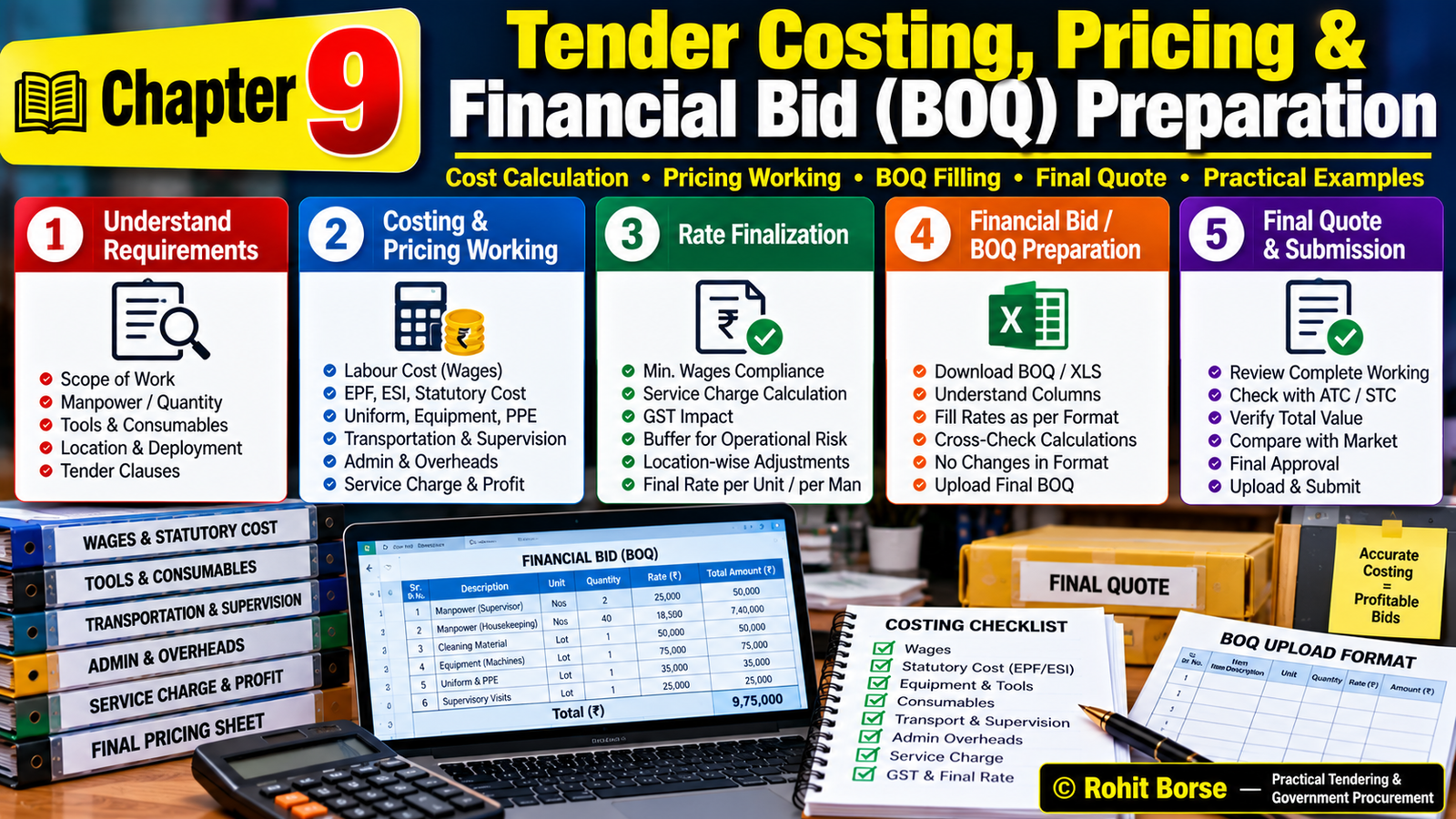
Topic 1 -: Tender Costing आणि Pricing Working – Exact Cost ते Final Quote
Tendering process मध्ये Tender Costing आणि Pricing हा सर्वात संवेदनशील आणि जबाबदारीचा भाग आहे. Tender शोधणे, tender document वाचणे, eligibility तपासणे आणि technical bid तयार करणे या सर्व प्रक्रिया योग्य झाल्या तरी शेवटी financial bid मध्ये चुकीचा rate दिला, तर संपूर्ण मेहनत व्यर्थ जाऊ शकते. याउलट, tender मिळवण्यासाठी अत्यंत कमी rate quote केला आणि तो rate प्रत्यक्ष execution मध्ये sustainable ठरला नाही, तर tender जिंकल्यानंतर कंपनीला operational loss, penalty, cash-flow pressure, statutory liabilities आणि contractual disputes यांना सामोरे जावे लागू शकते. त्यामुळे pricing चा उद्देश फक्त “L1 कसे यायचे?” एवढाच नसून “Tender जिंकण्याची शक्यता आणि tender मिळाल्यानंतर तो योग्य पद्धतीने execute करण्याची आर्थिक क्षमता यांचा संतुलित निर्णय कसा घ्यायचा?” हा असला पाहिजे.
आपल्या tendering methodology मध्ये costing ही tender च्या शेवटची प्रक्रिया नसून tender वाचायला सुरुवात केल्यापासूनच मनात सुरू झालेली प्रक्रिया असते. Tender document मध्ये scope of work, manpower requirement, working hours, shifts, minimum wages, statutory compliance, equipment, machinery, consumables, transportation, supervision, uniforms, safety requirements, performance requirements, penalty clauses, deployment conditions, location, accommodation किंवा travel requirements अशा अनेक गोष्टी वेगवेगळ्या ठिकाणी दिलेल्या असू शकतात. त्यामुळे फक्त Price Bid किंवा BOQ उघडून rate ठरवणे ही चुकीची पद्धत आहे. Tender चा संपूर्ण contract समजून घेतल्यानंतरच costing तयार झाली पाहिजे.
1.Estimated Tender Value म्हणजे काय?
प्रत्येक tender मध्ये अनेक वेळा department कडून एक Estimated Tender Value / Estimated Cost दिलेली असते. साध्या भाषेत सांगायचे तर department ला उपलब्ध असलेल्या market information, previous contracts, approved rates, internal calculations, Schedule of Rates, manpower requirements, quantity, duration आणि इतर अंदाजांच्या आधारे हे काम अंदाजे किती आर्थिक मूल्याचे असू शकते याचा विभागाने केलेला अंदाज म्हणजे estimated value.
मात्र येथे एक अत्यंत महत्त्वाची गोष्ट समजून घेणे आवश्यक आहे. Estimated Tender Value म्हणजे bidder ला मिळणारी किंमत नाही आणि ती आपल्या costing ची अंतिम किंमतही नाही. ती department च्या estimation ची reference आहे. प्रत्यक्ष tender मध्ये competition, scope, statutory obligations, location, deployment conditions आणि इतर परिस्थितीनुसार final quoted price वेगळी असू शकते.
उदाहरणार्थ, department ने एखाद्या housekeeping contract ची estimated value ₹50 lakh ठेवली आहे म्हणून आपली actual execution cost ₹50 lakhच असेल असे नाही. आपल्या manpower calculation नुसार ₹42 lakh खर्च येऊ शकतो किंवा additional machinery, transportation, supervision आणि consumables मुळे ₹47 lakh खर्च येऊ शकतो. त्यामुळे estimated value ही एक reference point आहे; तिच्यावर blind pricing करणे योग्य नाही.
2.Tender Costing ची सुरुवात Scope of Work पासून
Costing करण्यापूर्वी सर्वप्रथम स्वतःला एक प्रश्न विचारायचा आहे — “Department आपल्याकडून नेमके काय काम करून घेणार आहे?”
Scope of Work फक्त दोन-चार ओळींचा असला तरी त्याचा प्रत्यक्ष execution वर मोठा परिणाम होऊ शकतो. उदाहरणार्थ “Housekeeping Services” एवढेच नाव पाहून आपण manpower cost काढली तर ती incomplete costing ठरू शकते. त्याच tender मध्ये cleaning chemicals, machines, PPE, uniforms, waste disposal, consumables, supervision, transportation किंवा particular working hours ची जबाबदारी contractor वर असू शकते.
म्हणून costing करताना tender मधील प्रत्येक obligation चे आर्थिक रूपांतर करण्याची सवय लागली पाहिजे. म्हणजे document मध्ये लिहिलेली प्रत्येक महत्त्वाची अट वाचताना मनात प्रश्न आला पाहिजे — “ही अट पूर्ण करण्यासाठी company ला किती खर्च येणार?”
यालाच practical tender costing mindset म्हणता येईल.
3.Manpower Costing – सर्वात पहिला मोठा घटक
Manpower-based tender मध्ये costing चा सर्वात मोठा भाग manpower असतो. येथे फक्त “एका worker ला किती salary द्यायची?” एवढे पाहणे पुरेसे नाही. Tender मध्ये किती manpower required आहे, कोणत्या category मध्ये आहे, किती shifts आहेत, working hours किती आहेत, weekly off कसा आहे, reliever requirement आहे का, supervisor वेगळा आहे का, skilled/semi-skilled/unskilled classification काय आहे आणि applicable minimum wages काय आहेत हे समजून घ्यावे लागते.
उदाहरणार्थ tender मध्ये 20 unskilled workers आणि 2 supervisors required असतील तर 22 लोकांची basic deployment दिसते. पण weekly off, leave replacement किंवा tender-specific reliever requirement असल्यास actual manpower planning वेगळी असू शकते. त्यामुळे deployment manpower आणि costing manpower एकच आहे असे गृहीत धरू नये.
त्यानंतर प्रत्येक category साठी applicable minimum wage तपासली पाहिजे. Wage calculation करताना tender document मध्ये दिलेला wage basis, applicable State/Central notification, zone/category आणि effective date यांचा विचार करावा.
4.Statutory Cost – Salary पेक्षा पुढे विचार करा
Manpower tender मध्ये salary किंवा minimum wage हा पूर्ण manpower cost नसतो. त्यावर लागू होणाऱ्या statutory components चा विचार करावा लागतो. Tender च्या conditions आणि applicable law नुसार PF, ESI, EDLI, Bonus, statutory contributions, administrative components किंवा इतर mandatory liabilities लागू होऊ शकतात.
येथे एक अत्यंत महत्त्वाची practical discipline म्हणजे tender मध्ये statutory component स्पष्टपणे वेगळा दिलेला आहे का, त्याची calculation पद्धत काय आहे आणि quoted rate मध्ये तो कसा reflect होणार आहे हे तपासणे.
उदाहरणार्थ, एखाद्या bidder ने फक्त worker ची wage पाहून rate quote केला आणि नंतर PF/ESI/Bonus liability स्वतःच्या margin मधून भरावी लागली, तर त्याची original costing चुकीची ठरू शकते.
म्हणून प्रत्येक manpower tender मध्ये आपण स्वतःची एक internal calculation तयार करावी:
Wage + Statutory Components + Applicable Administrative Cost = Effective Manpower Cost
ही calculation tender-specific असावी. प्रत्येक tender साठी एकच fixed percentage blindly वापरू नये.
5.Service Charge – Pricing मधील अत्यंत संवेदनशील भाग
Manpower outsourcing tender मध्ये Service Charge हा pricing चा अत्यंत महत्त्वाचा भाग असतो. Service Charge म्हणजे contractor company ला manpower deployment, administration, supervision, management आणि contract handling यासाठी मिळणारा commercial component असा broadly समजता येतो; मात्र त्याची exact treatment tender document आणि applicable procurement conditions नुसार तपासली पाहिजे.
Service Charge ठरवताना फक्त “competitor किती टाकतील?” एवढे पाहणे धोकादायक आहे. Company ला प्रत्यक्षात contract चालवण्यासाठी किती administrative आणि operational burden येणार आहे हे समजणे आवश्यक आहे.
उदाहरणार्थ remote location असेल, local supervisor ठेवावा लागणार असेल, frequent travel असेल, attendance management असेल, documentation जास्त असेल, replacement manpower चा pressure असेल किंवा payment cycle मोठा असेल तर nominal service charge वर tender घेणे commercially risky ठरू शकते.
त्याच वेळी service charge excessively high ठेवल्यास L1 competition मध्ये tender गमावण्याची शक्यता वाढते.
म्हणून service charge हा costing आणि competition यांच्या intersection वरचा decision आहे.
6.Equipment Cost
Tender manpower-only आहे की manpower + equipment आहे हे स्पष्ट करणे आवश्यक आहे.
उदाहरणार्थ housekeeping tender मध्ये tender document मध्ये vacuum cleaner, single disc machine, high-pressure jet, scrubber, trolley किंवा इतर machinery contractor ने provide करायची असल्यास त्या equipment ची किंमत costing मध्ये आली पाहिजे.
Equipment costing करताना फक्त purchase price पाहू नये. त्यासोबत transportation, installation, maintenance, repair, spare parts, electricity consumption, depreciation किंवा contract duration मध्ये होणारा replacement risk यांचा विचार करावा.
जर machine company कडे आधीपासून उपलब्ध असेल तरी “ही machine free आहे” असे समजू नये. तिचा depreciation, maintenance आणि utilisation cost company च्या internal costing मध्ये असतो.
7.Consumables Cost
Cleaning chemicals, phenyl, detergent, garbage bags, tissue paper, gloves, masks, brushes, mops, buckets किंवा tender-specific consumables contractor च्या scope मध्ये असतील तर ते स्वतंत्रपणे calculate करणे आवश्यक आहे.
यामध्ये एक common mistake म्हणजे सुरुवातीच्या महिन्याचा consumption पाहून संपूर्ण contract चा cost ठरवणे. प्रत्यक्षात consumption location, footfall, area, frequency of cleaning आणि department requirements नुसार बदलू शकतो.
म्हणून शक्य असल्यास:
Monthly Consumption × Applicable Rate × Contract Duration
या आधारावर अंदाज काढावा आणि uncertainty असल्यास appropriate buffer ठेवावा.
8. Uniform, PPE आणि Safety Cost
Tender मध्ये uniform, shoes, helmet, gloves, masks, reflective jackets, safety equipment किंवा अन्य PPE mandatory असेल तर त्याची किंमत costing मध्ये समाविष्ट करणे आवश्यक आहे.
विशेषतः industrial, hospital, defence, construction किंवा technical environment असलेल्या tenders मध्ये PPE ची requirement लहान clause मध्ये दिलेली असली तरी ती financially significant असू शकते.
म्हणून tender वाचताना “PPE कोण देणार?” “Uniform किती वेळाने बदलायचा?” “Safety equipment contractor च्या scope मध्ये आहे का?” हे प्रश्न विचारण्याची सवय लावावी.
9.Transportation आणि Travel Cost
Tender ची location ही costing मधील स्वतंत्र आर्थिक factor आहे.
एकाच manpower requirement साठी Nashik मध्ये काम करणे आणि दुसऱ्या राज्यात किंवा remote industrial location वर काम करणे यांची costing सारखी असू शकत नाही.
Transportation मध्ये employee movement, material transportation, machine transportation, supervisor visits, document delivery, emergency travel आणि local conveyance यांचा विचार लागू परिस्थितीनुसार केला पाहिजे.
विशेषतः company च्या base location पासून मोठ्या अंतरावर tender असेल तर “काम मिळाले तर बघू” या विचाराने transportation costing नंतर करणे चुकीचे आहे. Tender मिळण्यापूर्वीच त्याचा commercial impact समजला पाहिजे.
10.Supervision आणि Management Cost
Contract execution साठी supervisor, coordinator किंवा site-in-charge आवश्यक असेल तर त्याचा खर्च manpower costing मध्ये दिसला पाहिजे.
याशिवाय company-level administration देखील असते — payroll, attendance, statutory compliance, billing, invoice preparation, management visits, documentation, client coordination आणि internal reporting.
हे सर्व खर्च एकेक करून छोट्या रकमा वाटू शकतात; परंतु 12 किंवा 24 महिन्यांच्या contract मध्ये त्यांचा cumulative impact मोठा असतो.
म्हणून pricing करताना visible cost आणि invisible operational cost दोन्ही समजून घेणे आवश्यक आहे.
11.Exact Cost – पहिली Internal Price
वरील सर्व घटकांचा विचार केल्यानंतर आपल्याला एक महत्त्वाची figure मिळते:
Exact Cost
Exact Cost म्हणजे tender execute करण्यासाठी company ला reasonably expected असलेला actual operational cost.
यामध्ये tender-specific:
Manpower + Statutory Cost + Equipment + Consumables + Uniform/PPE + Transportation + Supervision + Administrative/Operational Expenses + Other Mandatory Costs
यांचा समावेश होतो.
Exact Cost ही tendering team ने management समोर स्पष्टपणे ठेवली पाहिजे.
पण इथे pricing थांबत नाही.
12.Exact Cost आणि Buffer Cost वेगळे ठेवा
आपल्या practical working मध्ये ही पद्धत विशेष महत्त्वाची आहे.
एक costing आपण Exact Cost म्हणून तयार करू शकतो आणि दुसरी costing Buffer Cost म्हणून ठेवू शकतो.
Exact Cost म्हणजे सर्व known expenses चा realistic calculation.
Buffer म्हणजे uncertainty साठी ठेवलेली financial safety margin.
उदाहरणार्थ manpower replacement वाढू शकते, consumables rates बदलू शकतात, transportation खर्च अपेक्षेपेक्षा वाढू शकतो, machine repair लागू शकतो किंवा execution मध्ये एखादी unforeseen operational difficulty येऊ शकते.
म्हणून:
Exact Cost = Known / Calculated Cost
Buffer Cost = Risk / Uncertainty Protection
ही दोन figures management ला स्पष्टपणे दाखवणे अधिक योग्य आहे.
13.Minimum Acceptable Price
यानंतर तिसरी महत्त्वाची figure येते:
Minimum Acceptable Price
ही अशी price level आहे ज्यापेक्षा खाली company ने tender quote करू नये.
ही figure फक्त mathematical नसते. Management decision, company risk appetite, strategic importance, competition, tender duration, payment terms, client profile, execution complexity आणि future business value यांचा त्यावर परिणाम होऊ शकतो.
उदाहरणार्थ Exact Cost ₹40 lakh आहे आणि Buffer Cost धरून safe cost ₹43 lakh येते. पण management ने सर्व risk पाहून minimum acceptable price ₹44 lakh ठरवली तर ₹44 lakh पेक्षा कमी quote करण्याचा निर्णय स्वतःहून घेऊ नये.
Minimum Acceptable Price ही internal control line असते.
14.Final Quote
यानंतरच Final Quote ठरतो.
आपली working hierarchy अशी ठेवता येईल:
Exact Cost → Buffer Cost → Minimum Acceptable Price → Final Quote
परंतु याचा अर्थ Final Quote नेहमी Minimum Acceptable Price इतकाच असावा असा नाही.
Final Quote ठरवताना competition, estimated tender value, expected L1 range, tender structure, number of qualified competitors, scope complexity, company strategy आणि management decision यांचा विचार केला जाऊ शकतो.
म्हणजे:
Costing आपल्याला सांगते — खाली किती जाऊ शकतो.
Pricing strategy आपल्याला सांगते — किती quote करावे.
हा फरक प्रत्येक tender executive ने समजून घेतला पाहिजे.
15.Competition Factor
Tender pricing मध्ये competition महत्त्वाचा आहे; पण competitor चा अंदाज हा fact नसतो.
कधी आपल्याला market intelligence किंवा previous tender results मधून अंदाज मिळू शकतो. पण “सगळे competitor इतकाच rate टाकतील” असे गृहीत धरून स्वतःचा sustainable cost विसरणे चुकीचे आहे.
Competitor कमी rate मध्ये काम करू शकतो कारण त्याची internal cost structure वेगळी असू शकते. त्याच्याकडे local manpower असू शकतो, existing machinery असू शकते, local office असू शकते किंवा त्याची risk strategy वेगळी असू शकते.
म्हणून competitor चा rate हा pricing input असू शकतो; पण तो costing substitute होऊ शकत नाही.
16.“L1 मिळवणे” आणि “Contract Execute करणे” यातील फरक
Tender pricing चा सर्वात महत्त्वाचा practical lesson हा आहे की:
L1 येणे म्हणजे business success चा शेवट नाही; ते execution ची सुरुवात आहे.
समजा company ने अत्यंत कमी price quote करून L1 मिळवला. पण त्या price मध्ये manpower, statutory liabilities, consumables किंवा equipment cost cover होत नाही. अशा वेळी tender मिळाल्यानंतर company अडचणीत येऊ शकते.
Penalty लागू होऊ शकते, manpower replacement होऊ शकत नाही, statutory payment मध्ये delay होऊ शकतो, client complaints वाढू शकतात आणि शेवटी company च्या reputation वर परिणाम होऊ शकतो.
म्हणून sustainable pricing हा tendering department चा मूलभूत principle असला पाहिजे.
17.Buffer किती ठेवायचा?
Buffer साठी एक universal percentage ठरवणे योग्य नाही.
प्रत्येक tender मध्ये risk वेगळा असतो. काही tenders straightforward असतात; काही tenders मध्ये manpower replacement, remote location, equipment, high penalty, payment delay किंवा complicated execution असू शकते.
त्यामुळे buffer हा tender-specific risk assessment वर आधारित असावा.
उदाहरणार्थ risk factors management समोर स्पष्ट करून सांगता येतात:
“या tender मध्ये transportation risk आहे.”
“या tender मध्ये manpower replacement risk जास्त आहे.”
“या tender मध्ये equipment contractor च्या scope मध्ये आहे.”
“Payment cycle मोठा आहे.”
“Penalty exposure significant आहे.”
अशा पद्धतीने management ला फक्त final rate सांगण्यापेक्षा rate मागचा logic सांगणे अधिक महत्त्वाचे आहे.
18.Price कमी करण्याचा निर्णय कधी?
समजा Exact Cost ₹50 lakh आहे आणि management ला वाटते की competition अत्यंत aggressive आहे. अशा परिस्थितीत price कमी करण्याचा निर्णय घेताना प्रथम हे पाहिले पाहिजे की आपण कुठल्या component मध्ये legitimate saving करू शकतो.
Manpower requirement tender मध्ये mandatory असेल तर manpower artificially कमी दाखवणे हा saving चा मार्ग नाही.
त्याऐवजी existing machinery utilisation, local sourcing, transportation optimisation, administrative efficiency किंवा अन्य legitimate operational efficiencies तपासता येतात.
Cost कमी करणे आणि tender conditions च्या विरुद्ध जाणे या दोन पूर्णपणे वेगळ्या गोष्टी आहेत.
19.Pricing करताना Tender Conditions पुन्हा तपासा
Final quote तयार करण्यापूर्वी tender पुन्हा एकदा उघडणे अत्यावश्यक आहे.
विशेषतः:
- Minimum wages / wage basis
- GST treatment
- PF / ESI / Bonus requirements
- Service Charge
- Equipment
- Consumables
- Uniform / PPE
- Transportation
- Working hours / shifts
- Penalty
- Security Deposit / Performance Security
- Payment terms
- Contract duration
- Quantity
- BOQ units
- Price escalation किंवा revision clauses
यांचा financial impact पुन्हा verify करावा.
कारण technical bid तयार करताना लक्षात न आलेली एखादी commercial condition final costing मध्ये मोठा फरक निर्माण करू शकते.
20.BOQ म्हणजे फक्त Rate भरायची Sheet नाही
BOQ किंवा Price Bid ही tender च्या commercial structure ची महत्त्वाची document असते.
त्यात Quantity, Unit, Description, Rate, Amount किंवा tender-specific fields असू शकतात.
BOQ भरताना प्रत्येक column चा अर्थ समजून घेतल्याशिवाय rate भरू नये. काही portals वर formula automatically calculate होतात, काही ठिकाणी bidder ला amount भरावा लागतो, काही ठिकाणी tax वेगळा असतो आणि काही tender मध्ये price inclusive/exclusive basis दिलेला असतो.
म्हणून BOQ download → Instructions read → Column structure understand → Calculation verify → Rate enter → Formula/total verify → Final save अशी discipline ठेवावी.
21.Financial Bid तयार करण्यापूर्वी “Commercial Questions”
Pricing सुरू करण्यापूर्वी tender executive ने स्वतःला काही प्रश्न विचारले पाहिजेत:
“हा rate manpower सहित आहे का?”
“Statutory liabilities कोणाच्या scope मध्ये आहेत?”
“GST कसा apply होणार आहे?”
“Equipment कोण देणार?”
“Consumables कोण देणार?”
“Transportation कोणाची जबाबदारी?”
“Payment किती दिवसांनी मिळणार?”
“Penalty किती आहे?”
“Security deposit किती आहे?”
“Contract duration किती आहे?”
“Rate revision ची provision आहे का?”
“BOQ मध्ये quantity fixed आहे का estimated आहे?”
या प्रश्नांची उत्तरे मिळाल्याशिवाय final pricing करणे म्हणजे अर्धवट information वर commercial decision घेणे होय.
22.Management Approval साठी Pricing Note
Final rate management कडे ठेवताना फक्त:
“Sir, rate ₹XX आहे.”
असे सांगणे पुरेसे नाही.
त्याऐवजी concise पण complete commercial picture द्यावी.
उदाहरणार्थ:
| Particulars | Details |
| Tender Value | ₹ __________ |
| Exact Cost | ₹ __________ |
| Buffer Cost | ₹ __________ |
| Minimum Acceptable Price | ₹ __________ |
| Proposed Final Quote | ₹ __________ |
| Major Risks | ________________________ |
| Major Assumptions | ________________________ |
| Competition Observation | ________________________ |
| Recommendation | ________________________ |
यामुळे management ला decision घेण्यासाठी आवश्यक माहिती एका ठिकाणी मिळते.
23. Final Quote Before Submission – अंतिम मानसिक तपासणी
Final rate submit करण्यापूर्वी स्वतःला एक शेवटचा प्रश्न विचारायचा:
“हा tender उद्या आपल्याला मिळाला, तर या quoted price मध्ये आपण tender च्या सर्व obligations प्रत्यक्षात पूर्ण करू शकतो का?”
जर उत्तर स्पष्टपणे होय असेल तर pricing sustainable असण्याची शक्यता चांगली आहे.
जर उत्तर असे असेल की “काहीतरी manage करू”, “नंतर बघू”, “मशीनचा खर्च नंतर adjust करू”, “manpower somehow manage होईल”, “payment आल्यावर बघू”, तर costing पुन्हा तपासणे आवश्यक आहे.
Tendering मध्ये “somehow manage” ही costing methodology नाही.
24.Practical Pricing Discipline
आपल्या tender desk मध्ये प्रत्येक tender साठी final costing करताना एकच principle कायम ठेवता येईल:
पहिले Tender समजा → मग Scope समजा → मग Execution कल्पना करा → मग Cost काढा → मग Risk ओळखा → मग Buffer ठेवा → Minimum Acceptable Price ठरवा → Competition समजा → Management Decision घ्या → Final Quote करा.
यामुळे pricing ही अंदाजावर आधारित न राहता document-based + execution-based + commercially reasoned decision बनते.
25.सर्वात महत्त्वाचा निष्कर्ष
Tender costing मध्ये सर्वात मोठी चूक म्हणजे “आपल्याला L1 यायचे आहे” या एका विचाराने pricing सुरू करणे.
योग्य विचार असा असला पाहिजे:
“आपल्याला हा tender जिंकायचा आहे; पण जिंकल्यानंतर तो contract पूर्णपणे, कायदेशीररीत्या, technically आणि financially sustainable पद्धतीने execute देखील करायचा आहे.”
म्हणूनच आपल्या internal pricing methodology मध्ये चार figures अत्यंत स्पष्ट ठेवणे उपयुक्त आहे:
Exact Cost – प्रत्यक्ष अपेक्षित खर्च
Buffer Cost – Risk साठी protection
Minimum Acceptable Price – याखाली जाण्याची internal सीमा
Final Quote – Competition + Strategy + Management Decision नंतरचा अंतिम rate
ही चार पातळी वेगवेगळी ठेवली तर tender executive ला स्वतःचा costing logic समजतो, senior management ला decision घेणे सोपे जाते आणि सर्वात महत्त्वाचे म्हणजे L1 मिळवण्याच्या प्रयत्नात company ला unsustainable contract घेण्याचा धोका कमी होतो.
——————————————————————————————————————————————————————————-
Topic 2 -: Financial Bid / BOQ Preparation – प्रत्यक्ष Financial Bid कशी तयार करावी
Tendering process मध्ये Financial Bid हा तो टप्पा आहे जिथे आपण tender मध्ये सहभागी होण्याचा commercial decision प्रत्यक्ष rate मध्ये convert करतो. यापूर्वी आपण tender वाचलेला असतो, scope समजलेला असतो, eligibility तपासलेली असते, GO–NO GO decision घेतलेला असतो आणि costing करून Exact Cost, Buffer Cost, Minimum Acceptable Price आणि Final Quote यांचा विचार केलेला असतो. आता या सर्व अभ्यासाचा अंतिम आर्थिक परिणाम tender च्या Price Bid / Financial Bid / BOQ मध्ये दिसणार असतो.
Financial Bid म्हणजे केवळ “एक rate टाकून Submit करणे” नाही. Tender मध्ये department ने ज्या पद्धतीने financial offer मागितले आहे, त्याच structure मध्ये, त्याच unit मध्ये, त्याच quantity च्या आधारावर आणि tender मध्ये दिलेल्या commercial conditions चा विचार करून आपली financial offer तयार करणे म्हणजे Financial Bid Preparation. त्यामुळे technical bid कितीही व्यवस्थित असली तरी financial bid चुकीच्या पद्धतीने भरली गेली तर संपूर्ण tender धोक्यात येऊ शकतो.
आपल्या working methodology मध्ये Financial Bid कडे शेवटच्या क्षणी भरायची sheet म्हणून न पाहता, tender वाचत असतानाच समजून घेण्याची गोष्ट म्हणून पाहिले पाहिजे. Tender document मध्ये financial structure अनेक वेळा वेगवेगळ्या ठिकाणी explain केलेले असते. Price Bid format एका file मध्ये असू शकतो, BOQ दुसऱ्या file मध्ये असू शकतो, commercial terms RFP मध्ये असू शकतात आणि GST किंवा statutory treatment दुसऱ्या clause मध्ये असू शकतो. म्हणून financial bid तयार करण्यापूर्वी पूर्ण tender structure पुन्हा एकदा verify करणे आवश्यक आहे.
1.Financial Bid म्हणजे काय?
सोप्या भाषेत सांगायचे झाले तर, Financial Bid म्हणजे contractor/bidder कडून department ला दिलेली आर्थिक offer. Department ने tender मध्ये जे काम, quantity, unit आणि financial format दिलेले असते, त्यानुसार bidder आपला rate किंवा total price offer करतो. Department technical eligibility आणि इतर conditions तपासल्यानंतर financial bids च्या आधारावर commercial comparison करू शकते.
परंतु Financial Bid म्हणजे फक्त price नाही. त्या price मागे आपल्या company ची पूर्ण costing, execution capability, statutory obligations, equipment requirement, manpower requirement, risk आणि profit expectation असते. त्यामुळे financial bid मधील प्रत्येक figure मागे एक calculation असली पाहिजे.
आपण final BOQ मध्ये ₹100 rate भरला असेल, तर internal working मध्ये “हा ₹100 का?” याचे उत्तर असले पाहिजे. तो rate अंदाजाने किंवा competitor काय टाकेल या विचारानेच आलेला नसावा. त्यामागे tender-specific costing आणि management-approved pricing logic असणे आवश्यक आहे.
2.Financial Bid, Price Bid आणि BOQ – हे तिन्ही एकच आहेत का?
Tendering मध्ये वेगवेगळ्या departments आणि portals वर वेगवेगळे शब्द वापरले जातात. कुठे Financial Bid, कुठे Price Bid, कुठे BOQ, कुठे Financial Schedule, कुठे Price Schedule किंवा Schedule of Rates असे शब्द दिसू शकतात.
प्रत्येक वेळी नाव पाहून निष्कर्ष काढू नये. त्या document मध्ये नेमके काय मागितले आहे ते वाचणे महत्त्वाचे आहे.
उदाहरणार्थ काही tender मध्ये एक downloadable Excel BOQ असतो. त्यात bidder ने फक्त applicable rate भरायचा असतो. काही tender मध्ये price schedule मध्ये अनेक components असतात. काही tender मध्ये percentage quote करायचा असतो. काही tender मध्ये item-wise rates असतात तर काही ठिकाणी lump-sum amount मागितले जाऊ शकते.
म्हणून tender executive ने “Financial Bid कुठे आहे?” एवढेच शोधू नये; तर “Department ने financial offer कोणत्या structure मध्ये मागितली आहे?” हे शोधले पाहिजे.
3. Financial Bid शोधताना Tender मधील कोणती documents पाहायची?
Tender download केल्यानंतर technical documents प्रमाणेच financial documents वेगळे identify करावेत. Tender notice, RFP, NIT, BOQ, Price Schedule, Financial Bid Format, commercial terms, corrigendum, pre-bid clarification किंवा revised BOQ यापैकी कोणत्याही document मध्ये financial information असू शकते.
काही वेळा tender च्या पहिल्या page वरच BOQ किंवा Price Bid असल्याचे दिसते. पण काही वेळा financial requirement वेगळ्या section मध्ये असते. म्हणून “Technical Bid मध्ये नाही म्हणजे Financial Bid मध्येच असेल” असा mechanical approach ठेवू नये.
विशेषतः corrigendum किंवा revised financial format नंतर जुना BOQ वापरला जाणार नाही याची काळजी घ्यावी. Tender मध्ये नवीन BOQ upload केला असेल तर original BOQ बाजूला ठेवून revised BOQ चा वापर करणे आवश्यक असू शकते.
4.BOQ म्हणजे काय?
BOQ – Bill of Quantities म्हणजे tender मध्ये department ने कामातील items किंवा services आणि त्यांची quantities ज्या स्वरूपात दिल्या आहेत ती financial working structure.
साधारणपणे BOQ मध्ये काही columns असू शकतात — Item Description, Quantity, Unit, Rate, Amount किंवा tender-specific इतर fields. मात्र प्रत्येक tender चा BOQ format वेगळा असू शकतो.
उदाहरणार्थ housekeeping tender मध्ये:
Housekeeping manpower – 40 persons – Per Month
अशी quantity आणि unit असू शकते. दुसऱ्या tender मध्ये:
Cleaning Area – 95,000 Sq. Ft. – Per Month
असे असू शकते.
म्हणून BOQ पाहताना पहिली गोष्ट म्हणजे quantity आणि unit समजून घेणे. Rate किती टाकायचा हे त्यानंतर येते.
5.Quantity समजणे का महत्त्वाचे आहे?
समजा BOQ मध्ये Quantity 12 आहे आणि Unit “Month” आहे. याचा अर्थ contract period 12 months असा असू शकतो; पण हे tender document वरून confirm करणे आवश्यक आहे. त्याचप्रमाणे Quantity 40 आणि Unit “Nos.” असल्यास 40 manpower/items असा अर्थ असू शकतो.
Quantity चुकीची समजली तर rate बरोबर असूनही total financial offer चुकीची होऊ शकते.
म्हणून costing करताना आपली internal calculation आणि BOQ quantity यांची तुलना करावी. Internal costing मध्ये आपण ज्या quantity वर calculation केली आहे, तीच quantity tender BOQ मध्ये आहे का? हा प्रश्न final financial verification मध्ये अनिवार्य असावा.
6.Unit समजणे – Rate च्या आधीचे पहिले काम
Financial Bid मध्ये सर्वात सामान्य चुका unit समजण्यात होऊ शकतात. Per day, per month, per person, per unit, per square foot, per kilogram, per item, lump sum किंवा percentage अशा विविध units असू शकतात.
उदाहरणार्थ आपण ₹500 rate पाहिला तर तो स्वतःमध्ये काहीच सांगत नाही.
₹500 per day आहे की ₹500 per month, ₹500 per person आहे की ₹500 per unit — हे समजल्याशिवाय त्या rate चा अर्थच स्पष्ट होत नाही.
म्हणून BOQ मध्ये rate भरताना एक practical rule ठेवावा:
Description → Quantity → Unit → Duration → Rate → Amount
या क्रमाने समजून घ्या.
7.Internal Costing Sheet आणि Tender BOQ वेगवेगळे ठेवा
ही आपल्या tender desk साठी अत्यंत महत्त्वाची working discipline आहे.
Tender BOQ ही department ने दिलेली document असते. त्यात आपण tender च्या requirement नुसार final commercial offer भरतो.
त्याच्या आधी तयार होणारी Internal Costing Sheet ही company ची confidential working document असते. त्यात manpower calculation, statutory cost, equipment, consumables, transportation, supervision, buffer, profit आणि management-approved rate यांची calculation असते.
दोन्ही documents एकसारखे दिसण्याची गरज नाही.
Internal costing मध्ये खूप detail असू शकतो, पण department च्या BOQ मध्ये फक्त rate किंवा मागितलेली financial information भरायची असू शकते.
म्हणून:
Internal Costing = आपण rate कसा ठरवला
BOQ / Financial Bid = Department ला आपण काय rate offer केला
हा फरक नवीन staff ने सुरुवातीपासून समजून घेतला पाहिजे.
8.Price Bid वाचताना “Rate कुठे भरायचा?” एवढेच पाहू नका
BOQ किंवा Price Schedule उघडल्यानंतर लगेच rate भरायला सुरुवात करू नये. सर्वप्रथम त्यातील instructions वाचाव्यात.
काही BOQ मध्ये काही cells bidder ने भरायचे असतात तर काही cells formula-based असतात. काही columns locked असू शकतात. काही ठिकाणी tax वेगळा विचारला जाऊ शकतो. काही ठिकाणी total amount automatically calculate होतो.
जर bidder ने formula cell मध्ये अनावश्यक बदल केला किंवा department ने दिलेल्या format मध्ये structural modification केली तर financial bid वर परिणाम होऊ शकतो.
म्हणून BOQ मध्ये फक्त allowed fields मध्येच entry करणे ही basic discipline आहे.
9.Rate Basis – आपल्या costing शी BOQ जोडणे
आपण मागील chapter मध्ये Exact Cost काढली. आता ती BOQ मध्ये कशी येणार हे समजून घ्यावे.
उदाहरणार्थ आपल्या internal calculation नुसार एका worker चा monthly sustainable cost ₹25,000 आहे. पण BOQ मध्ये rate per person per month मागितला असेल तर calculation त्या unit मध्ये convert करावी लागेल.
जर BOQ मध्ये rate per day मागितला असेल तर monthly calculation थेट copy करता येणार नाही. Tender मध्ये applicable working-day basis किंवा wage calculation method काय आहे ते तपासावे लागेल.
म्हणून Internal Cost आणि BOQ Unit एकच आहे असे गृहीत धरू नये.
10.Inclusive आणि Exclusive Amount समजणे
Financial Bid मध्ये “inclusive” आणि “exclusive” हे शब्द अत्यंत काळजीपूर्वक वाचावे.
एखादा rate GST inclusive आहे की GST exclusive आहे, statutory component included आहे की वेगळा आहे, service charge मध्ये GST treatment काय आहे किंवा price मध्ये transportation/other charges समाविष्ट आहेत का — हे tender document नुसार तपासले पाहिजे.
फक्त “₹X + GST” असे स्वतःहून गृहीत धरून rate भरू नये.
Tender ने ज्या पद्धतीने price मागितला आहे त्याच basis वर quote करणे आवश्यक आहे.
11.Price Bid मध्ये स्वतःहून नवीन Item Add करायचा का?
साधारणपणे department ने दिलेल्या BOQ structure मध्ये bidder ने स्वतःहून नवीन commercial item add करण्याचा निर्णय घेऊ नये, जोपर्यंत tender instructions त्याला परवानगी देत नाहीत किंवा department कडून clarification मिळत नाही.
समजा आपल्या costing मध्ये transportation चा खर्च आहे, पण BOQ मध्ये transportation नावाचा स्वतंत्र column नाही. अशा वेळी आपण स्वतःहून “Transportation” नावाचा नवीन row तयार करून amount टाकणे योग्य आहे असे गृहीत धरू नये.
त्या खर्चाचा treatment tender conditions मध्ये कसा आहे हे तपासावे. आवश्यक असल्यास department कडे clarification घ्यावे.
12.Financial Bid आणि Tender Conditions यांचा संबंध
Financial Bid वेगळी document असली तरी तिचा अर्थ tender च्या बाकी conditions पासून वेगळा नसतो.
उदाहरणार्थ tender मध्ये manpower minimum wages नुसार द्यायची अट असेल, तर आपण financial bid मध्ये असा rate देऊ शकत नाही की execution करताना minimum wage requirement पूर्णच होणार नाही.
तसेच tender मध्ये machinery contractor ने provide करायची असेल तर त्या machinery चा cost आपल्या financial offer मध्ये economically covered आहे का हे costing करताना पाहिले पाहिजे.
म्हणून financial bid ही संपूर्ण tender contract चा commercial expression आहे.
13.BOQ भरताना Calculation कशी तपासायची?
BOQ मध्ये प्रत्येक item साठी:
Quantity × Rate = Amount
हा मूलभूत calculation relationship तपासावा.
जर BOQ formula-based असेल तर formula automatically calculate होत असला तरी final amount verify करावा. Automation म्हणजे verification ची गरज नाही असे नाही.
उदाहरणार्थ Quantity 100 आणि Rate ₹250 असल्यास Amount ₹25,000 असणे अपेक्षित आहे. पण जर Excel मध्ये formula बदलला असेल किंवा चुकीचा cell reference असेल तर total चुकीचा येऊ शकतो.
म्हणून final submission पूर्वी rate, quantity, amount आणि grand total cross-check करणे आवश्यक आहे.
14.Decimal आणि Zero ची चूक
Financial Bid मध्ये छोटासा decimal error देखील मोठा commercial फरक निर्माण करू शकतो.
उदाहरणार्थ ₹125.50 ऐवजी ₹1,255.00 किंवा ₹12.50 ऐवजी ₹125.00 अशी चुकीची entry झाली तर tender result वर थेट परिणाम होऊ शकतो.
त्याचप्रमाणे एखाद्या field मध्ये 0 टाकणे आणि field blank ठेवणे याचा अर्थ tender system मध्ये वेगळा असू शकतो.
म्हणून financial bid भरताना speed पेक्षा controlled accuracy महत्त्वाची आहे.
15.Revised BOQ – Corrigendum नंतर विशेष काळजी
Tender मध्ये corrigendum किंवा amendment आले आणि त्यात BOQ बदलला तर जुन्या BOQ वर केलेली calculation पुन्हा verify करावी.
उदाहरणार्थ quantity बदलली, item description बदलले, unit बदलले किंवा financial format बदलला तर आधीची costing जसच्या तशी वापरता येणार नाही.
अशावेळी:
Original BOQ → Corrigendum → Revised BOQ → Internal Costing → Final Rate
या chain ने काम करावे.
16.Management कडे Final Rate कसा ठेवायचा?
Financial Bid तयार झाली म्हणून ती लगेच submit करायची नाही. Final rate management approval system मधून गेला पाहिजे.
Management समोर फक्त final rate न ठेवता त्यामागची commercial position स्पष्ट करणे आवश्यक आहे.
उदाहरणार्थ:
Exact Cost: ₹_____
Buffer: ₹_____
Minimum Acceptable Price: ₹_____
Recommended Quote: ₹_____
यासोबत tender मध्ये असलेले major risks, payment conditions, penalty exposure, location-related costs किंवा competition-related observations सांगावेत.
यामुळे management ला final rate हा फक्त number नसून एक informed commercial decision आहे हे स्पष्ट होते
17.Rate Approval Hierarchy
आपल्या practical working मध्ये आपण आधी ठरवलेली hierarchy Financial Bid मध्ये अत्यंत उपयोगी ठरते:
Exact Cost → Buffer Cost → Minimum Acceptable Price → Final Quote
यातील प्रत्येक figure चा वेगळा उपयोग आहे.
Exact Cost सांगतो की contract execute करण्यासाठी किती खर्च अपेक्षित आहे.
Buffer Cost सांगतो की uncertainty साठी किती protection ठेवले आहे.
Minimum Acceptable Price सांगतो की company च्या internal assessment नुसार कुठल्या level खाली जाणे योग्य नाही.
Final Quote हा management decision, competition आणि tender strategy लक्षात घेऊन ठरवला जातो.
नवीन tender executive ने स्वतःहून Minimum Acceptable Price च्या खाली rate बदलणे टाळावे. Final pricing authority management कडे असते.
18.Financial Bid मध्ये “Last Minute Pricing” टाळा
Tender submission च्या शेवटच्या काही मिनिटांत अचानक competitor चा विचार करून rate बदलणे ही धोकादायक पद्धत आहे.
जर final quote आधीच costing, risk assessment आणि management approval नंतर निश्चित झाला असेल तर unnecessary last-minute changes टाळावेत.
कारण त्या वेळी calculation पुन्हा तपासण्यास, BOQ verify करण्यास आणि management approval घेण्यास पुरेसा वेळ नसतो.
Pricing decision आणि submission activity यांच्यात पुरेसा time gap ठेवणे ही tender desk ची professional discipline आहे.
19.Financial Bid Final Verification
Financial Bid upload करण्यापूर्वी एक focused verification करावी.
प्रथम पाहावे की योग्य tender चाच BOQ वापरला आहे का. त्यानंतर revised BOQ/corrigendum आहे का ते पाहावे. मग quantity आणि unit verify करावेत. त्यानंतर approved rate भरला आहे का ते तपासावे. Formula आणि total amount verify करावा. GST किंवा इतर applicable treatment tender conditions प्रमाणे आहे का ते तपासावे. शेवटी final amount management-approved quote शी match होतो का ते पाहावे.
ही verification करताना पूर्ण tender पुन्हा सुरुवातीपासून अनेक वेळा वाचण्याची गरज नसते. आपल्याकडे आधी तयार केलेल्या notes आणि final costing sheet च्या आधारावर focused final check करणे अधिक योग्य आहे.
20.Financial Bid ची File Management
Final financial working स्वतंत्रपणे record मध्ये ठेवावी.
Tender folder मध्ये:
Financial Bid / BOQ
Internal Costing
Approved Rate Working
Final Filled BOQ
Submitted Financial Bid
Relevant Corrigendum / Revised BOQ
अशा प्रकारे documents व्यवस्थित ठेवता येतात.
विशेषतः final submitted rate ची copy जतन करणे अत्यंत महत्त्वाचे आहे. भविष्यात tender result, negotiation, financial comparison किंवा contract execution संदर्भात प्रश्न निर्माण झाल्यास आपण “आपण नेमका कोणता rate submit केला होता?” हे लगेच दाखवू शकतो.
21.Financial Bid म्हणजे Tender चा शेवटचा Commercial Checkpoint
Technical Bid मध्ये आपण department ला सांगतो की:
“आम्ही या tender च्या technical आणि eligibility requirements पूर्ण करण्यास सक्षम आहोत.”
Financial Bid मध्ये आपण practically सांगतो:
“या कामासाठी आमची commercial offer ही आहे.”
म्हणून Financial Bid ही technical bid नंतरची formality नाही. ती tendering process मधील स्वतंत्र decision-making stage आहे.
Tender executive ने या stage वर accuracy, confidentiality, calculation discipline आणि management approval या चार गोष्टी कायम लक्षात ठेवाव्यात.
22. या Chapter चा Practical Working Rule
नवीन employee साठी हा संपूर्ण chapter एका practical sequence मध्ये असा लक्षात ठेवता येईल:
Tender मधील Financial Requirement शोधा → BOQ/Price Schedule पूर्ण वाचा → Quantity समजा → Unit समजा → Commercial Conditions तपासा → Internal Costing शी Match करा → Exact Cost verify करा → Buffer assess करा → Minimum Acceptable Price ठरवा → Management Approval घ्या → Approved Final Quote BOQ मध्ये भरा → Formula/Amount तपासा → Corrigendum तपासा → Final Financial Verification करा → Submitted BOQ ची copy सुरक्षित ठेवा.
आणि सर्वात महत्त्वाचे:
BOQ मध्ये rate भरण्यापूर्वी rate कसा ठरला हे आपल्याला माहीत असले पाहिजे; आणि rate submit केल्यानंतर आपण नेमका कोणता rate submit केला हे record मध्ये स्पष्ट असले पाहिजे.
© Rohit Borse
— Practical Tendering & Government Procurement